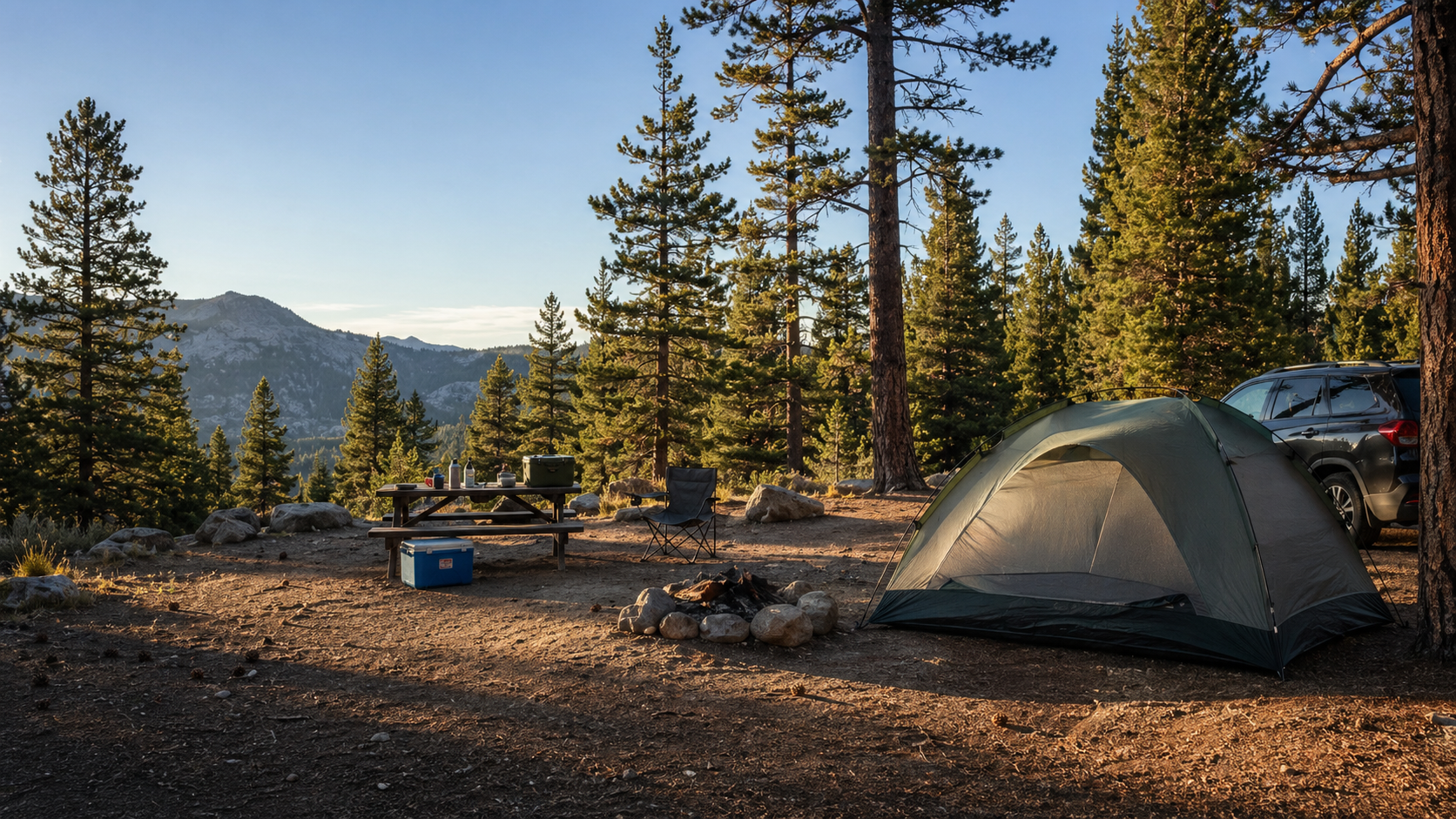
How to choose a campsite that works after dark
Do the walkaround before unloading: sleep ground, drainage, shade, wind, kitchen flow, and the paths people use at night.
PRACTICAL HOW-TO
Practical steps for camp, vehicle, shop, and tool problems: what to check first, what order to use, and which mistakes to avoid.
Start Here
Start with the decisions that shape the whole weekend: where you park, what comes out first, how camp flows, and whether people sleep well enough to enjoy the next day.
Do the walkaround before unloading: sleep ground, drainage, shade, wind, kitchen flow, and the paths people use at night.
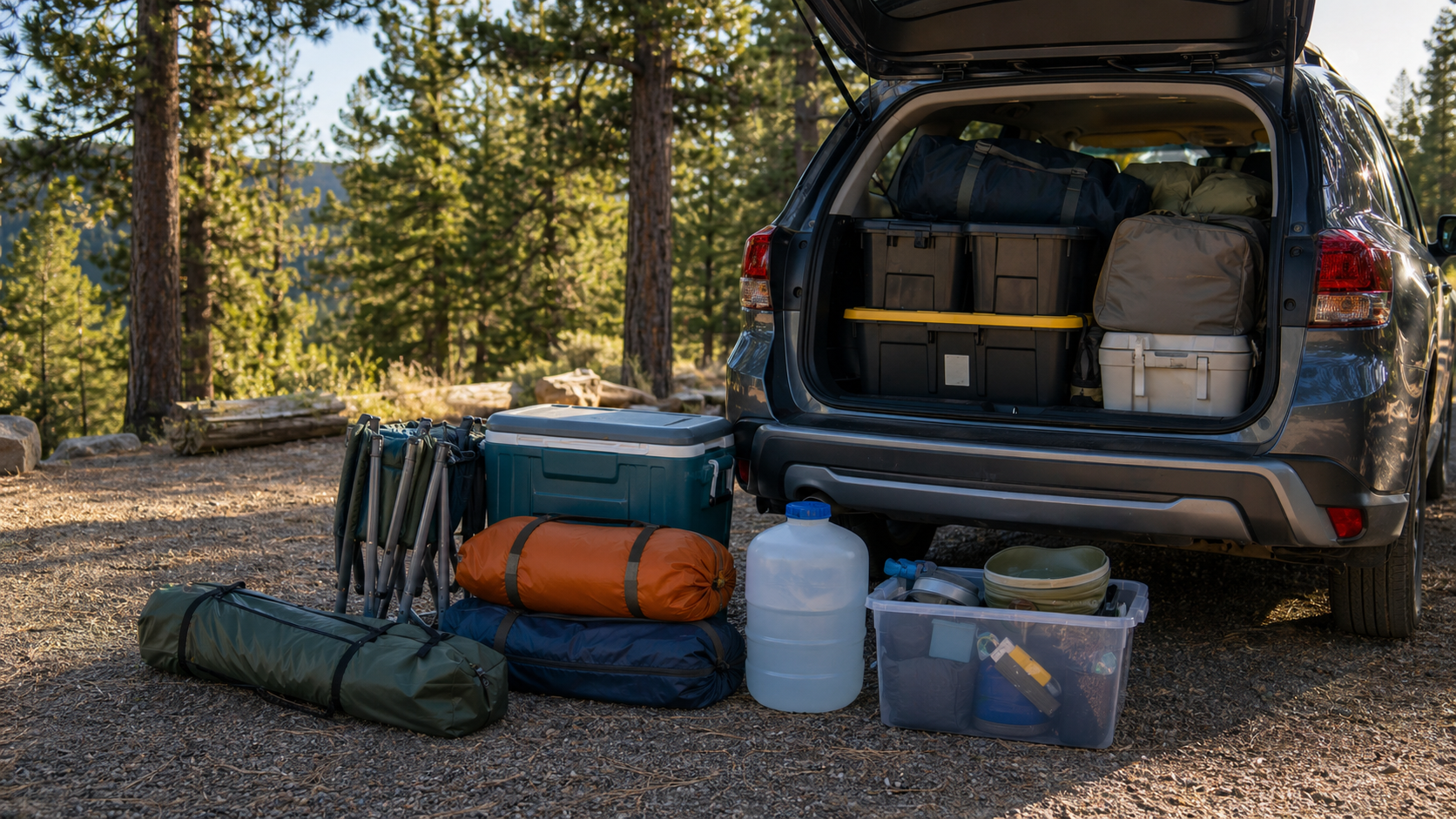
Pack by zone and setup order so arrival, meals, sleep, and teardown stay calm.
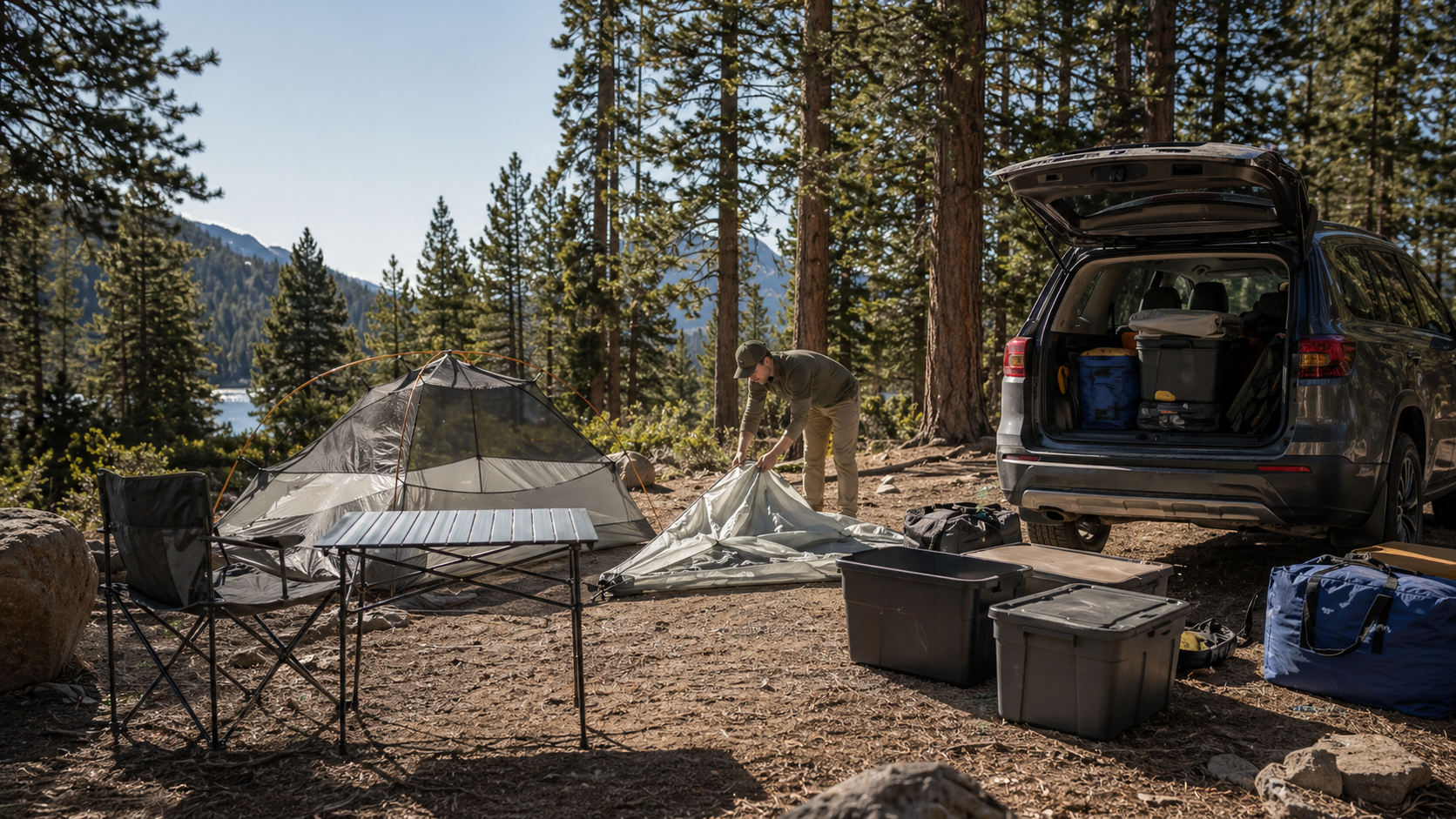
A practical arrival order for shelter, kitchen, seating, sleep gear, and lights.
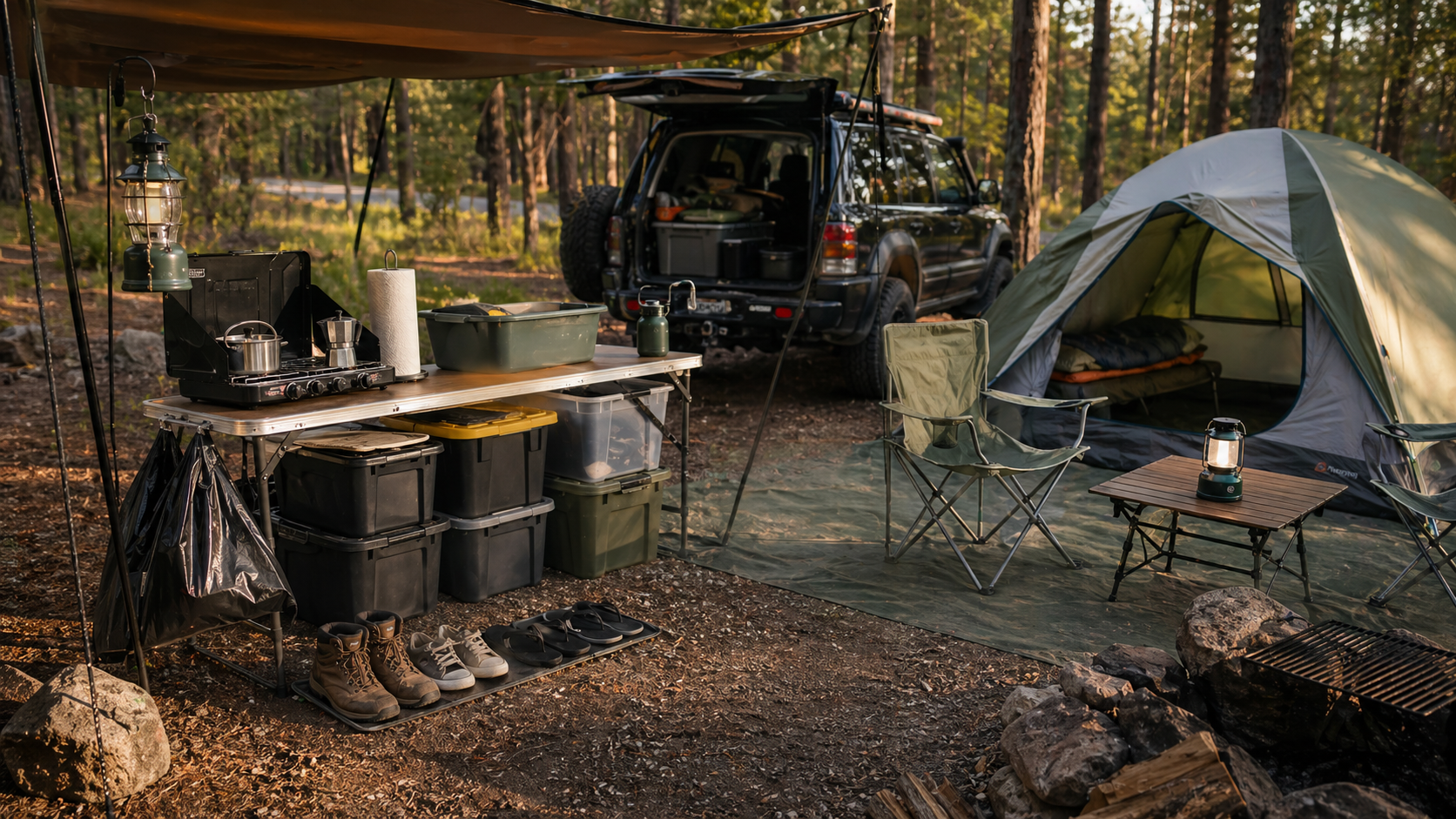
Build simple zones for cooking, sleeping, trash, shoes, dirty gear, tools, and pack-up.
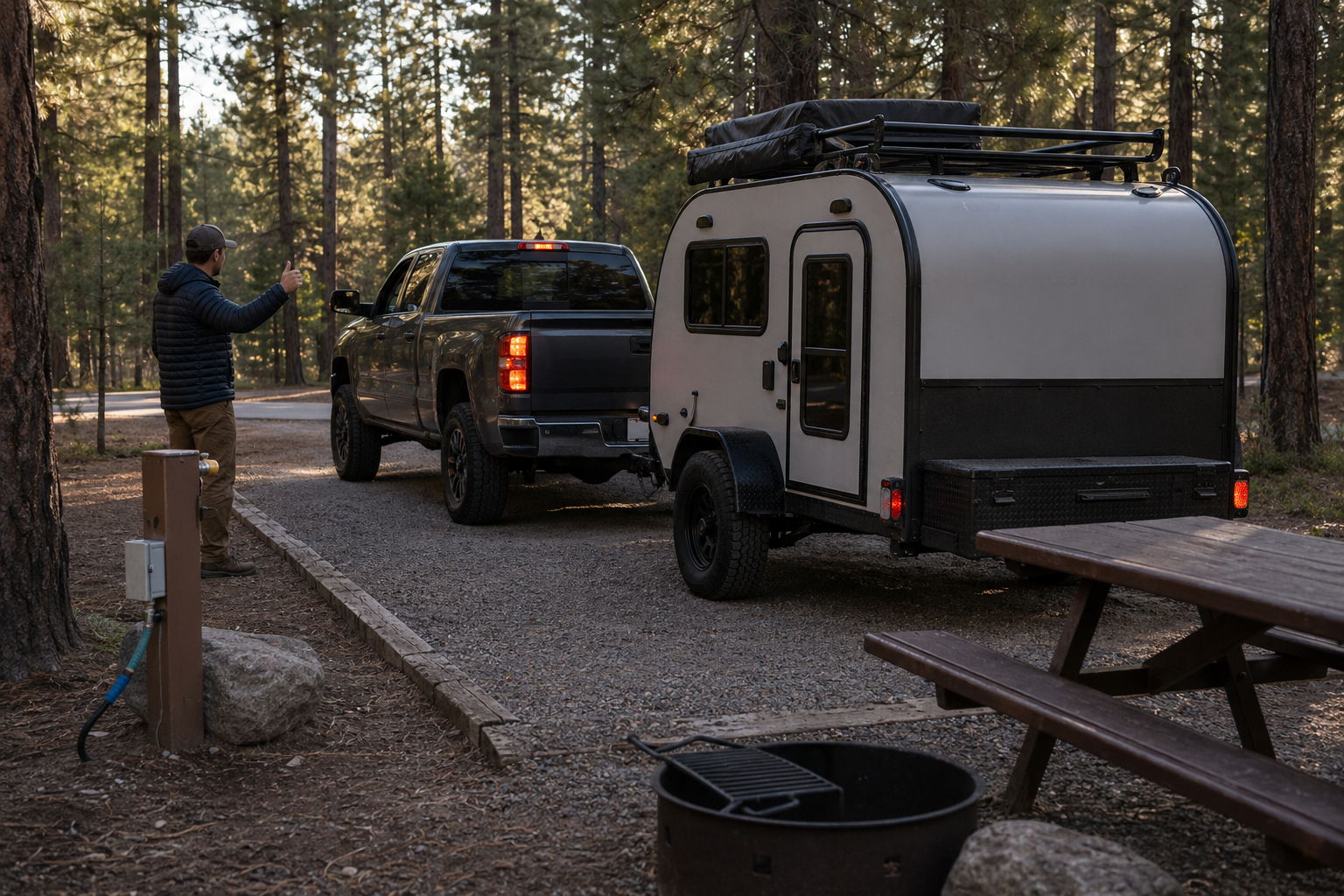
Place a trailer so hookups, shade, door side, fire ring, table, and exit angle all make sense.
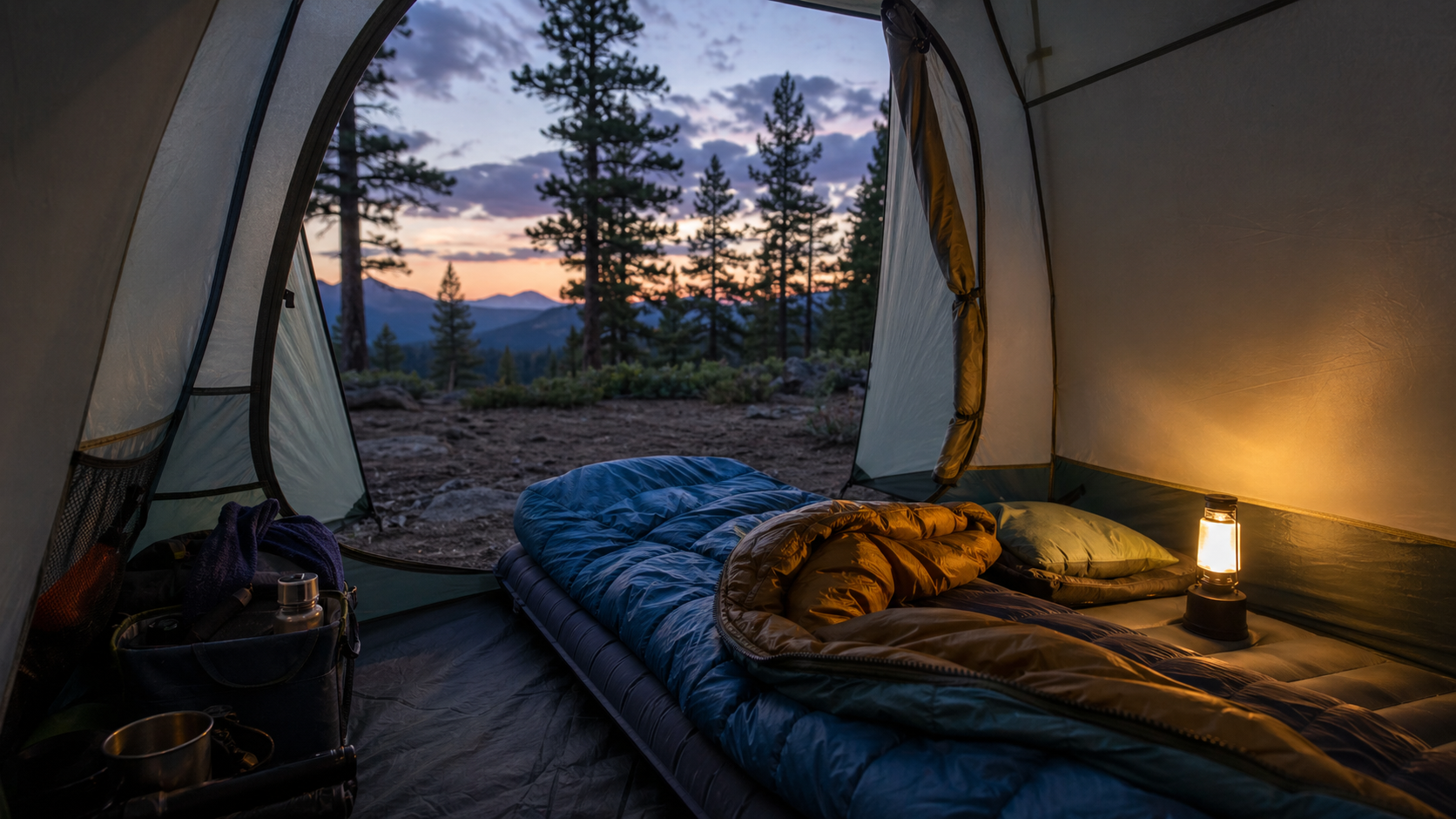
Improve tent sleep with better ground choice, insulation, pillow height, airflow, and dry layers.
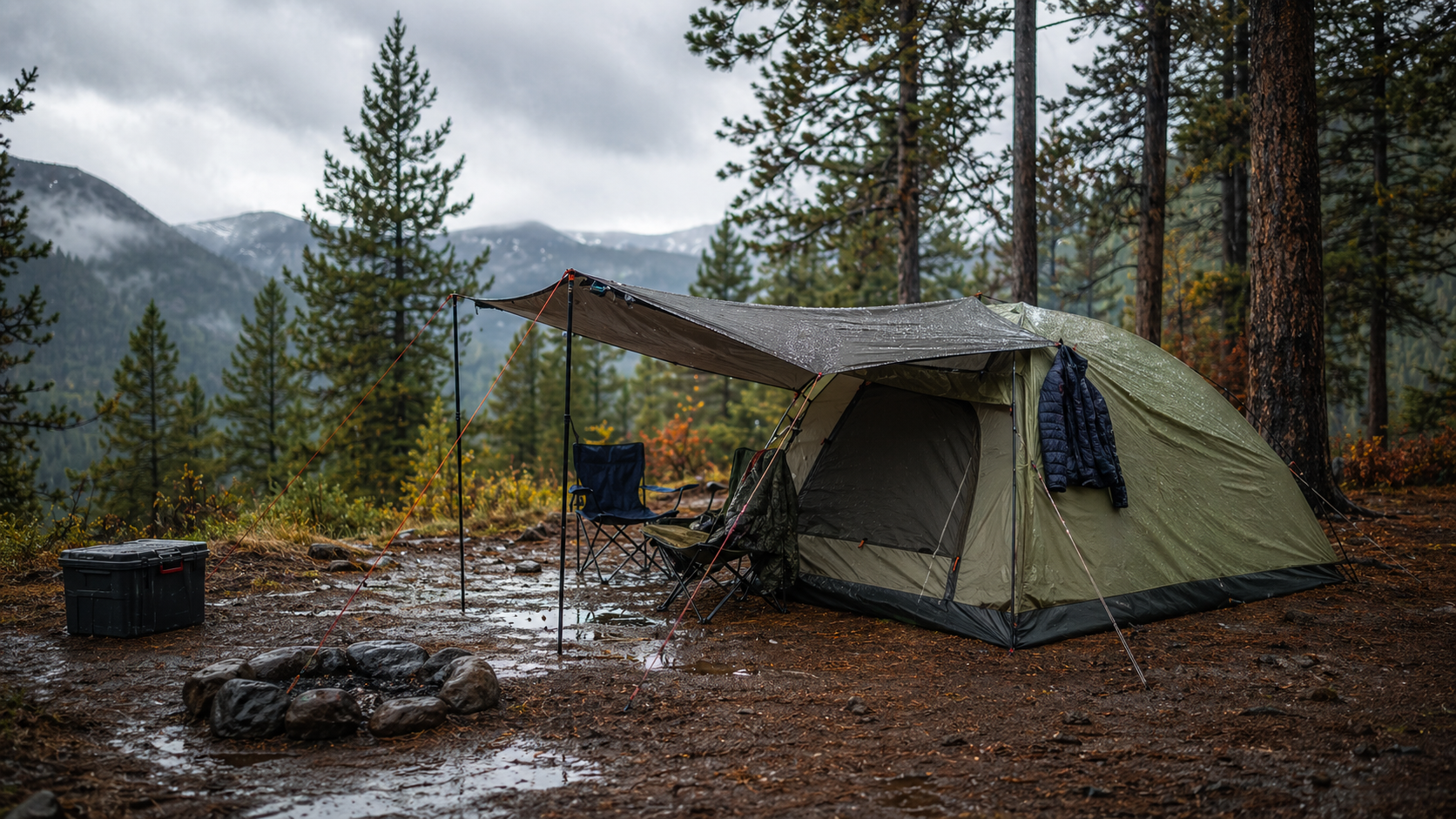
Handle rain, wind, cold, and dust with better shelter angles, dry gear, and exit judgment.
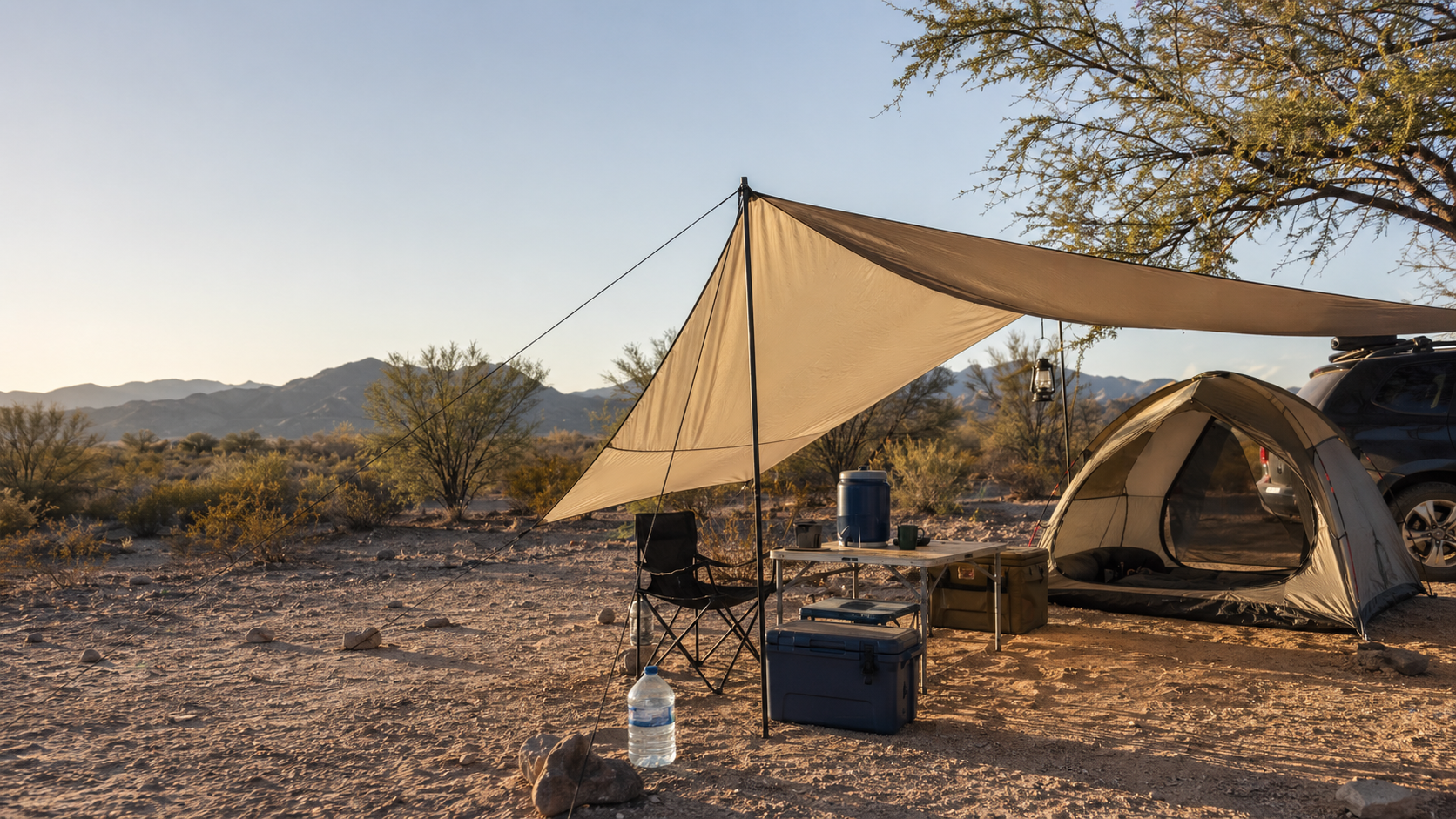
Use elevation, timing, shade, water, airflow, and season choice to avoid a miserable weekend.
Shelter Control
Make fabric behave with lower tarp pitches, cleaner guy lines, better anchor choices, and knots that tension without drama.
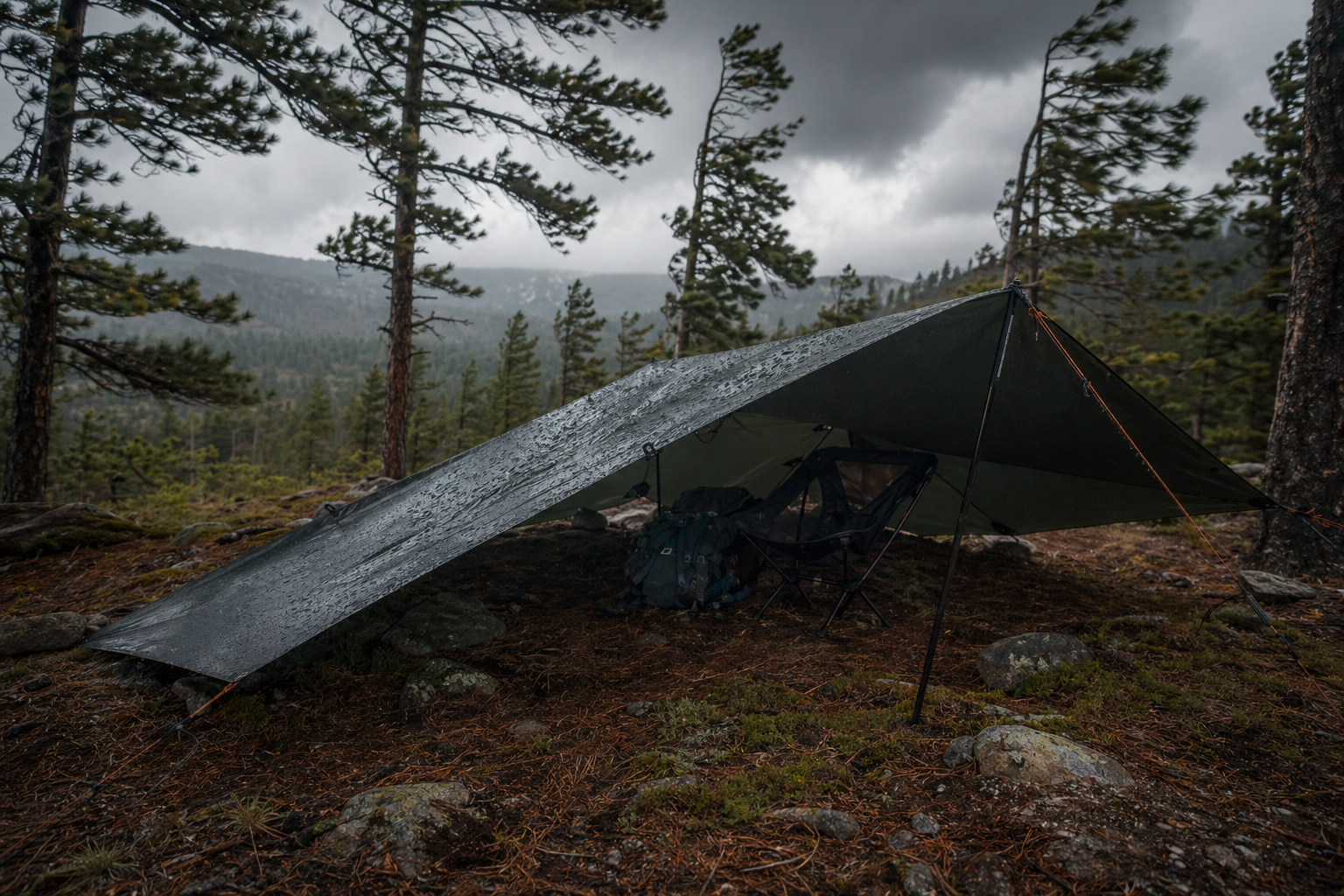
Pitch a tarp lower, tighter, and smarter when wind is trying to turn it into a sail.
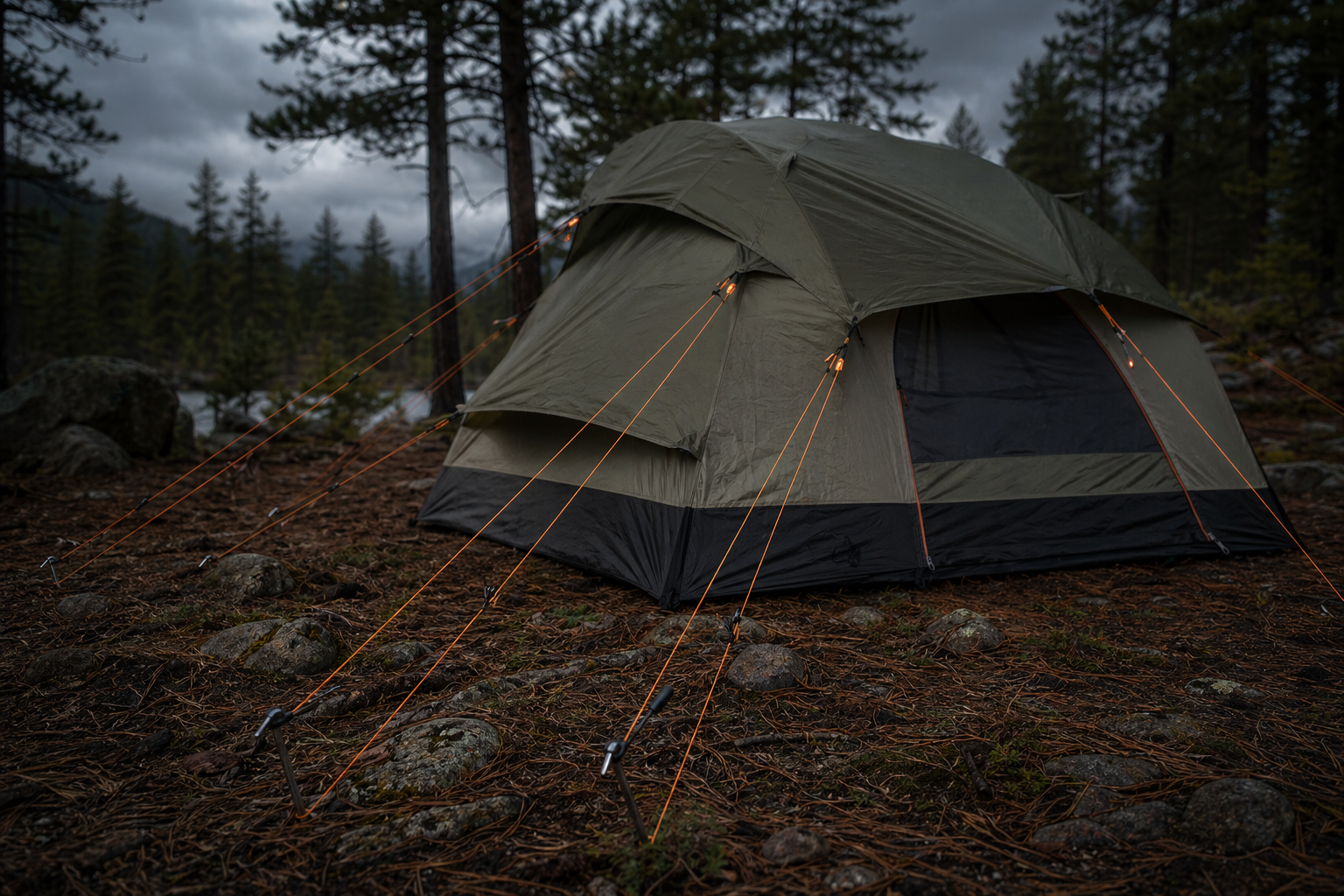
Use guy lines to make a tent quieter, stronger, drier, and less annoying in wind.

Tie a fixed loop that does not cinch down, useful for tarp corners, tie-outs, light hauling, and camp rigging.
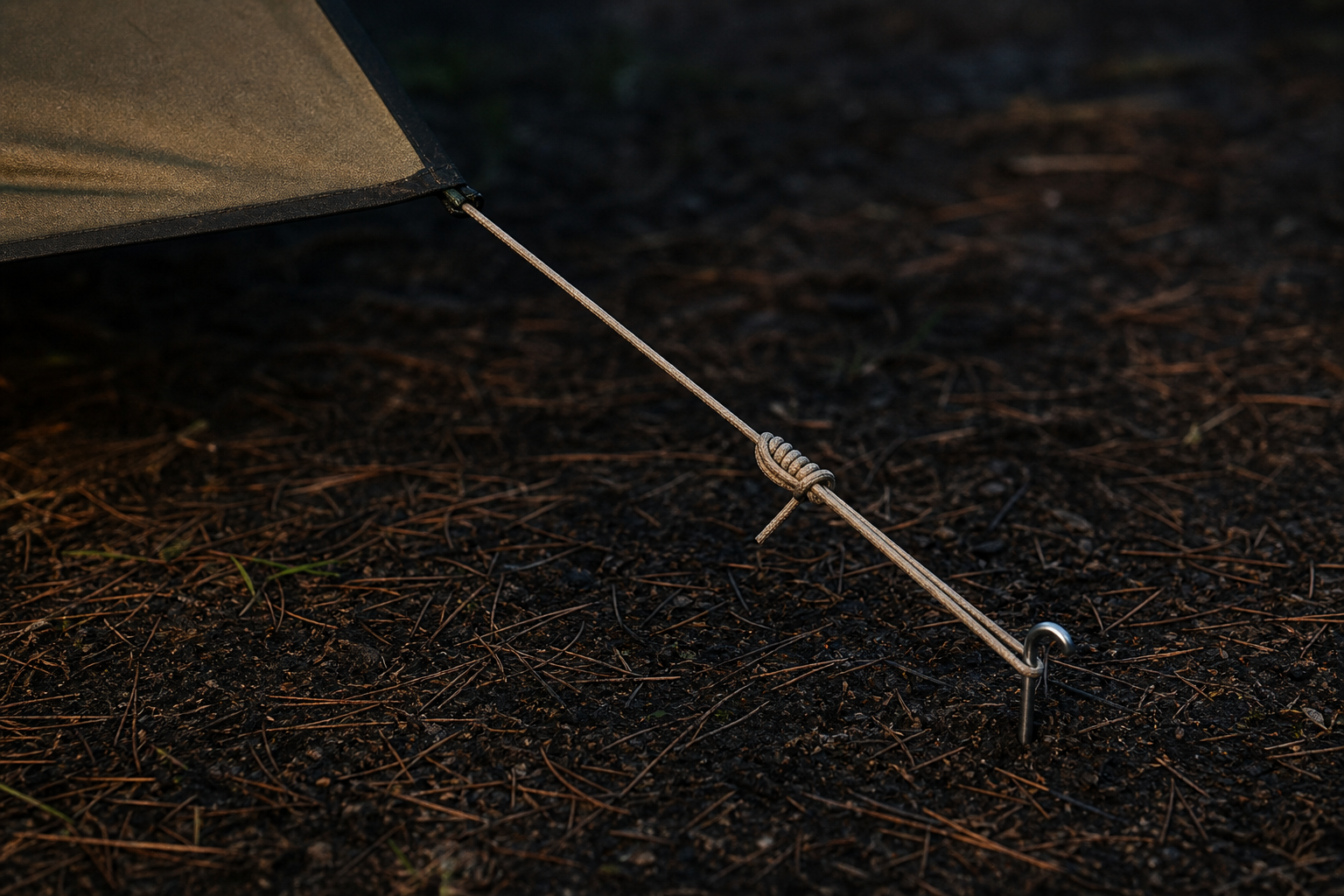
Tie an adjustable hitch for tent and tarp guy lines so you can tighten camp shelter without retying everything.
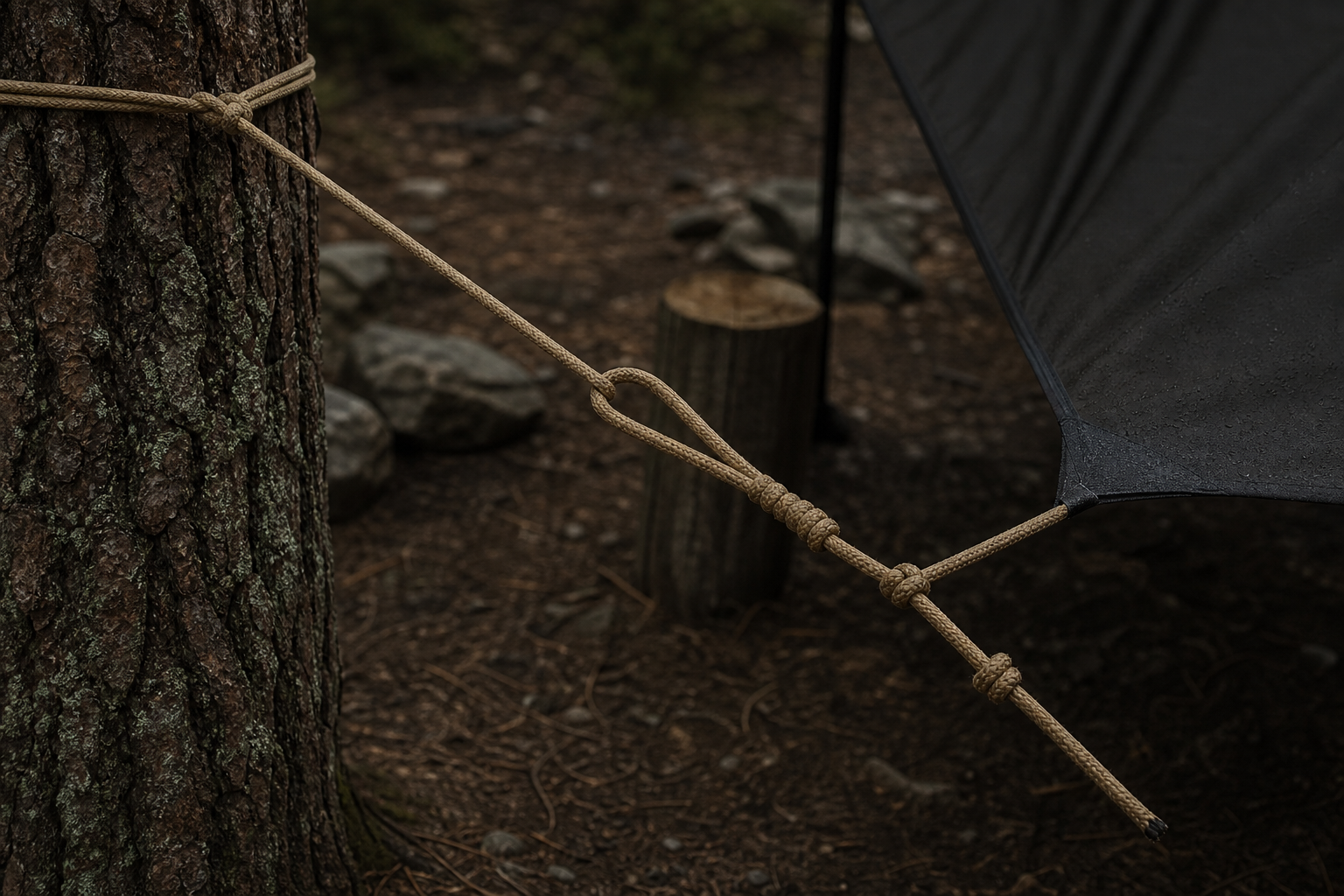
Use a trucker's hitch to tension a tarp ridgeline, light camp load, or utility rope without turning the line into a tangled mess.
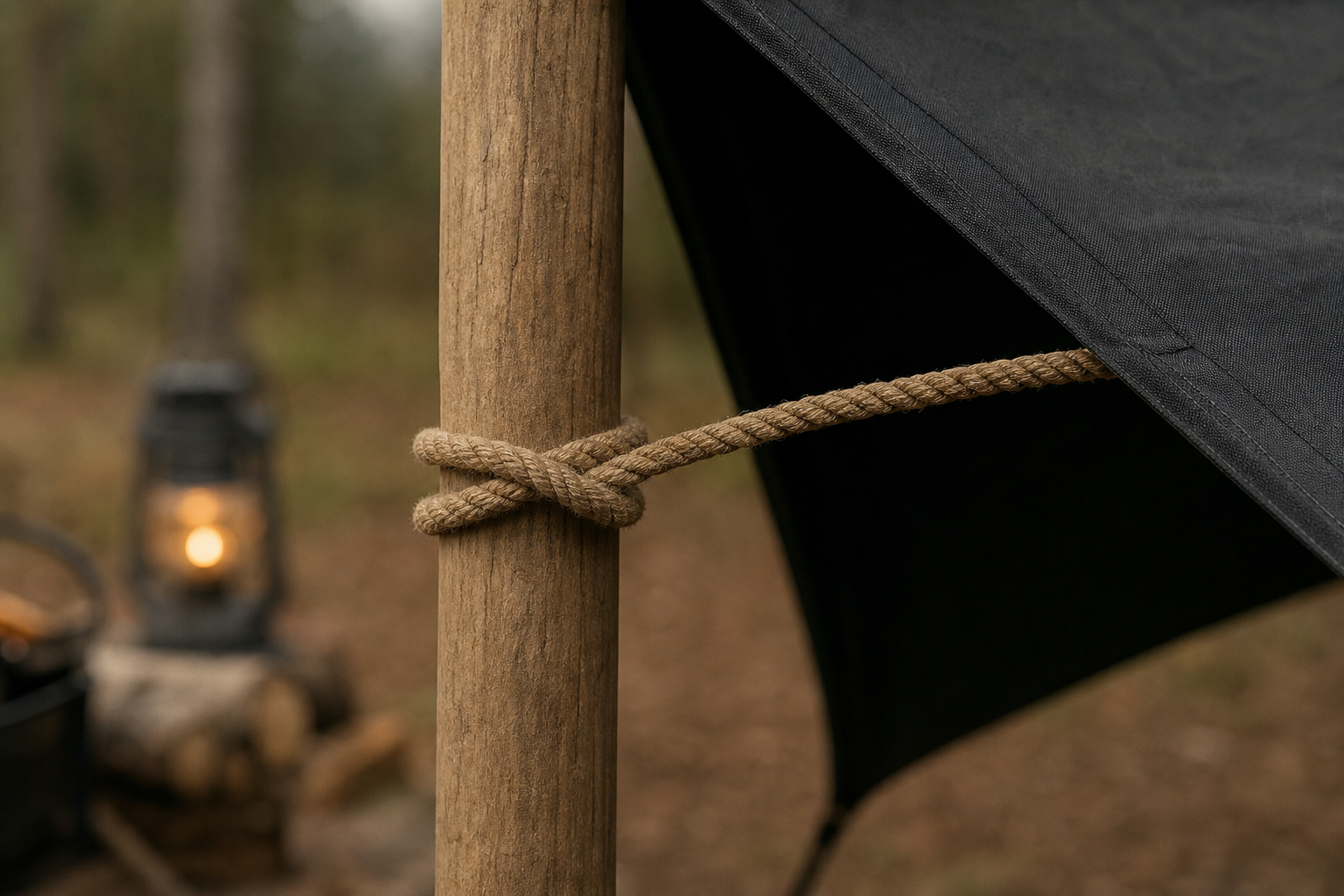
Tie a quick temporary hitch around a post, pole, rail, or tree when you need a simple camp attachment point.
Camp Systems
The quiet systems that make camp feel civilized: cooking, cold food, clean water, hand washing, dishes, trash, and gray water.
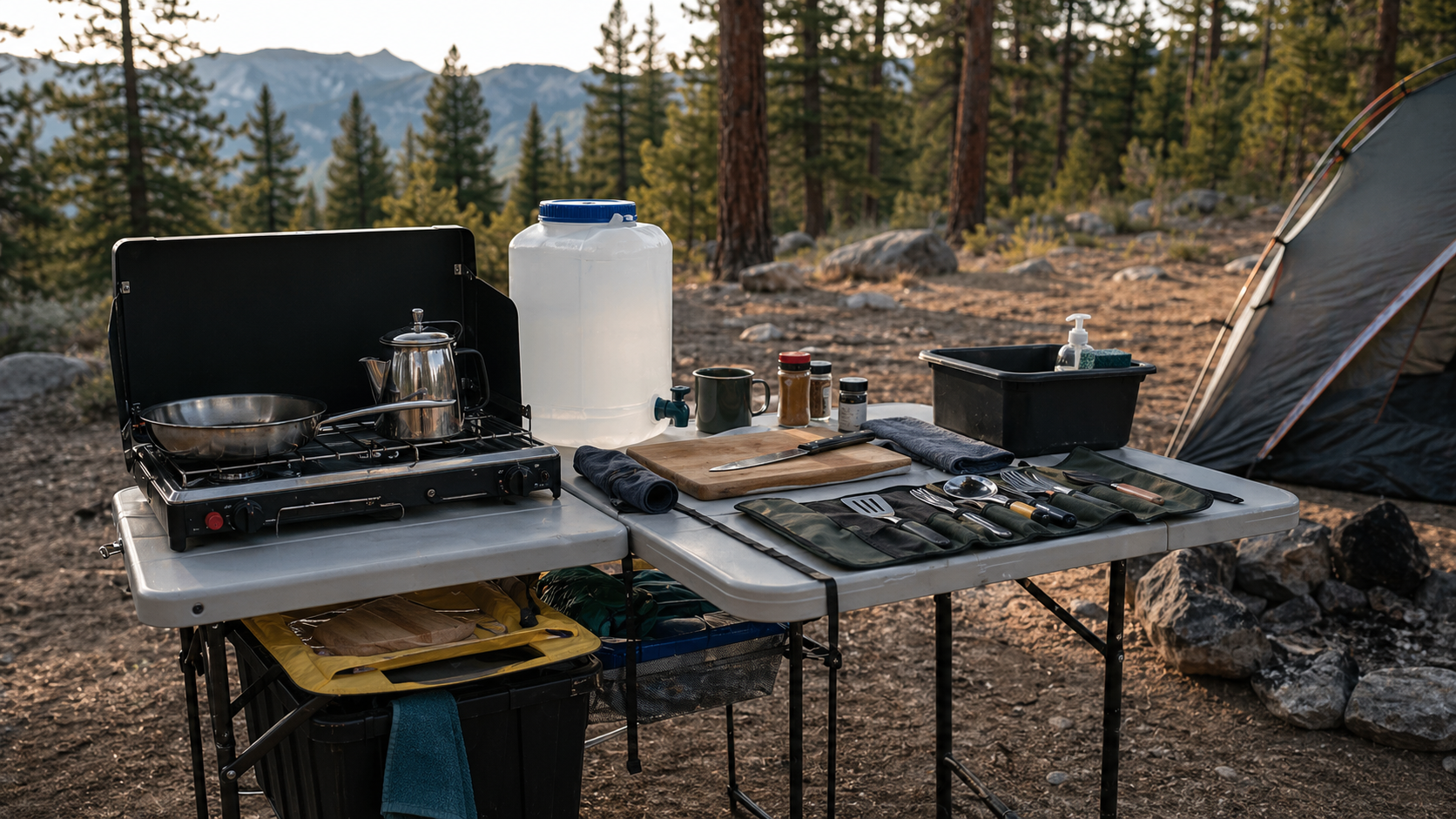
A compact kitchen system for cooking, prep, water, cleanup, storage, and trash.
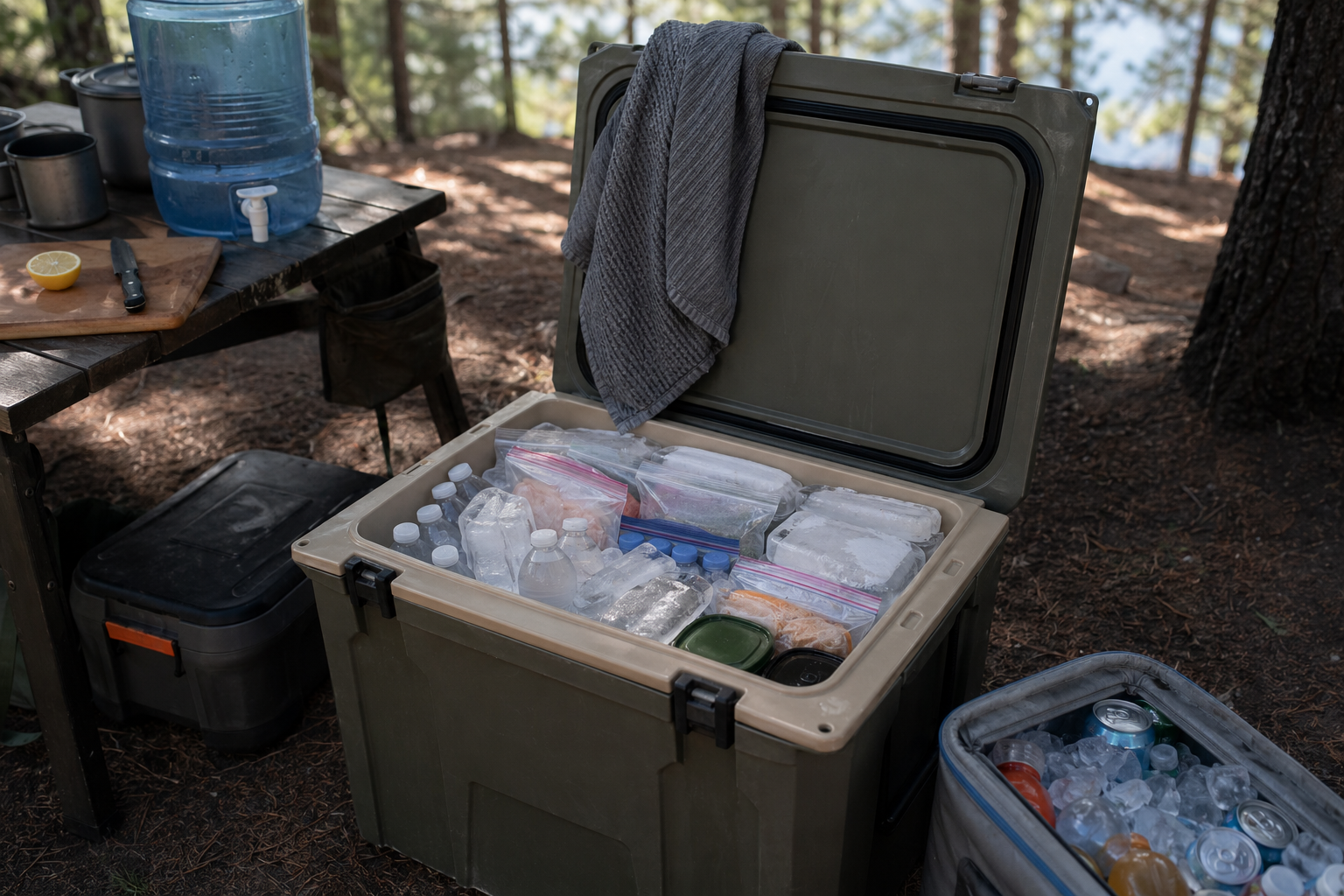
Keep food cold with pre-chilling, tighter packing, shade, and fewer lid-open disasters.
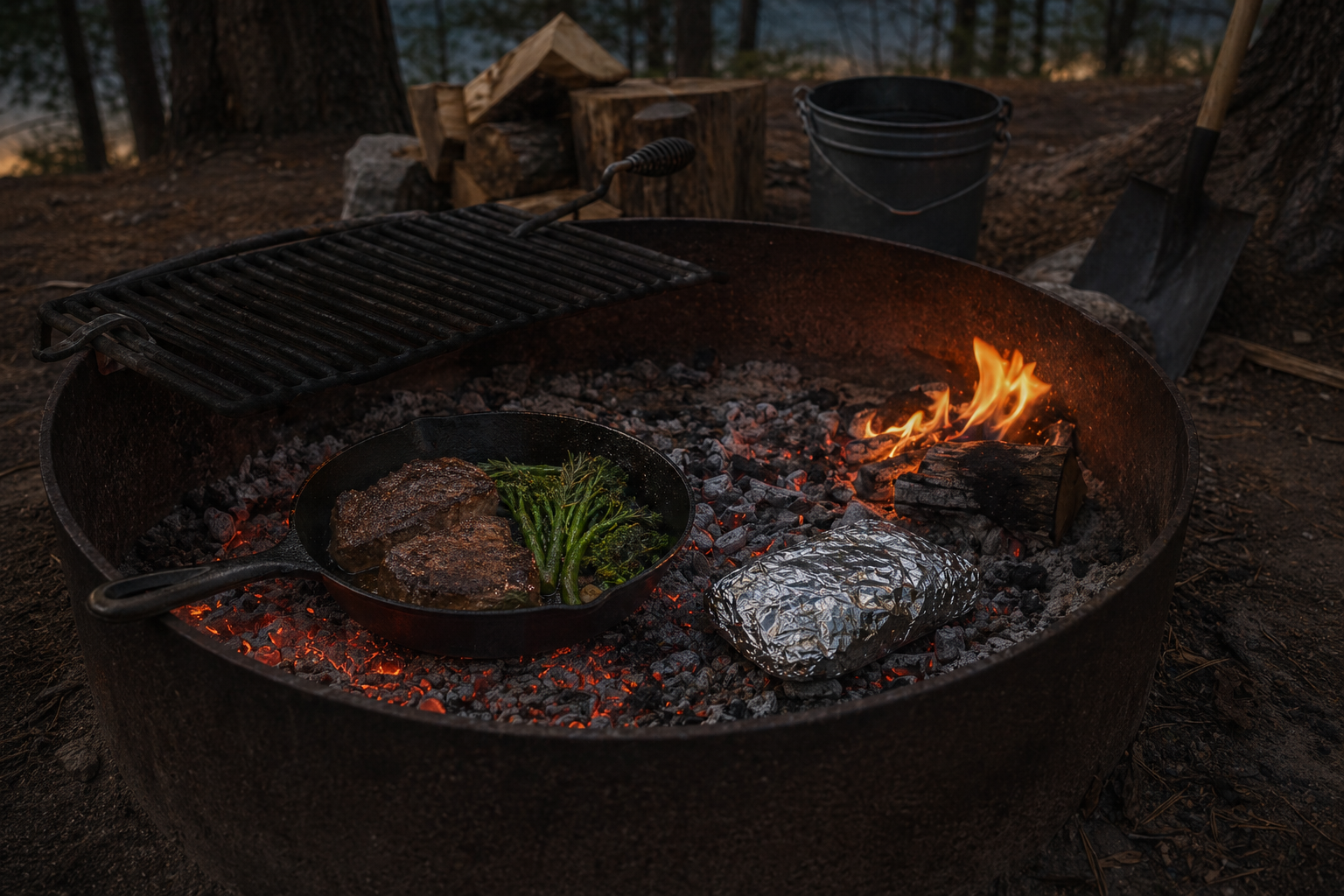
Cook on steady campfire coals instead of chasing tall flames and scorched food.

Keep dirty and clean sides separate, know filter versus purifier limits, and protect wet hollow-fiber filters from freezing.
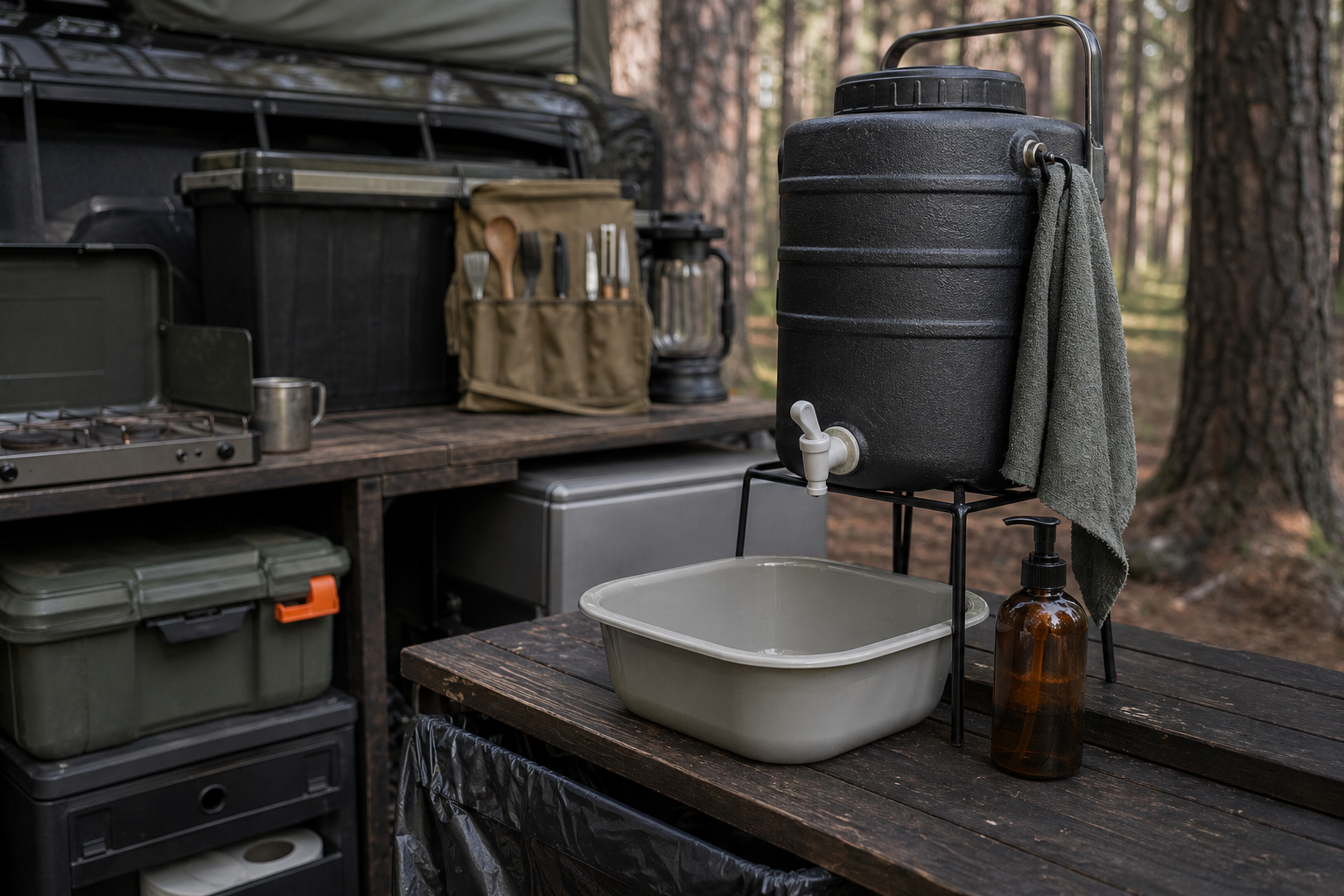
Build a simple hand-washing station people will actually use before cooking and eating.
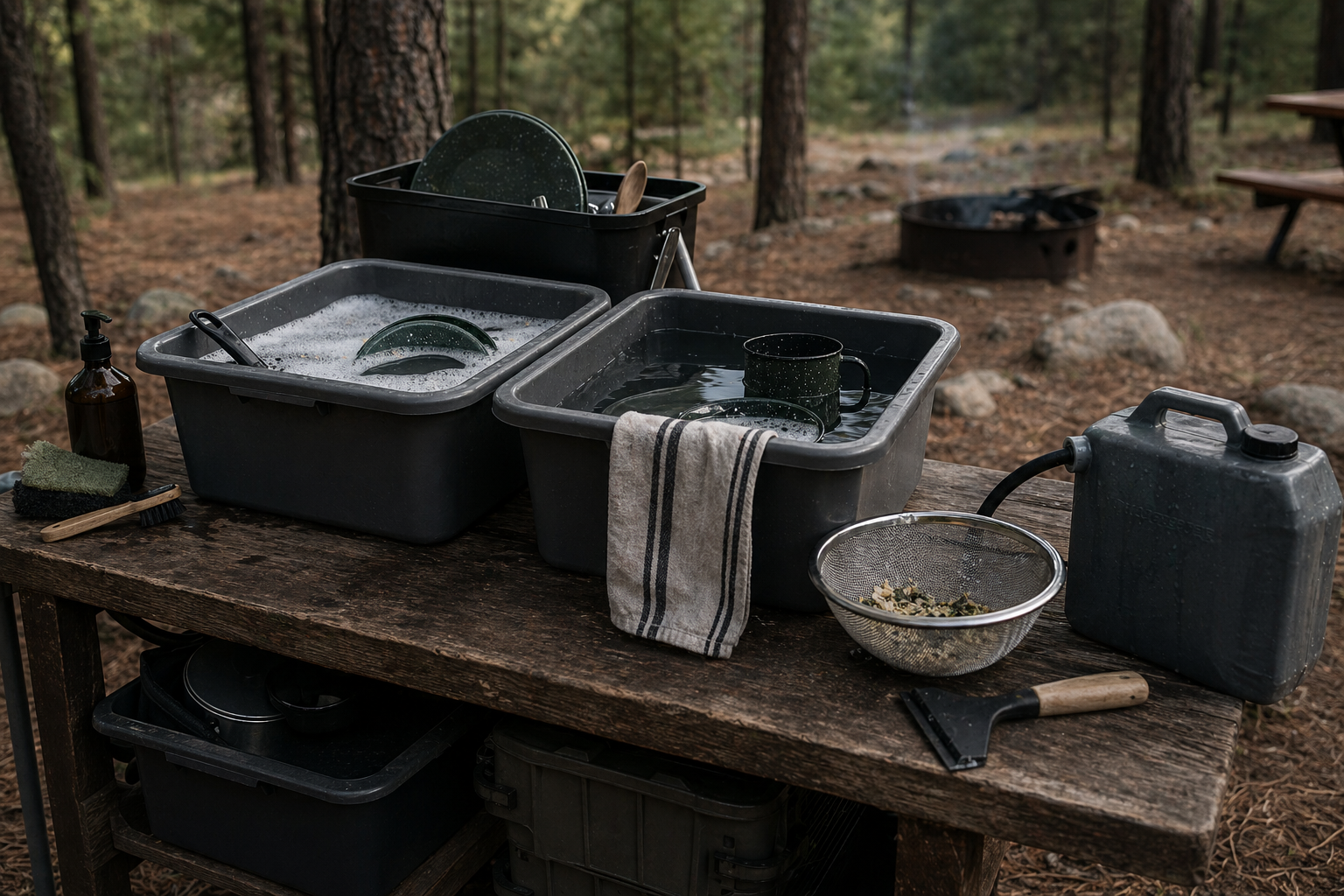
Wash dishes without greasy ground, food scraps in the wrong place, or a sink nobody wants to touch.
Small Fixes
Small repairs and basic map skills for the problems that are easy to ignore until they own the afternoon.
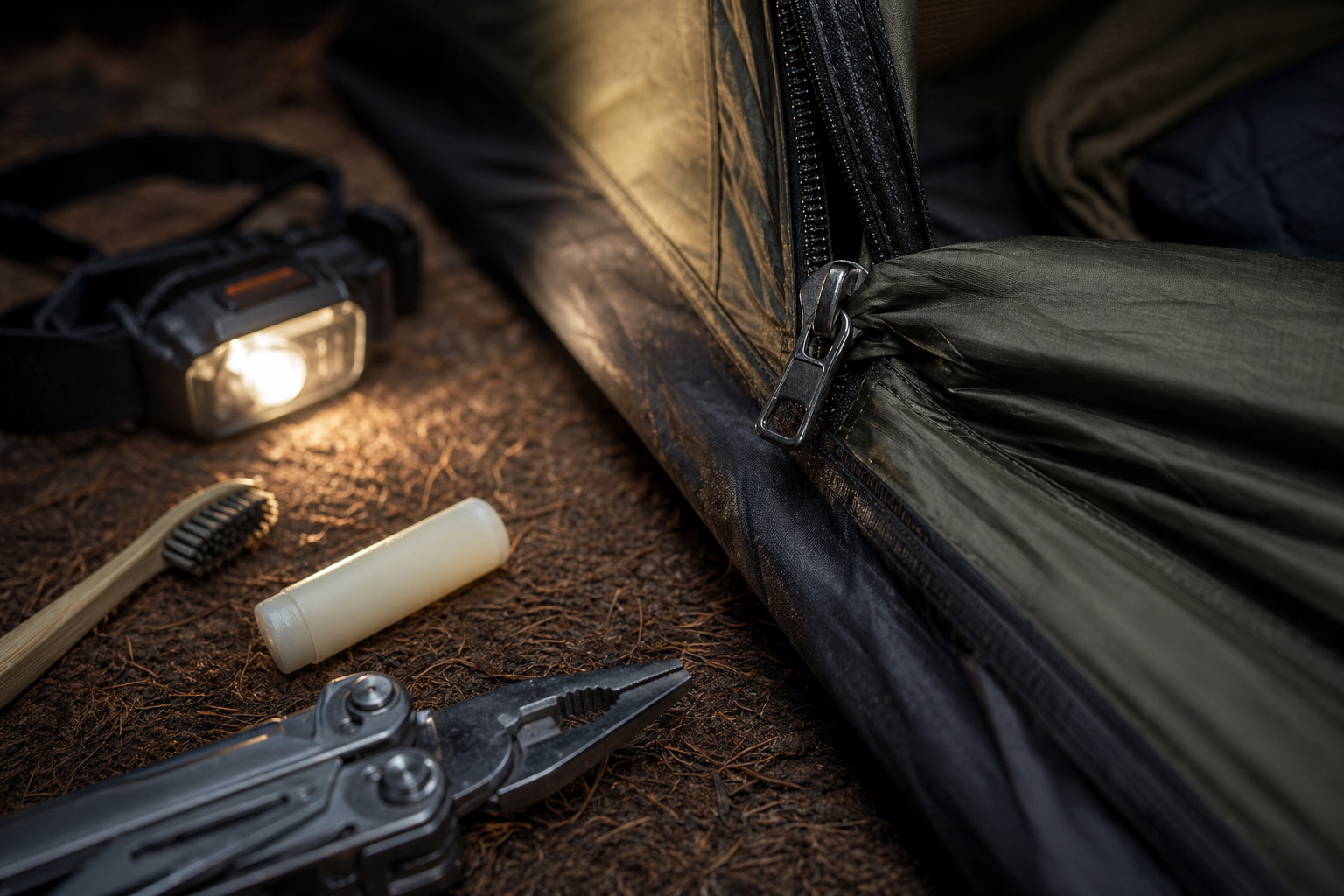
Free a tent, jacket, bag, or sleeping-bag zipper without ripping fabric or bending teeth.
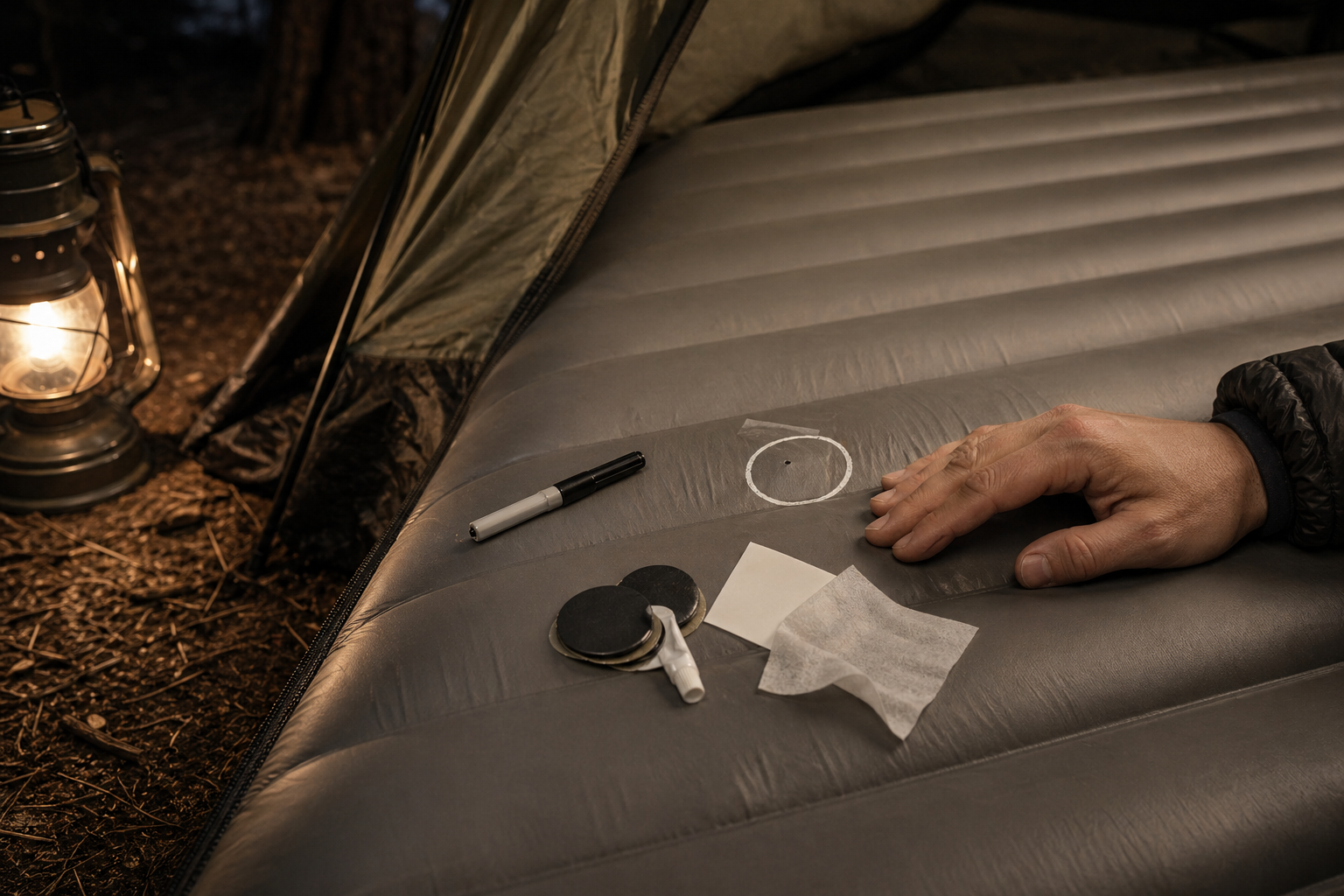
Find a slow leak, prep the surface, apply the right patch, and give it time to bond.
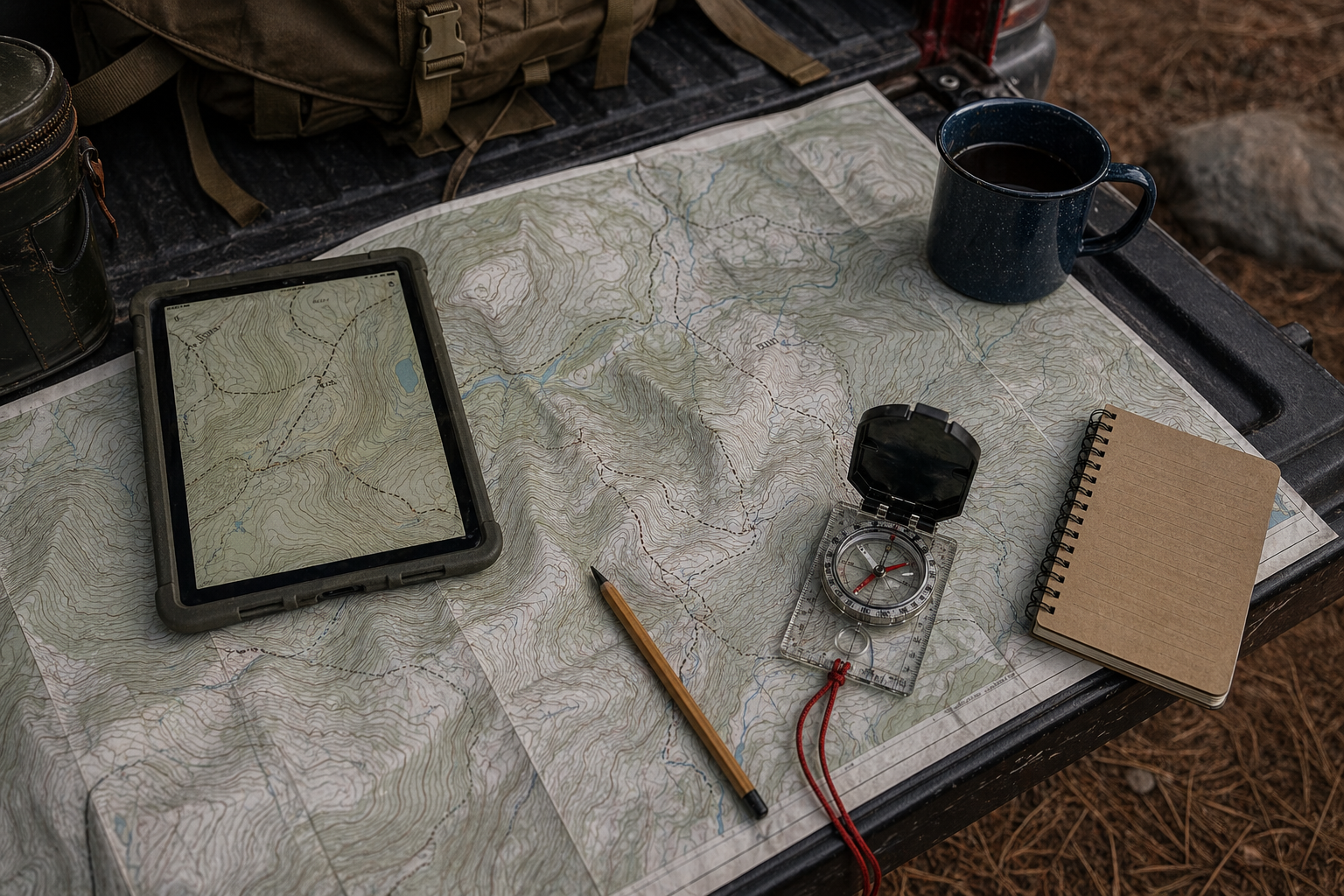
Use contours, drainages, roads, and elevation to spot terrain problems before you arrive.
Firecraft
Build fires that behave, put them out fully, make kindling without rushing, and keep edge tools useful.
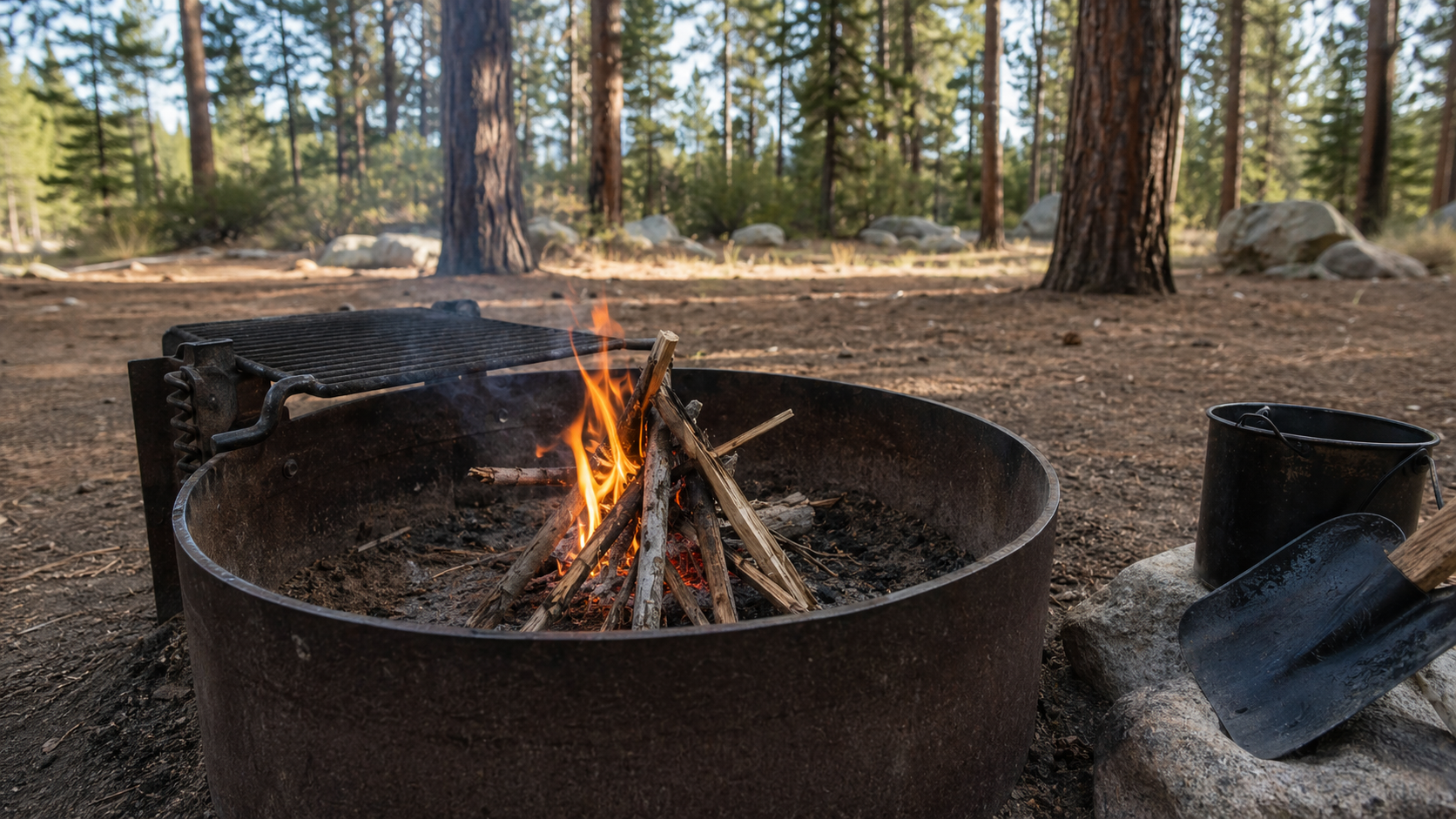
Build a small, controllable fire with tinder, kindling, fuel wood, water, and a clean ring.
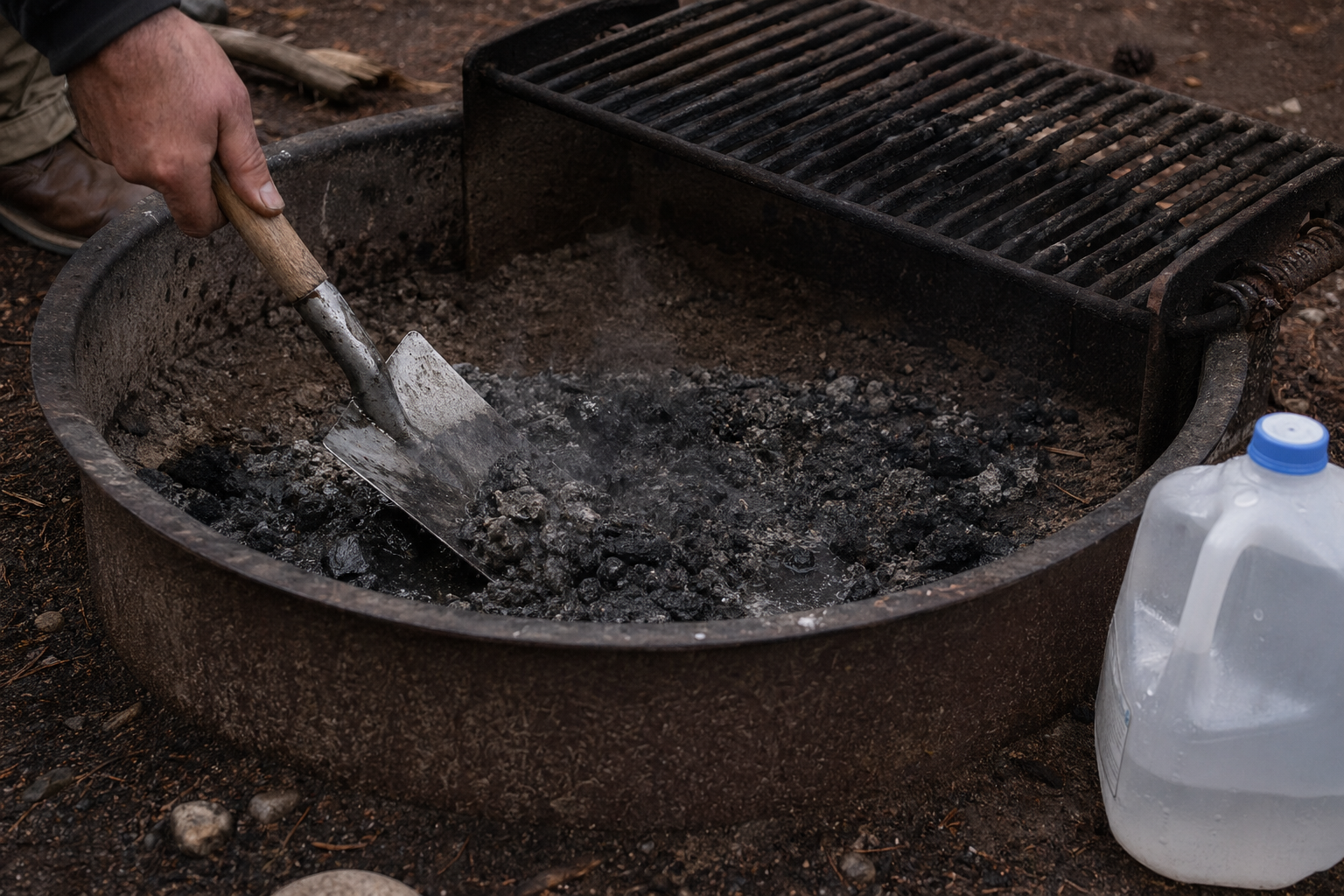
Drown, stir, feel, and repeat until the fire ring is wet, cold, and boring.
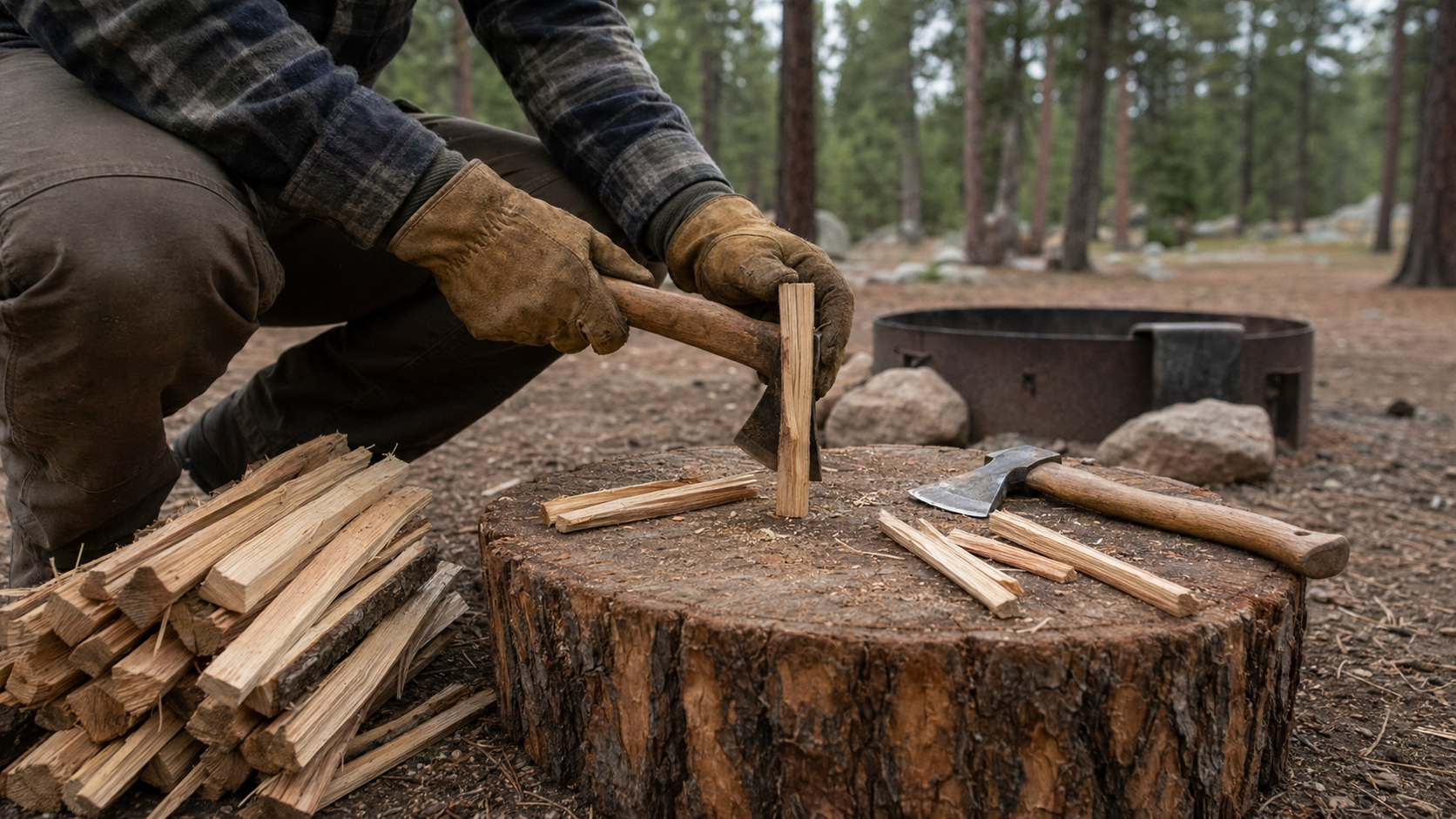
Make dry starter pieces while keeping fingers, knees, and rushed swings out of the path.

Refresh a working edge with a stone, steady angle, light pressure, and a clean burr.
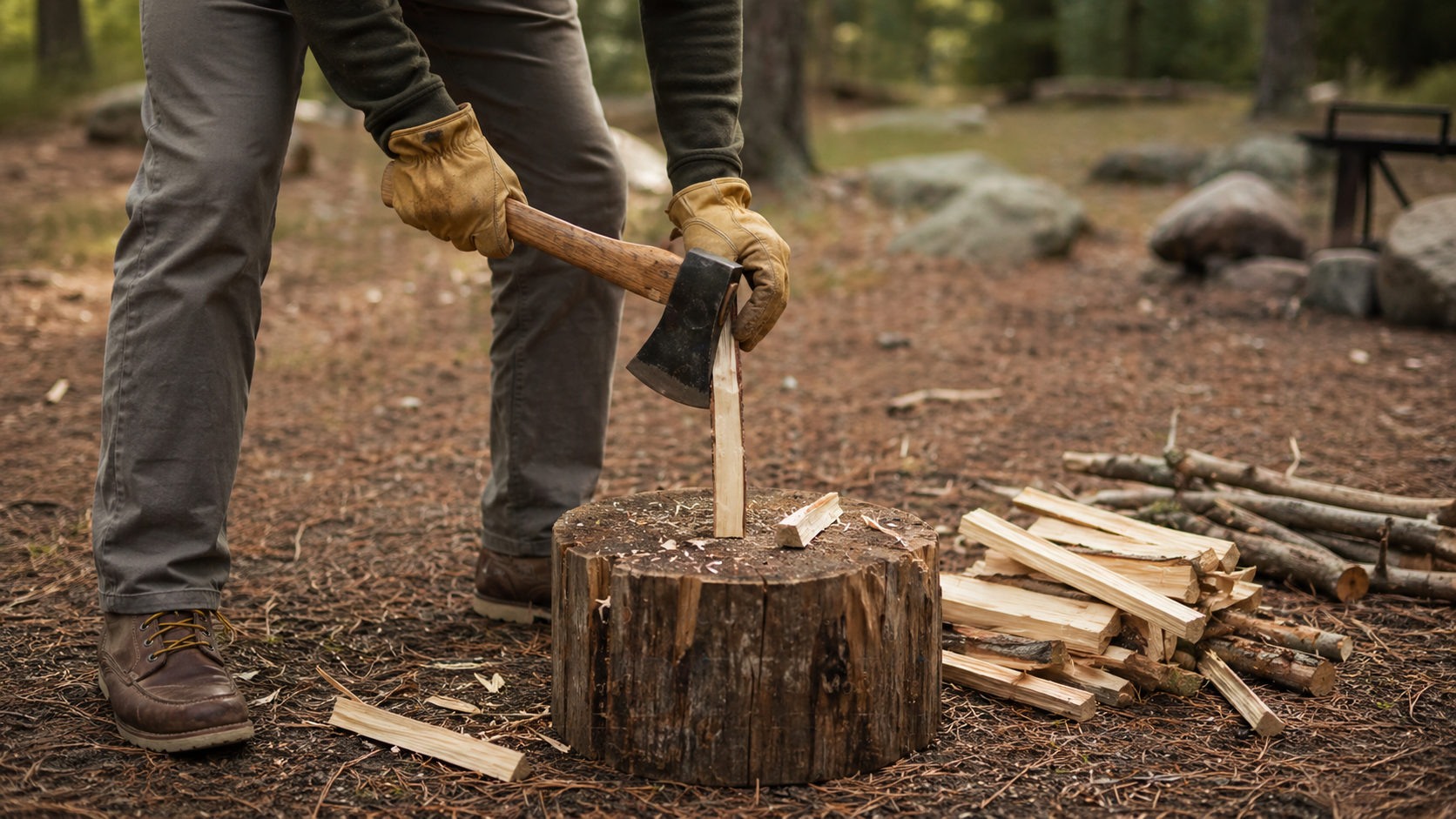
Use a clear swing path, a chopping block, controlled body position, and no rushed cuts.
Vehicle Skills
Vehicle basics for camp roads and driveways: trailers, straps, tires, batteries, chains, generators, and recovery judgment.
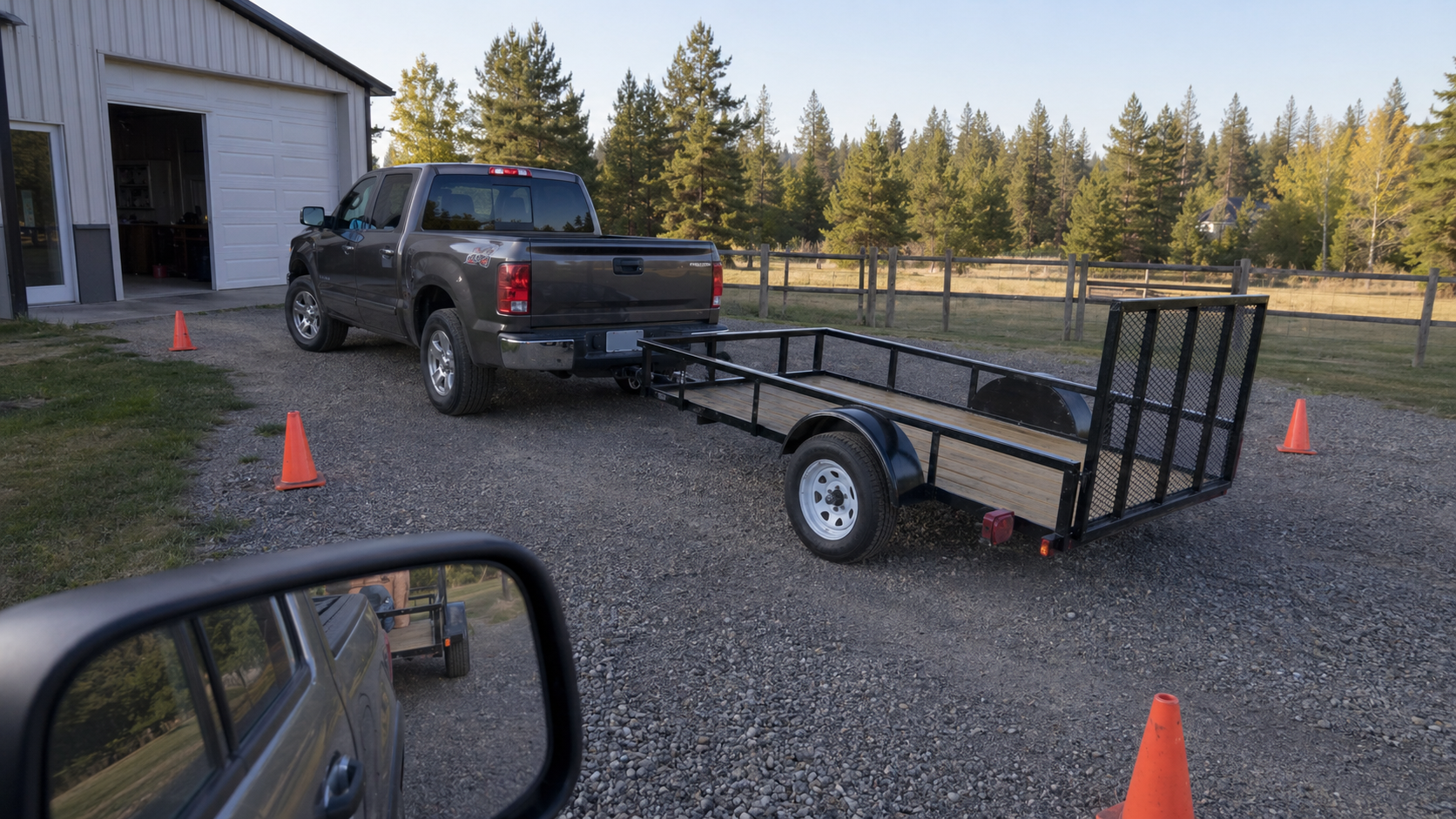
Back slowly with a plan, a spotter, small corrections, and permission to pull forward.
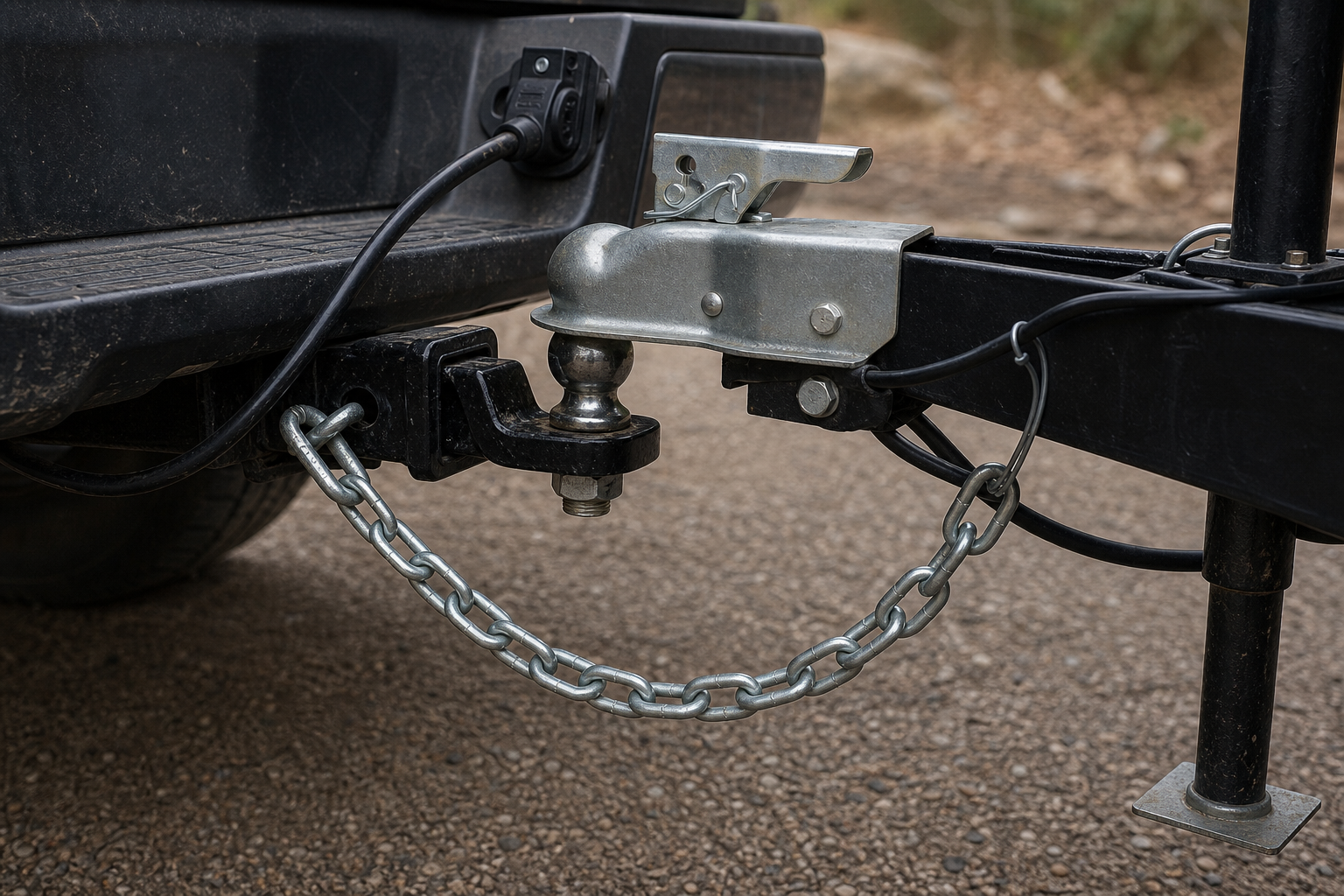
Seat the coupler, cross chains, check lights, connect breakaway, and do the last walkaround.
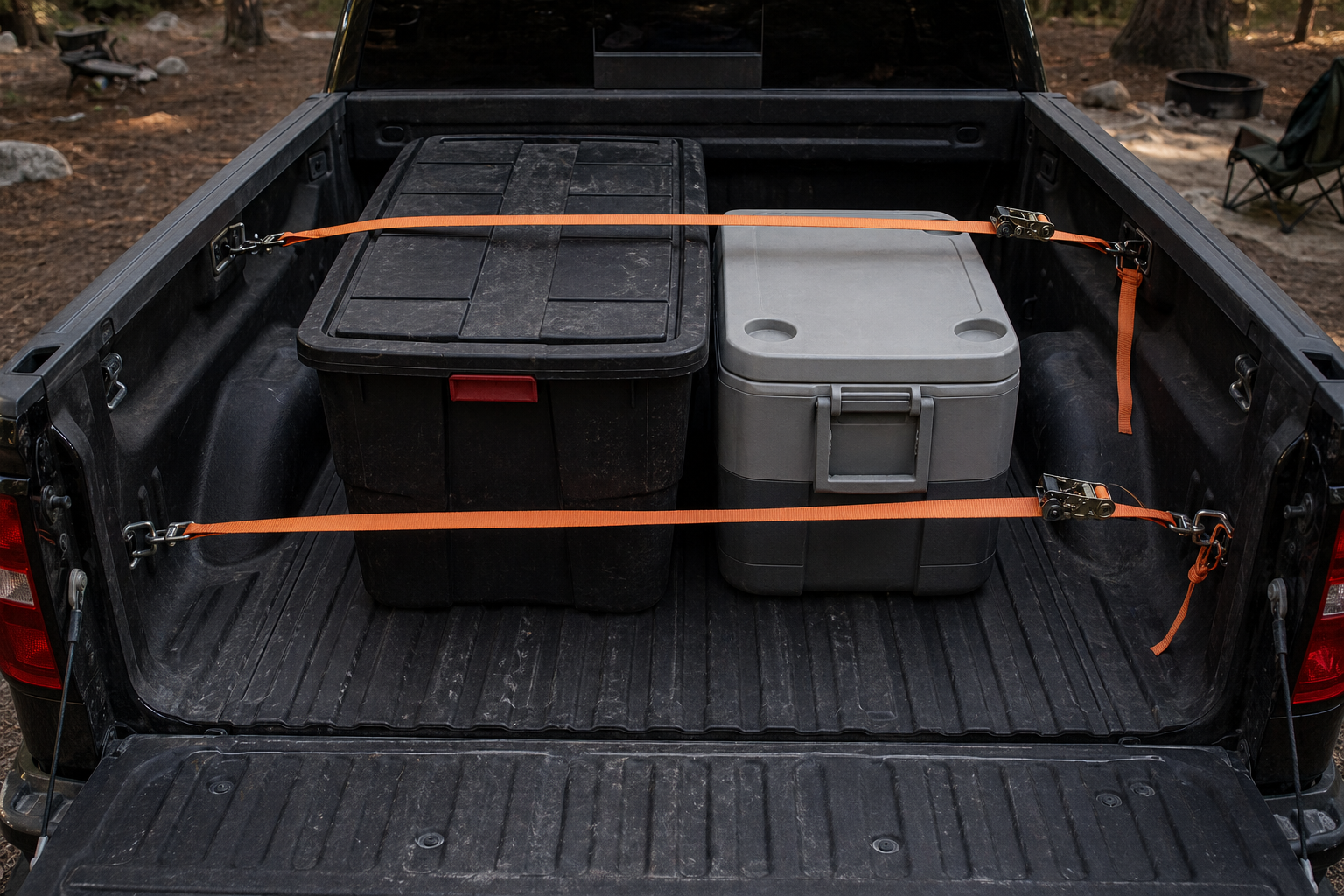
Use readable working load limits, solid anchors, flat webbing, edge protection, and enough straps to control movement.
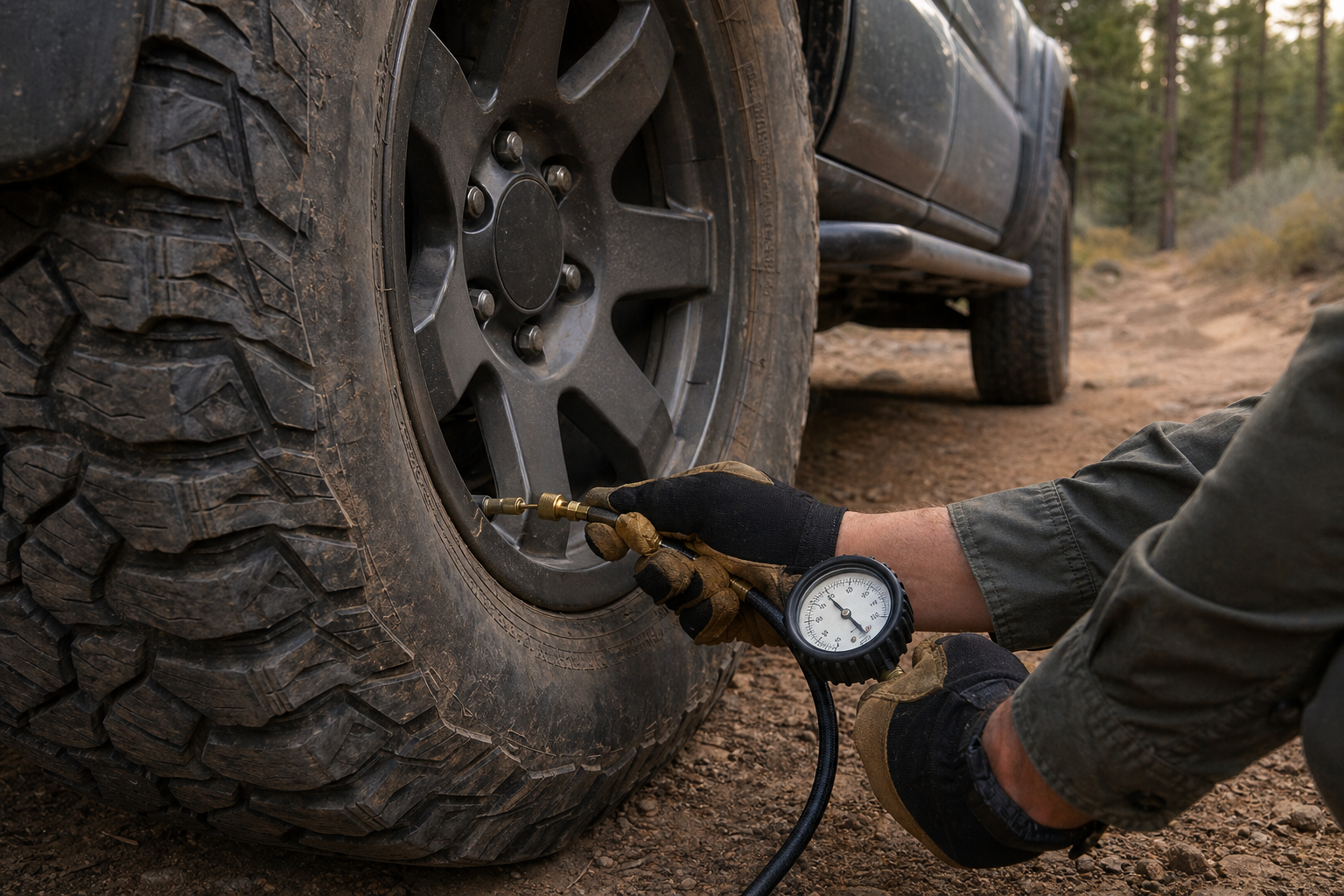
Air down for rough roads, sand, snow, and washboard, then air back up before pavement.
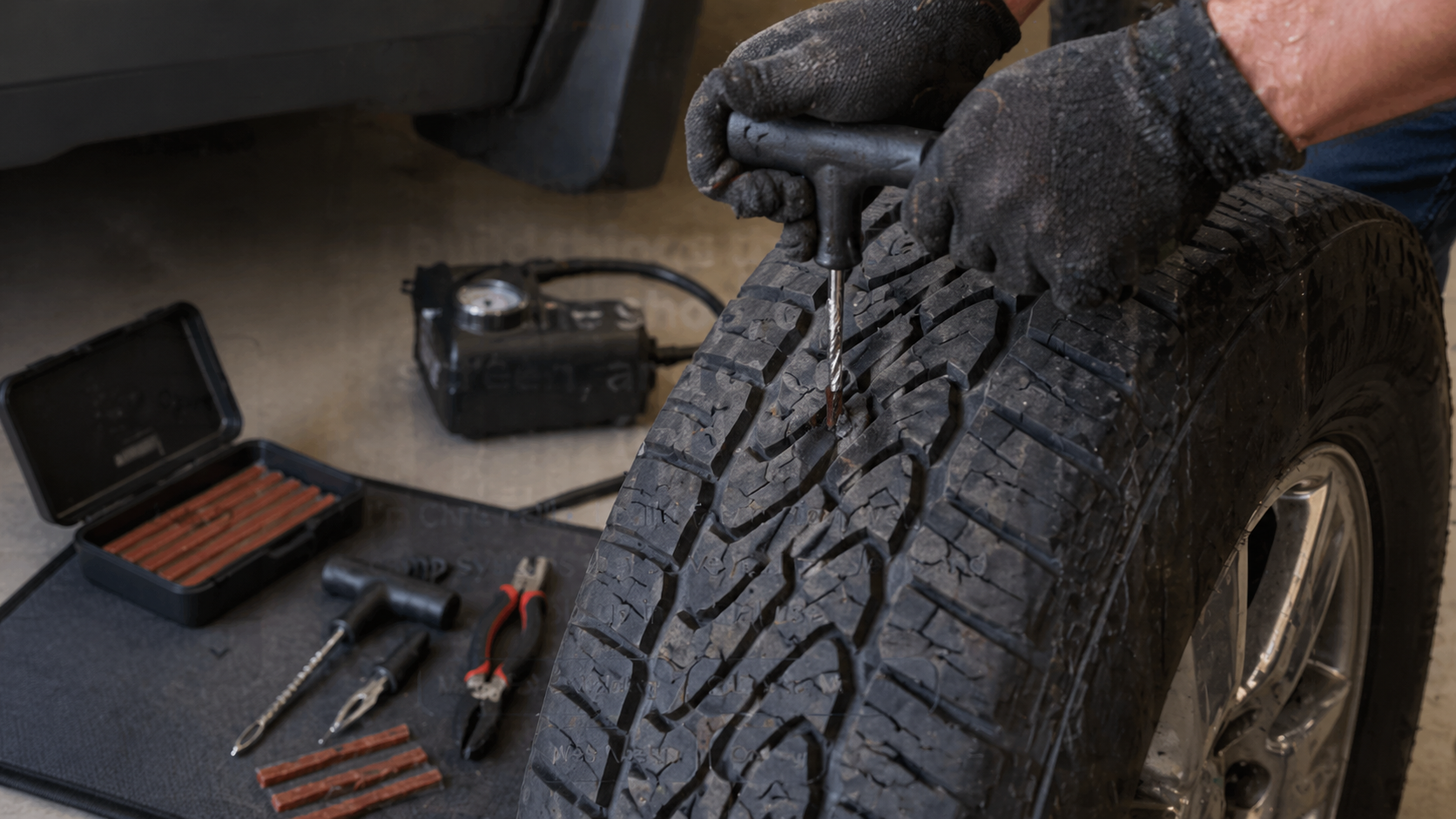
Use a plug as a temporary tread-puncture fix, skip sidewalls and shoulders, and get the tire inspected from the inside.
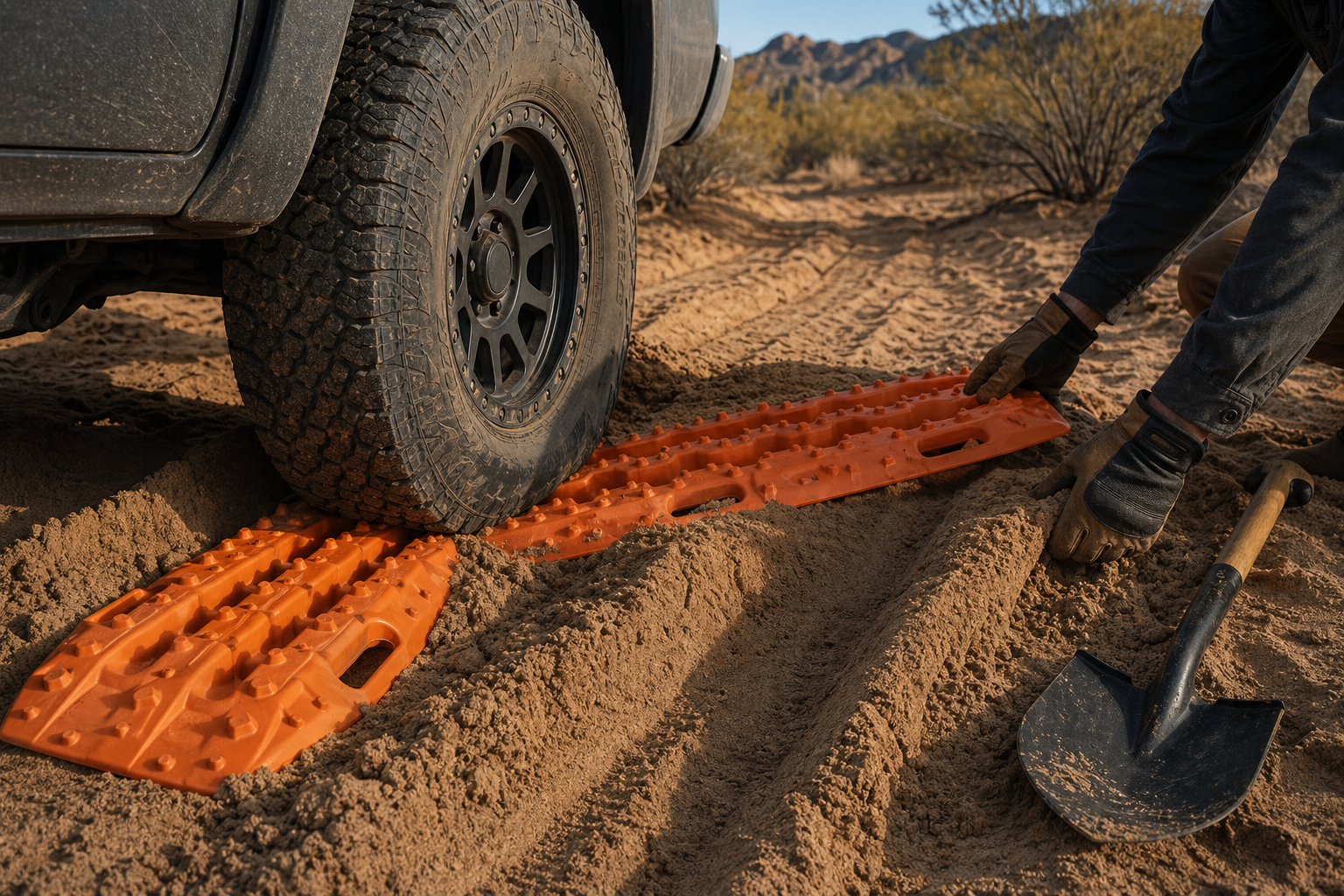
Clear the tire path, wedge boards firmly, and use slow throttle instead of wheelspin.
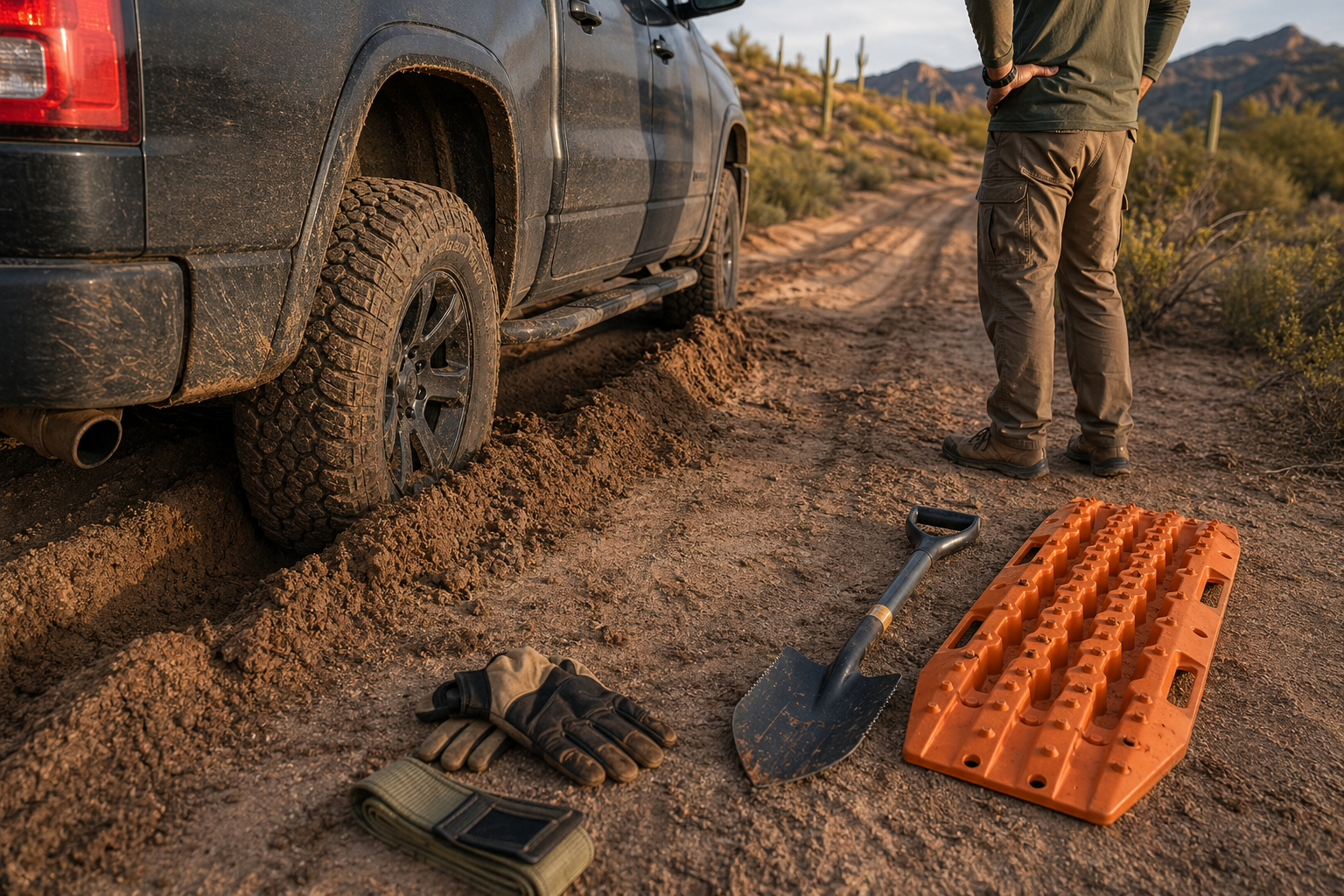
Stop spinning, understand why you are stuck, clear the path, and recover with traction.
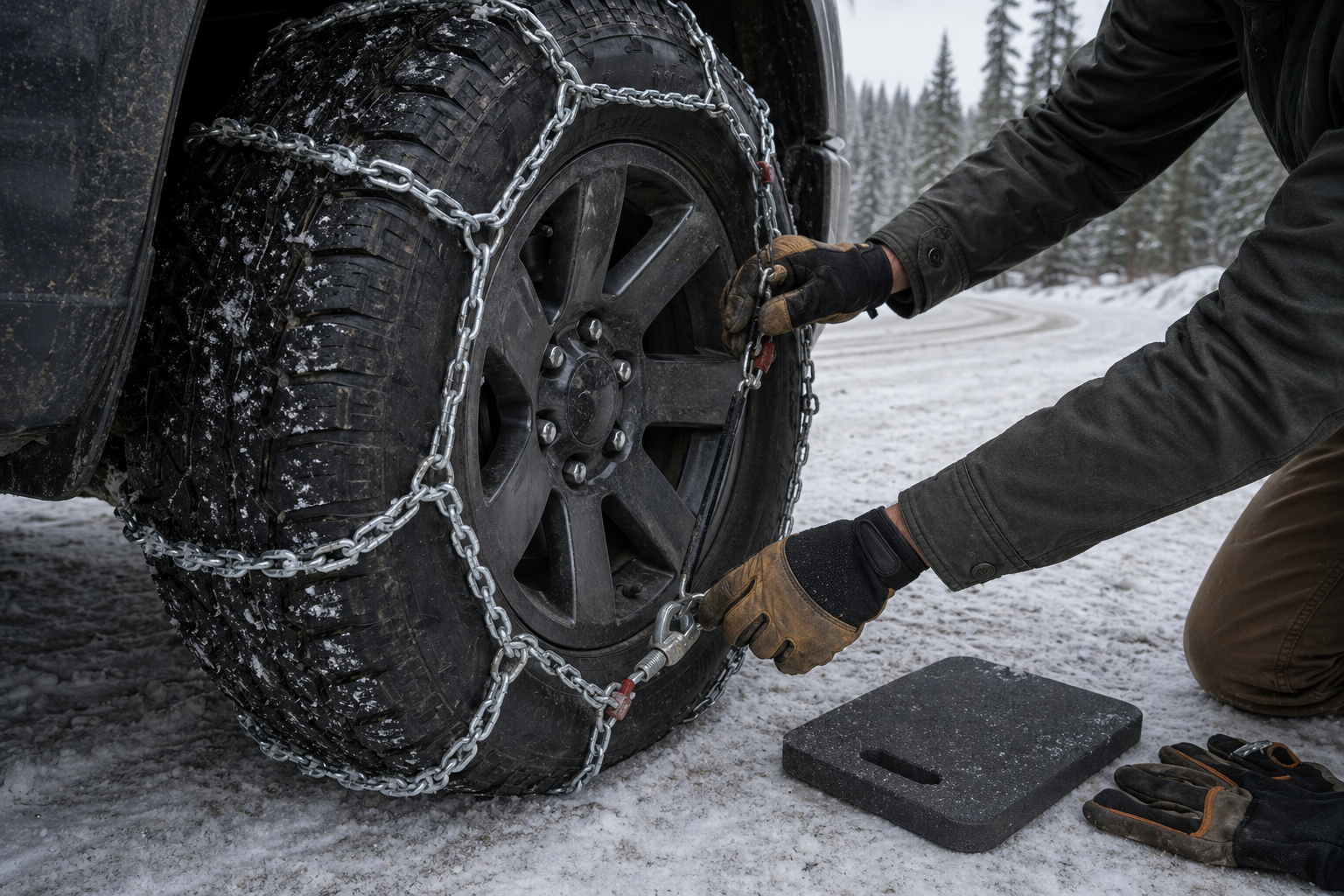
Fit chains before the bad section, keep them snug, drive slowly, and remove them on dry pavement.
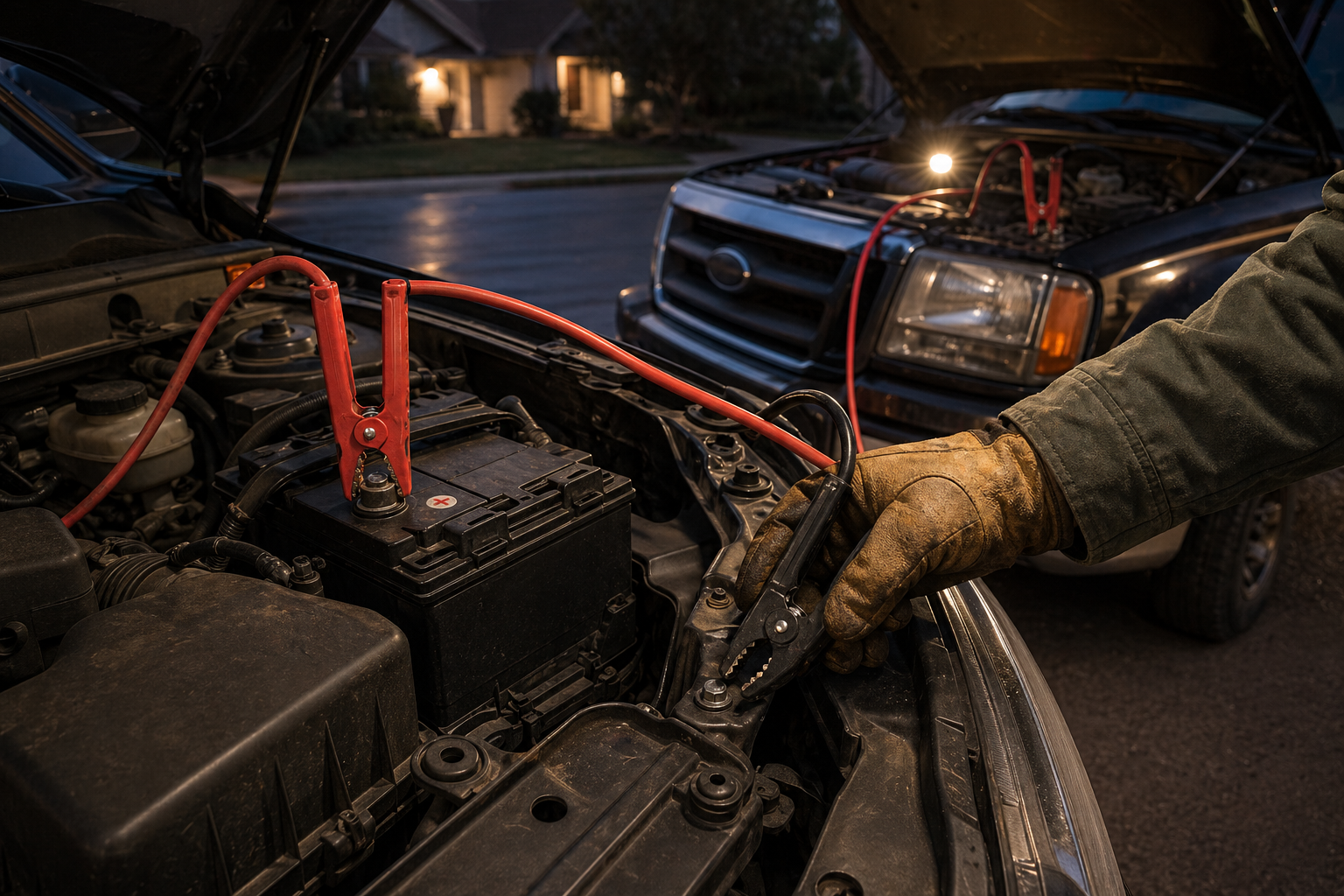
Inspect the battery, use jumper cables in the safer order, or use a NOCO Boost pack when a self-contained jump is cleaner.
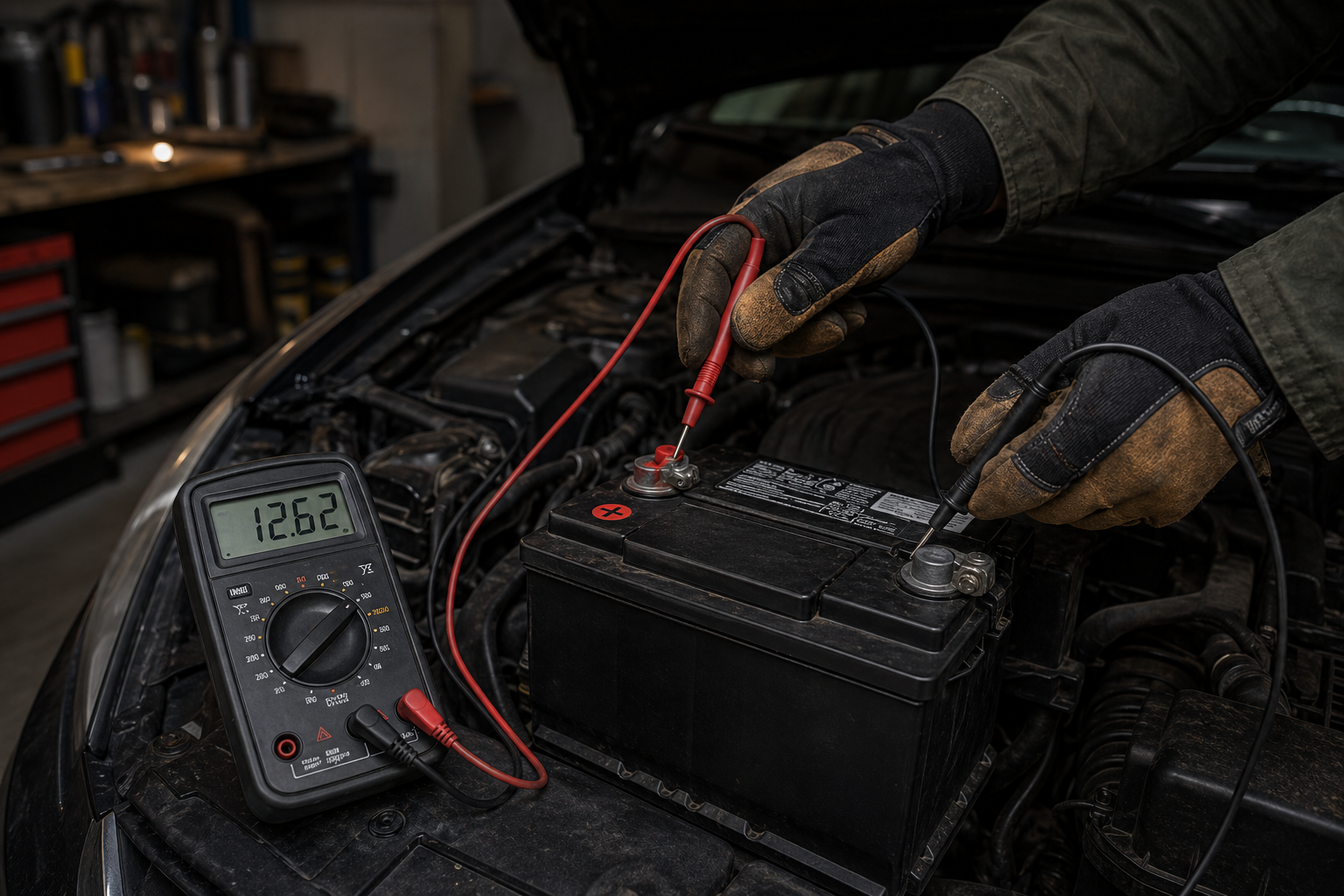
Use a multimeter to get a useful first read on a 12V car battery, then understand what voltage can and cannot tell you.
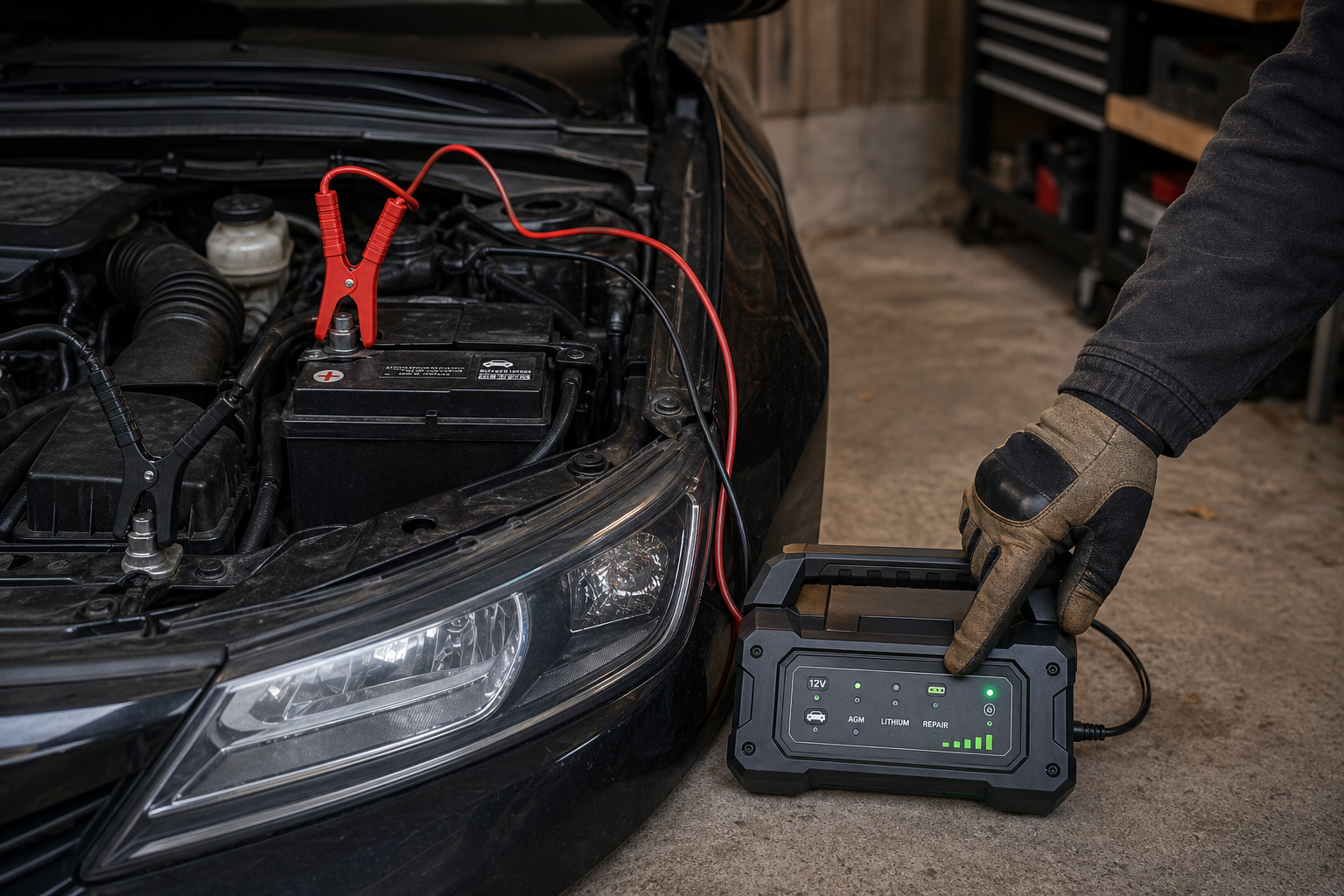
Pick the right charger mode, ventilate the area, avoid casual force modes, and know when a dead battery is done.
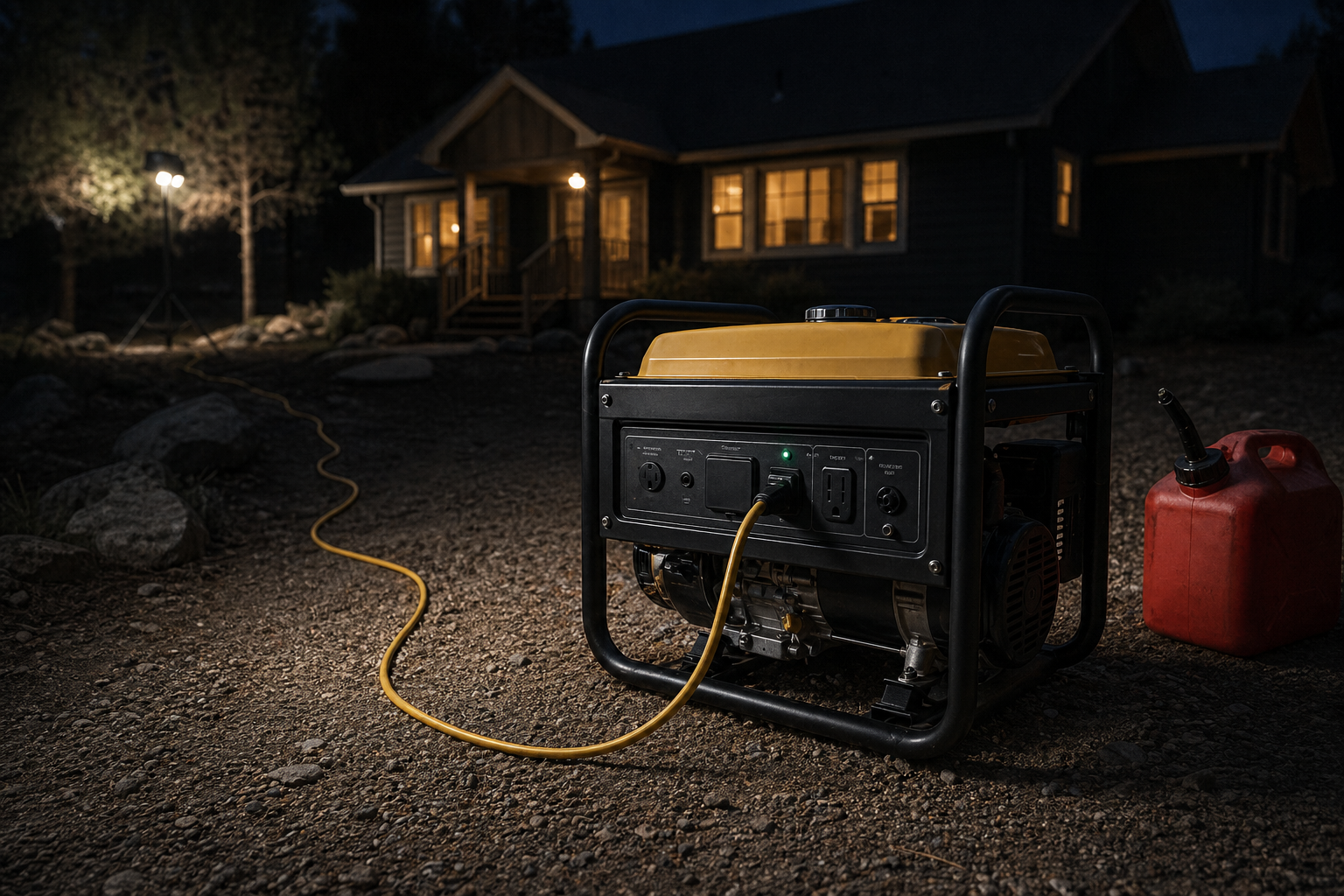
Use a portable generator outside, 20 feet from openings, with dry grounded cords, no backfeed, CO alarms, and cold refueling.
Fabrication Basics
Basic measuring and electrical skills for projects where guessing turns into rework.
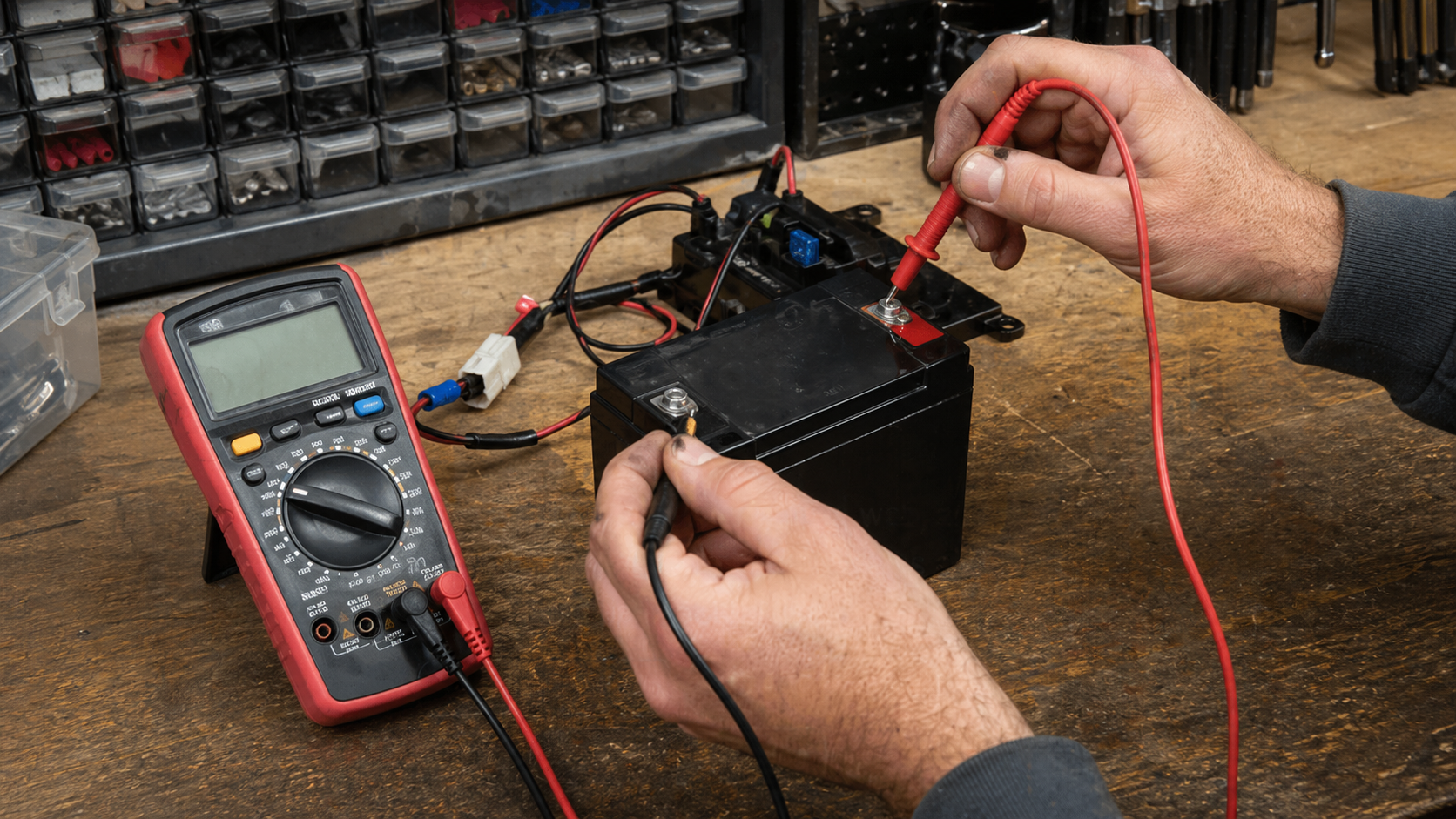
Choose the right jack, mode, range, and rating before touching the probes to anything.
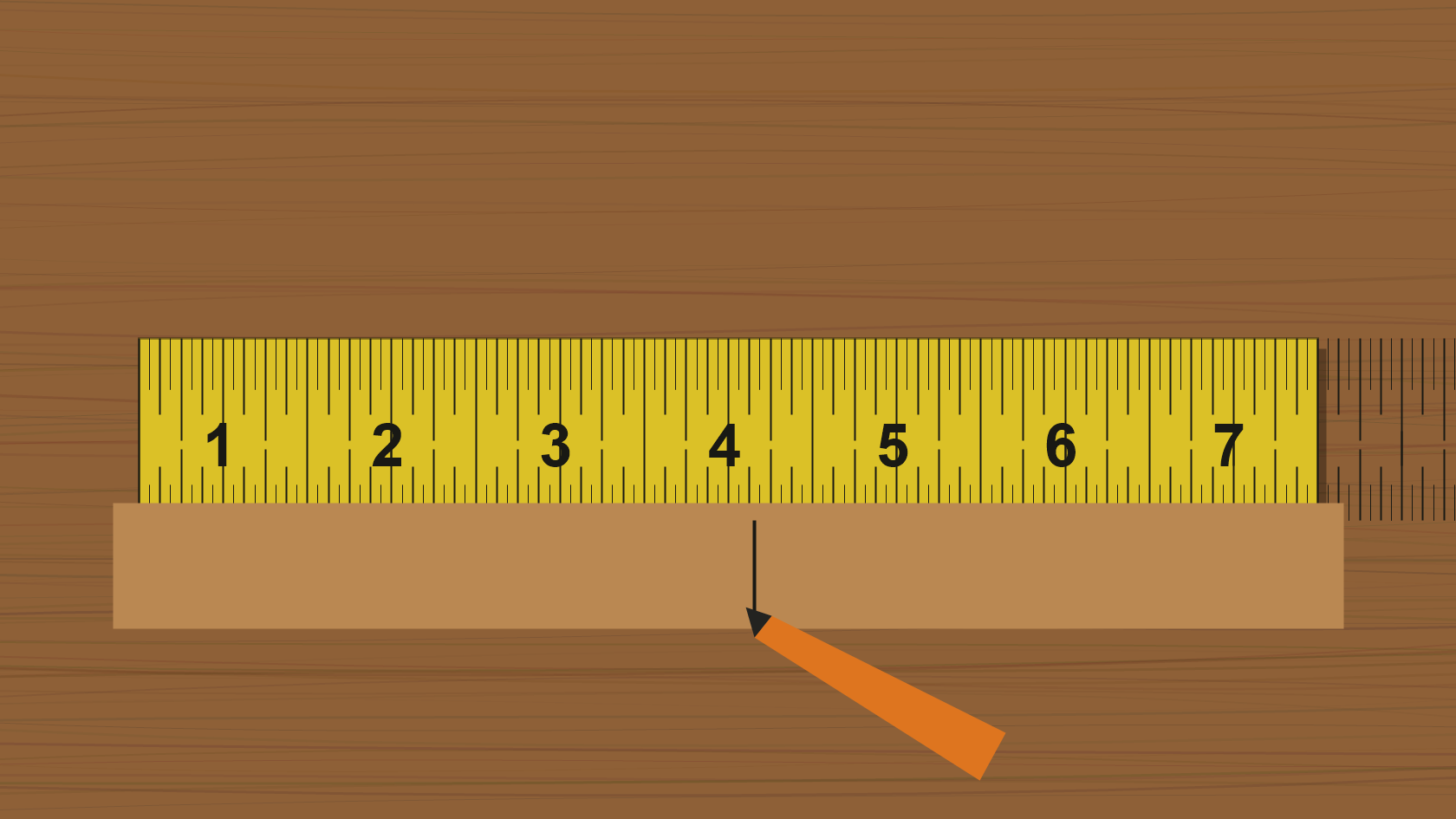
Read inches, halves, quarters, eighths, and sixteenths without guessing.

Measure outside, inside, depth, and step dimensions by reading the beam and dial together.
No matching results for this search.