 By Chris Follin
KITCHEN
How to build a simple camp kitchen setup
A good camp kitchen is not a pile of cookware. It is a little workflow: clean hands, safe food, prep space, heat, serving, dishes, trash, and storage. When those pieces have a home, meals stop taking over the whole campsite.
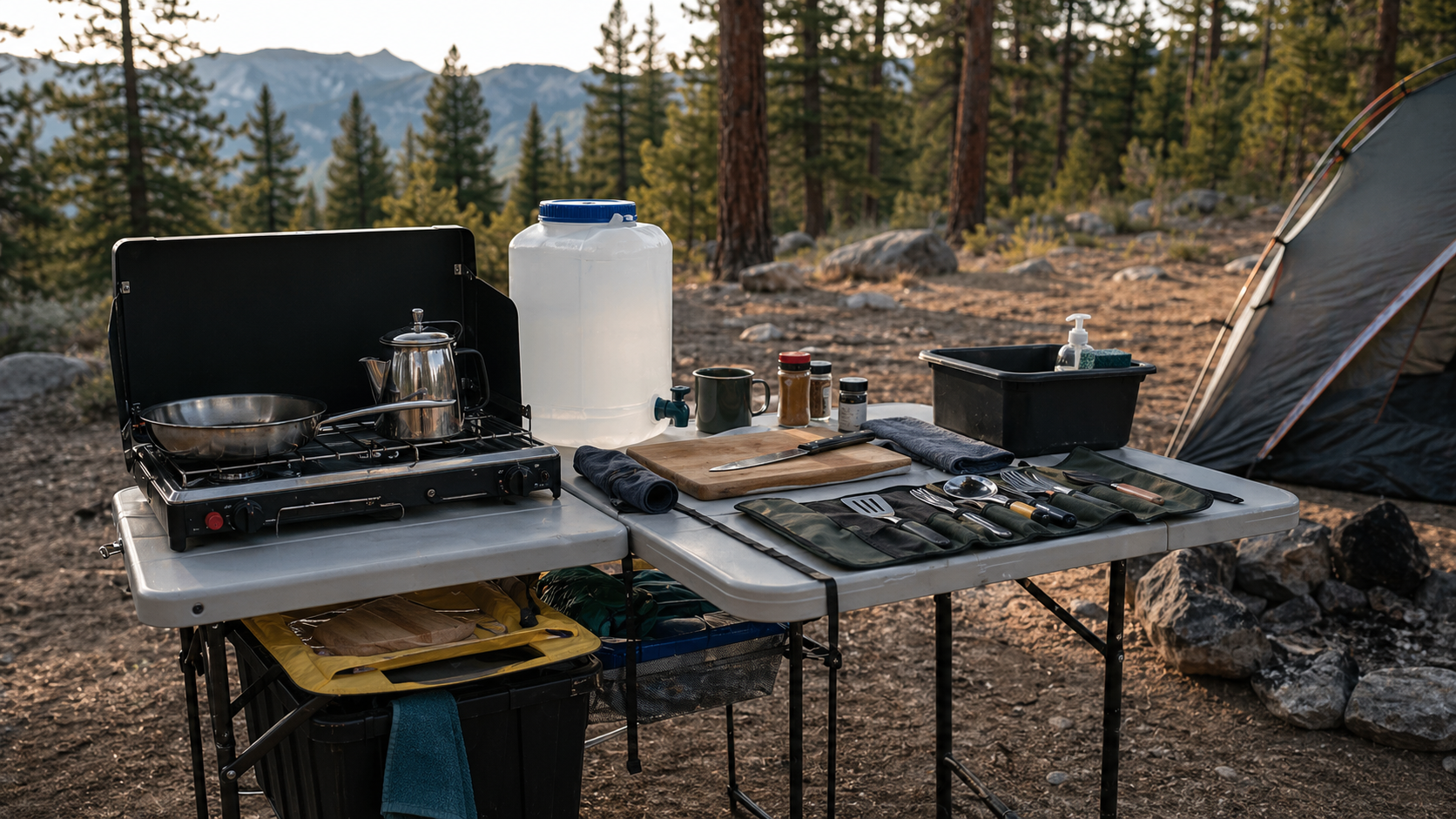
The kitchen should lower friction
A good camp kitchen does not need to look impressive. It needs to stop dinner from becoming a scavenger hunt. The lighter has a home. The knife is not wrapped in a towel under the sleeping bags. Trash is not drifting around camp. Dirty dishes have somewhere to go before everyone pretends they are a morning problem.
Think station, not spread. Put the stove where it can run safely, put prep beside it, put water and soap where people actually wash their hands, and put trash somewhere obvious before the first wrapper appears.

| Station | Keep here | Do not mix with |
|---|---|---|
| Stove | Stove, fuel, lighter, pot, pan, oil, salt, and the utensil you always need first. | Loose paper towels, trash bags, low awnings, kids cutting through camp, or unstable tables. |
| Prep | Cutting board, knife, towel, bowls, seasonings, and food that is ready to cook. | Raw-meat packaging, cooler water, dirty dishes, or the edge where things roll off. |
| Water | Drinking jug, hand wash, soap, towel, and a small catch basin if needed. | Gray water, dish sludge, or a faucet everyone touches with dirty hands. |
| Cleanup | Scrape bin, wash bin, rinse water, drying towel, and gray-water plan. | The cooking flame, clean plates, or the main path through camp. |
Pack a kitchen box you can trust
Use one box for the things that always come: stove fuel, lighter, backup matches, one pot, one pan, cutting board, knife, spatula, spoon, oil, salt, pepper, soap, sponge, towel, foil, zip bags, trash bags, paper towels, and a few clips.
Do not build the box around fantasy meals. Build it around the meals you actually cook after driving, setting up, and realizing the sun is dropping. Burritos, rice bowls, pasta, eggs, sandwiches, reheated leftovers, and one-pan meals are popular because they match camp reality.
Separate food safety from mood
Food safety still matters outside. Keep raw meat sealed, keep it away from ready-to-eat food, use a separate board or a washable surface, and keep perishable food cold until it is time to cook. A pretty camp table does not help if raw chicken juice gets on the apple slices.
A small thermometer is not overkill if you cook meat at camp. Guessing is easy when light is fading and the outside of the food browns before the center is done.
Set the table by workflow
The cleanest layout is simple: cooler or food bin on one end, prep in the middle, stove on the safe heat side, serving area away from raw food, wash bin off to the side, trash clipped where everyone can see it.
If wind is blowing dust across the site, move the prep surface or use lids. If the stove is unstable, fix the surface before lighting it. If people keep walking through the kitchen, move the chairs, not the hot pan.
Dinner will be easy
- The first meal can happen without unpacking the entire vehicle.
- Soap and towel are visible before anyone touches food.
- Trash is contained before wrappers start migrating.
This kitchen will fight you
- The lighter is in a mystery pocket every single trip.
- Raw food, clean plates, and snack bags share the same wet cooler sludge.
- Dishes wait until morning because the wash setup is annoying.
Field note
A camp kitchen earns its space when it makes the next meal easier than the last one.