 By Chris Follin
EDGE TOOLS
How to use a hatchet safely
A hatchet is useful because it concentrates force into a small edge. That is also why it gets ugly fast when the target is unstable, the swing path is crowded, or the user is tired and showing off.
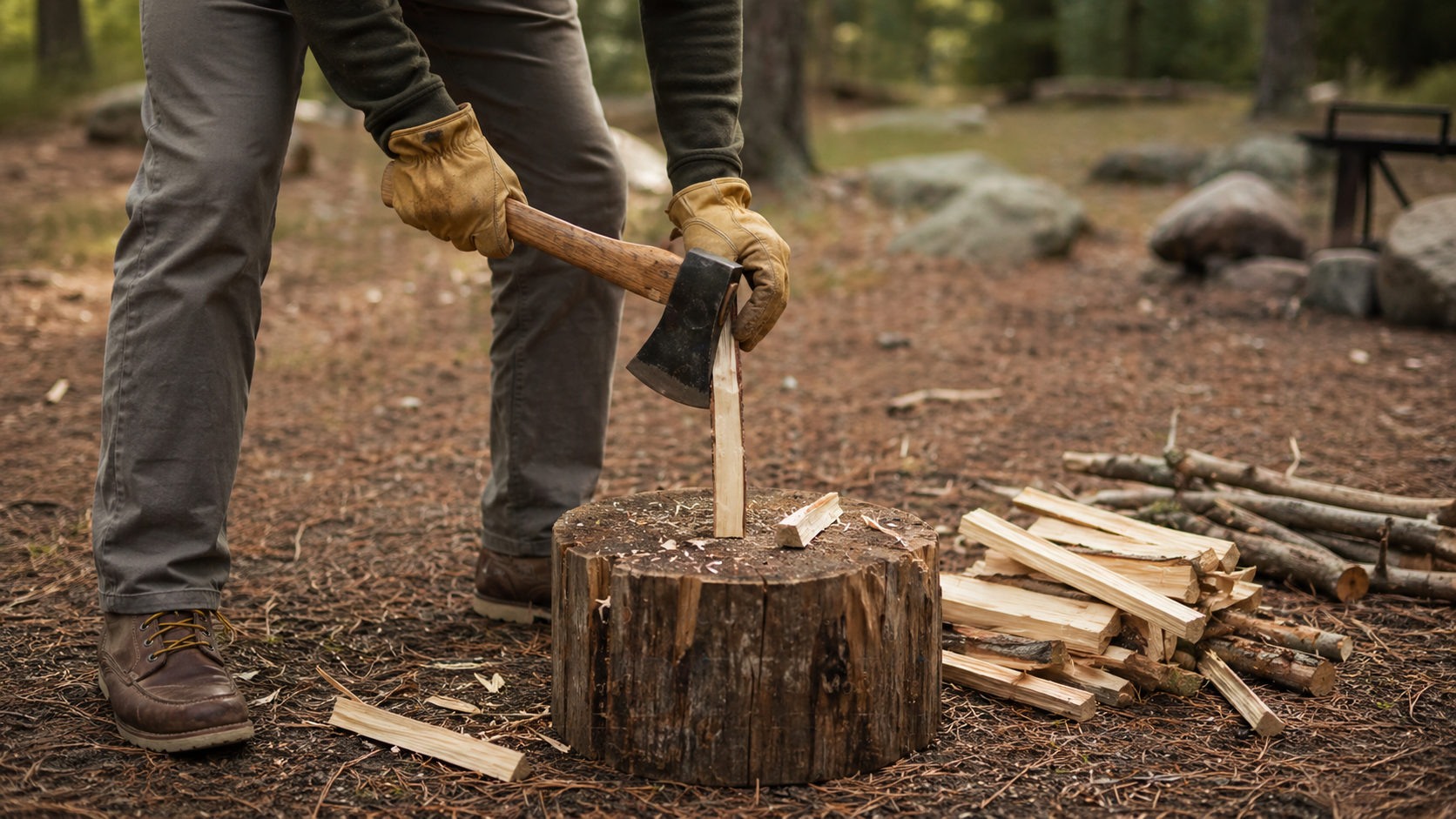
The miss is what matters
Hatchet safety is mostly about planning for the miss. If the blade glances, skips, over-penetrates, or goes through the wood, where does it go next? If the answer is your shin, fingers, foot, cooler, fuel can, or someone else, the setup is wrong.
A sharp hatchet is safer than a dull one because it bites instead of bouncing. But sharp is not enough. You still need a stable block, a controlled target, a clear work zone, and the humility to stop when you are tired.
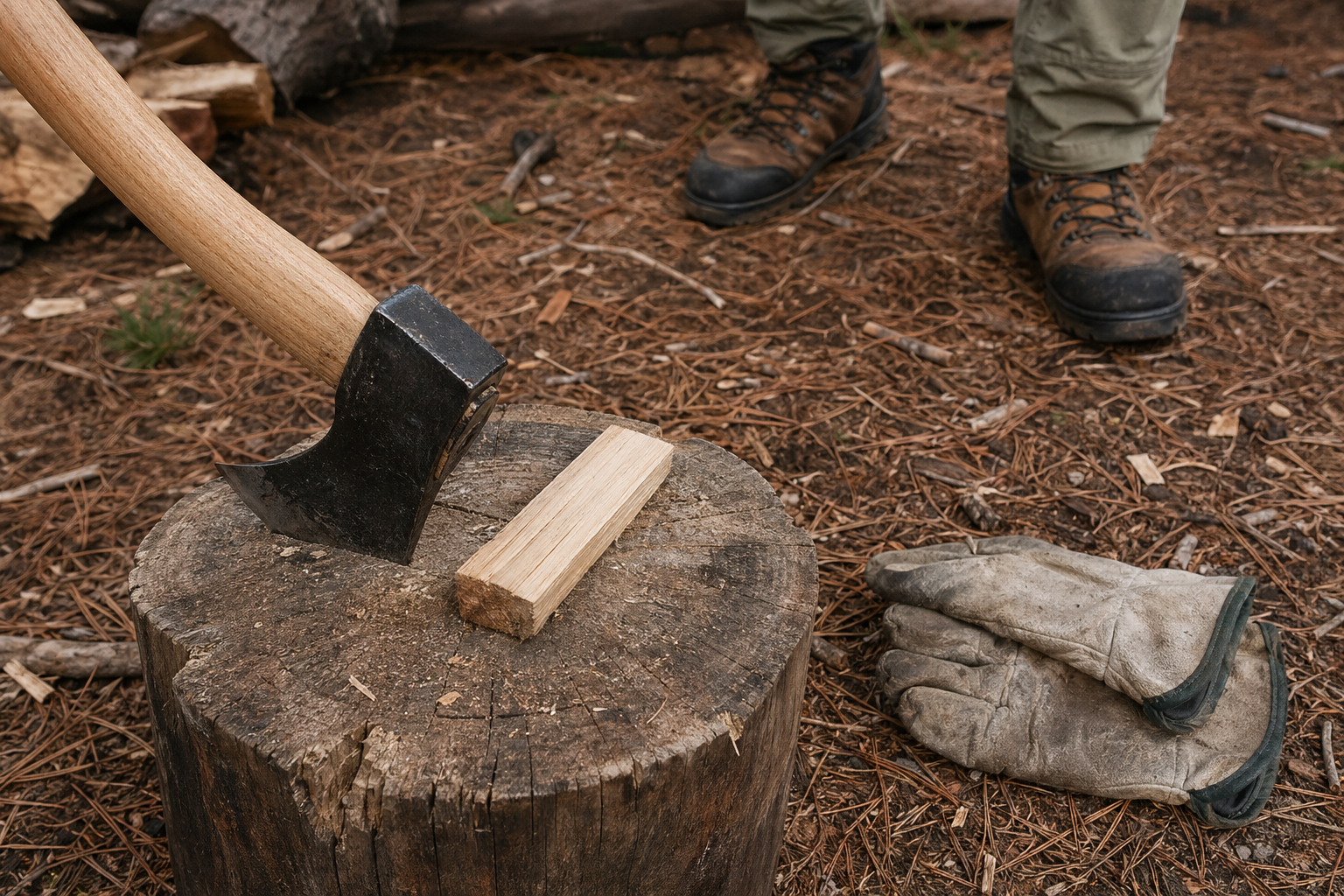
SWING PATH
Plan for the miss, not the perfect hit
The safe setup assumes the hatchet glances, bounces, or goes through the wood faster than expected.
Quit before the last bad swing
Fatigue, cold hands, poor light, alcohol, and frustration all make edge tools worse. If the job starts feeling sloppy, stop chopping and change the plan.
Set up the work zone
Put the block on flat ground and clear the area around it. The target should sit on the block, not on gravel, concrete, rocks, or a picnic table. Check overhead and around you. A hatchet does not need much space until something goes wrong.
Do not let people stand in the "interesting" spot. That is usually beside or slightly in front of the chopping block, exactly where a glancing blade or flying split can go.
Use controlled cuts
For kindling, avoid holding short pieces upright with your fingertips. Seat the hatchet edge into the wood first, then lift the hatchet and wood together and bring them down onto the block. For small trimming, use short taps instead of full swings.
If the hatchet sticks, do not twist wildly or pry sideways with force. Reset the piece, use smaller wood, or change technique. Most camp jobs do not need heroic swings.
Store it like it is still sharp
Sheath the hatchet when it is not actively in use. Put it somewhere visible and boring, not blade-up in a stump, buried under gear, or lying in the dirt where someone reaches for it blind.
Stop before fatigue turns into sloppiness. The last few pieces of kindling are rarely worth a cut hand or a boot full of blood.
The cut is controlled
- The work is on a stable block.
- The blade path misses your body even if the cut fails.
- The hatchet is sheathed or staged safely between cuts.
Put the hatchet down
- You are chopping toward your leg or boot.
- The target rolls, bounces, or has to be hand-held near the cut.
- People are gathered close to watch.
Field note
A hatchet is not dangerous because it is sharp. It is dangerous when the setup assumes every swing will go perfectly.