 By Chris Follin
FIRE SKILLS
How to start a campfire
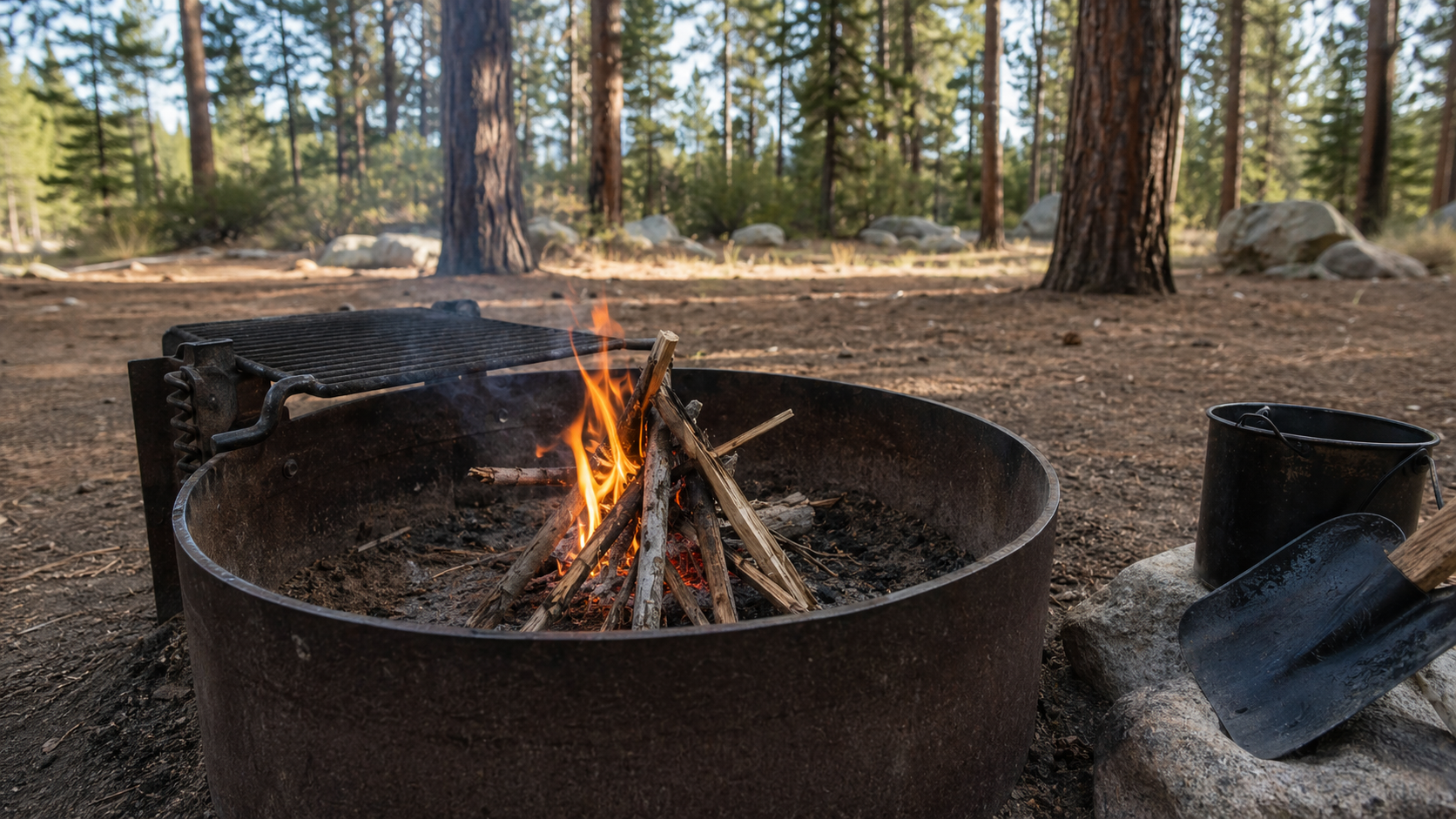
A good campfire starts before the match. It is legal, small, contained, fed with dry staged wood, and easy to put out. If you build it with air and patience instead of a giant pile, it lights cleaner and behaves better.
Start with permission, not matches
Before you touch the lighter, check the campground rules, current restrictions, wind, and the site itself. If fires are not allowed, if the wind is moving sparks, or if you cannot put the fire dead out, use a stove instead. A campfire should be a controlled comfort, not a problem you spend all night managing.
Most bad campfires are too big too early. People stack thick wood over a weak flame, smother the tinder, add more paper, then chase it with lighter fluid or frantic blowing. The cleaner way is slower for about two minutes and faster for the rest of the night: dry tinder, small kindling, thumb-size sticks, then larger wood only after the core is actually burning.

FIRE LADDER
Do not skip sizes
Most bad campfires fail because someone tries to light a log with a match. Build a ladder from tiny fuel to real fuel.
| Stage | What it looks like | Job |
|---|---|---|
| Tinder | Shavings, dry grass where legal, cotton starter, paper, or commercial fire starter. | Catches from a lighter or match and starts flame. |
| Pencil kindling | Dry sticks and splits about pencil size. | Lets flame climb without smothering. |
| Thumb fuel | Small sticks or splits about thumb size. | Builds heat and starts the coal bed. |
| Real wood | Wrist-size and larger pieces added after the fire is breathing. | Sustains the fire after the small stuff is burning cleanly. |
Restrictions beat the plan
If there is a fire ban, high wind, no legal ring, or no reliable water to put it out, the correct campfire is no campfire. A stove dinner is better than becoming the person who starts a preventable problem.
Build the fuel ladder
Tinder is the tiny stuff: shavings, dry grass where legal, paper, cotton fire starter, or commercial starter. Kindling is pencil-size dry sticks that flame can wrap around. Small fuel is thumb-size to wrist-size. Larger logs come later, after the fire has heat and coals.
Do not make the first stack dense. Fire needs air. A loose lean-to or teepee works because flame can climb and breathe. If the center smokes and dies, it was probably packed too tightly or the kindling was damp.
Light low and wait
Light the tinder from the low side so flame climbs into the kindling. Give it a minute before adding anything. Once the pencil-size pieces are burning on their own, add a few thumb-size pieces. Once those catch, add larger wood.
Keep the fire small enough that you can still see and manage the coal bed. A waist-high blaze is not a better campfire. It is just a faster way to waste wood, make smoke, and create a harder shutdown.
Use the fire ring like a tool
Cook or sit around the fire ring, but do not treat it as a trash can. Foil, cans, glass, bottle caps, food packaging, and plastic do not belong in the fire. They make cleanup worse for the next person and some of them create nasty smoke.
If you want coals for cooking, start earlier and burn down wood intentionally. Cooking over coals is a different skill than starting the fire, and it works better when the fire has time to mature.
The fire is earning itself
- The flame catches without blowing hard into it.
- Smoke stays reasonable because the wood is dry and the fire is not smothered.
- The fire stays low and contained inside the ring.
You are forcing it
- Sparks are leaving the ring in the wind.
- You need lighter fluid to keep it alive.
- People keep stepping around loose fuel wood or hot tools.
Field note
Build the fire you can put out in five minutes. That usually means less wood, more patience, and starting earlier if you want coals.