 By Chris Follin
FIRE SKILLS
How to split kindling
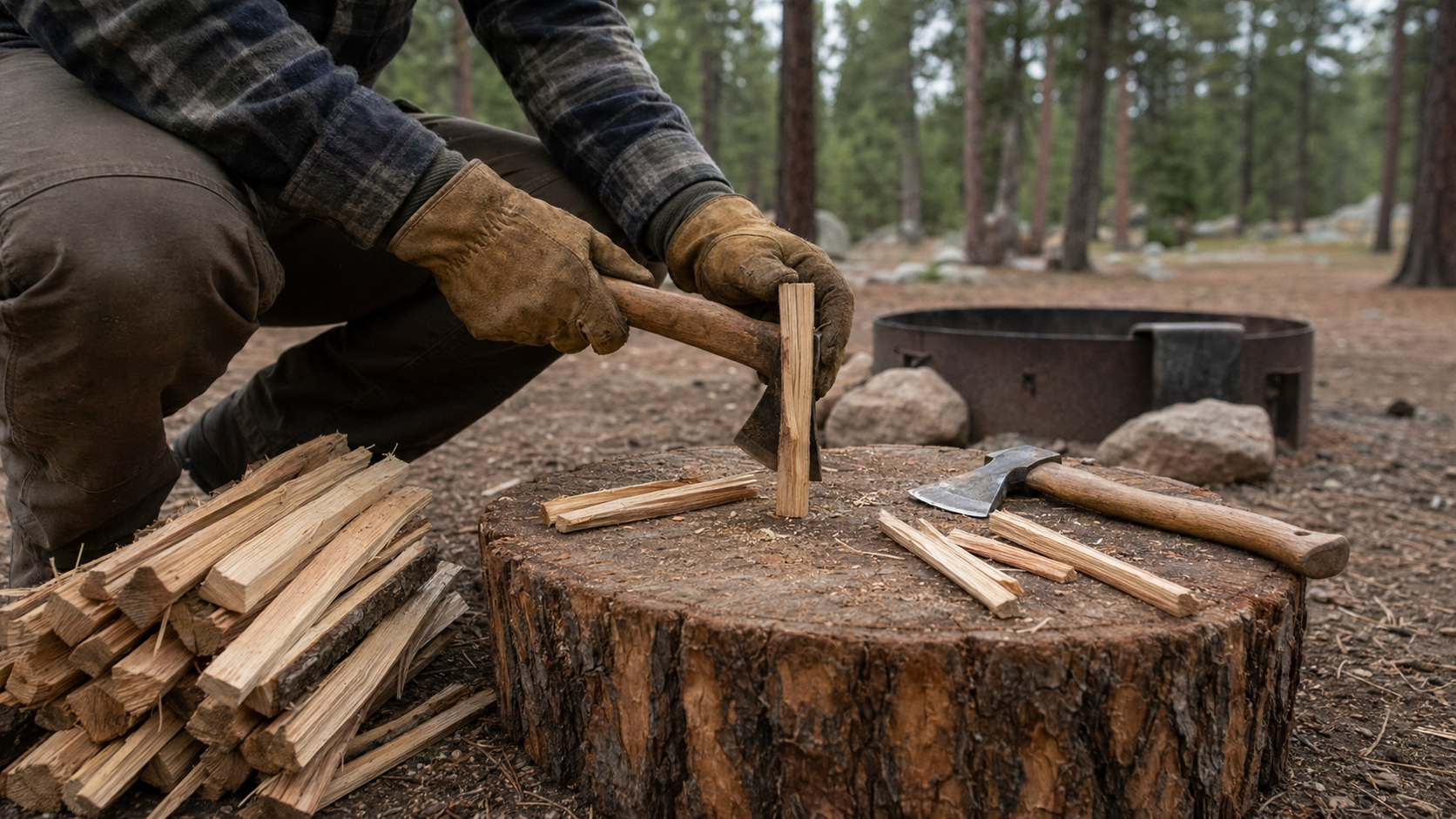
Kindling is not tiny firewood for decoration. It is the bridge between tinder and real fuel. Split it small, keep your hands out of the strike path, and make enough before the fire is lit.
Make the small stuff first
A fire that will not start often has a kindling problem, not a lighter problem. You need enough small dry pieces for flame to climb from tinder into fuel wood. One or two skinny sticks are not enough when the rest of the wood is damp or oversized.
The safe version is controlled. Work on a stable block. Keep feet, knees, and fingers out of the blade path. Split larger pieces down to wrist, thumb, pencil, and shaving sizes before you light anything. Once the fire is lit, you do not want to be chopping in the dark while everyone is standing around.
KINDLING STACK
Make the bridge before the match
Kindling is a size progression. If the next piece is too big, the fire stalls and smokes.
| Piece | How much | Why |
|---|---|---|
| Shavings or feathered edges | A handful. | Helps weak tinder become real flame. |
| Pencil-size splits | Two loose handfuls. | The first reliable flame ladder. |
| Thumb-size splits | A small stack. | Builds heat without smothering the start. |
| Wrist-size fuel | A few pieces nearby. | Only goes on after the kindling is burning cleanly. |
LOW-RISK SPLIT
Seat the edge first
- 1. Set wood on blockUse straight-grain dry wood that stands without fingers near the cut.
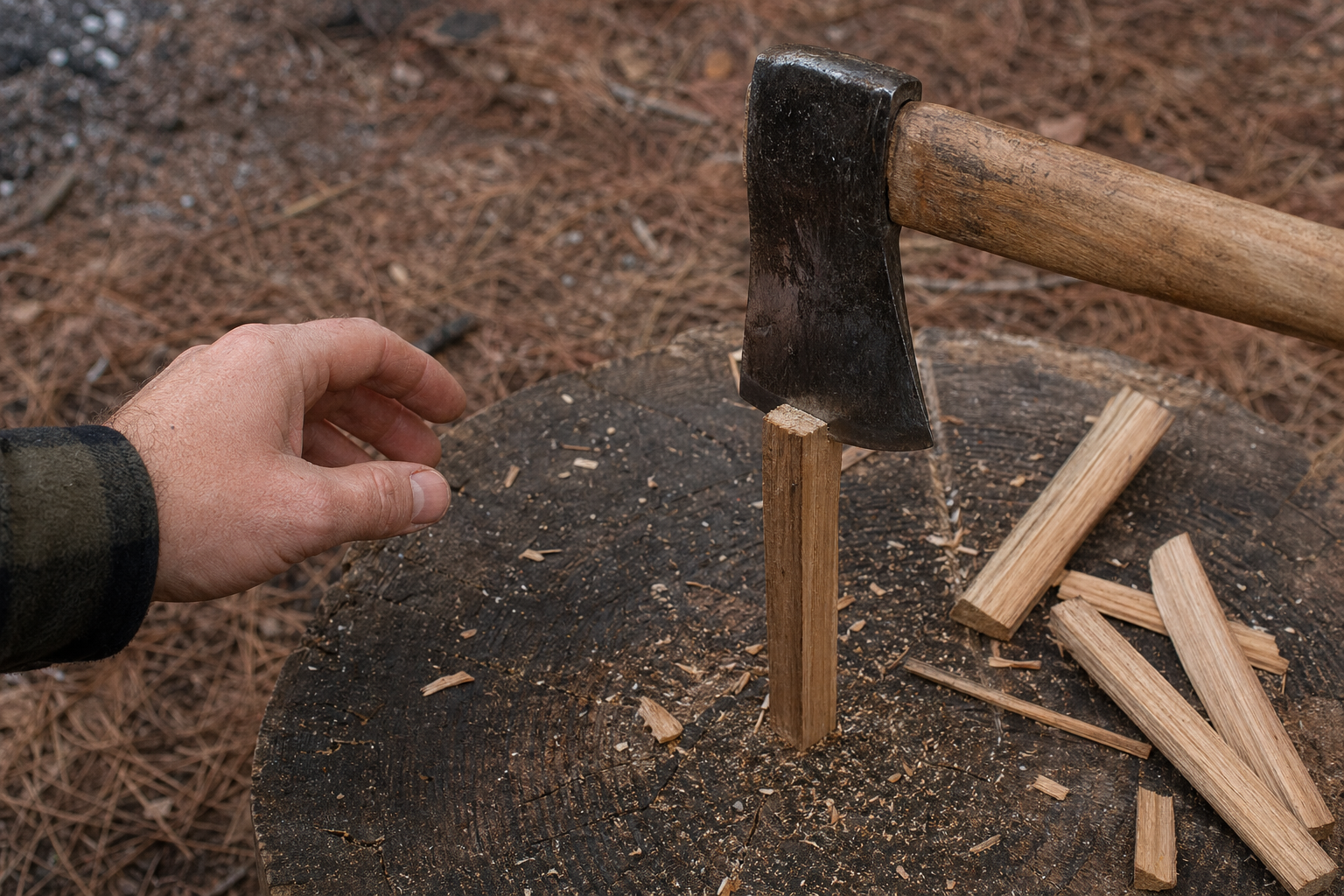
- 2. Tap the edge inSeat the hatchet lightly into the end grain.
- 3. Lift togetherRaise wood and hatchet as one unit a short distance.
- 4. Drop onto blockLet the block split the wood without a wild swing.
Choose better wood
Dry, straight-grained pieces split better than knotty, twisted, wet rounds. If the outside of a stick is damp but the inside is dry, splitting exposes the usable dry center. That is one of the main reasons kindling matters.
Avoid pressure-treated lumber, painted wood, pallets with unknown chemicals, and anything full of nails or hardware. Campfire wood should be wood, not a disposal plan.
Use controlled techniques
For larger pieces, set the hatchet edge into the end grain, lift the wood and hatchet together a short distance, then bring both down onto the block. The hatchet is already seated, so your hand is not holding the target near the blade.
For smaller pieces, use short controlled taps or baton with a sturdy stick if the hatchet/knife and situation make sense. The theme is the same: no fingers in the path, no wild swings, no rushing.
Make a kindling stack
Make more than you think you need: shavings or feathered bits, pencil-size pieces, thumb-size pieces, and a few wrist-size pieces. Keep them dry and close enough to feed the fire without stepping over the ring.
Once the fire is established, stop chopping unless you need to. Edge tools and firelight are not a great combination.
The split is controlled
- The block is stable and at a comfortable height.
- The blade path misses your body even if the cut glances.
- Kindling is staged before the match is lit.
Stop swinging
- You are chopping on rocks or gravel.
- Someone is holding tiny pieces upright by hand.
- People, dogs, chairs, or fuel cans are inside the swing area.
Field note
Kindling should make the fire easier, not make the campsite more dangerous.