 By Chris Follin
SYSTEMS
How to keep camp organized
Camp organization is about reducing friction, not being precious. When every object has a home, camp stays usable after meals, after dark, and when it is time to leave.
Make zones, not piles
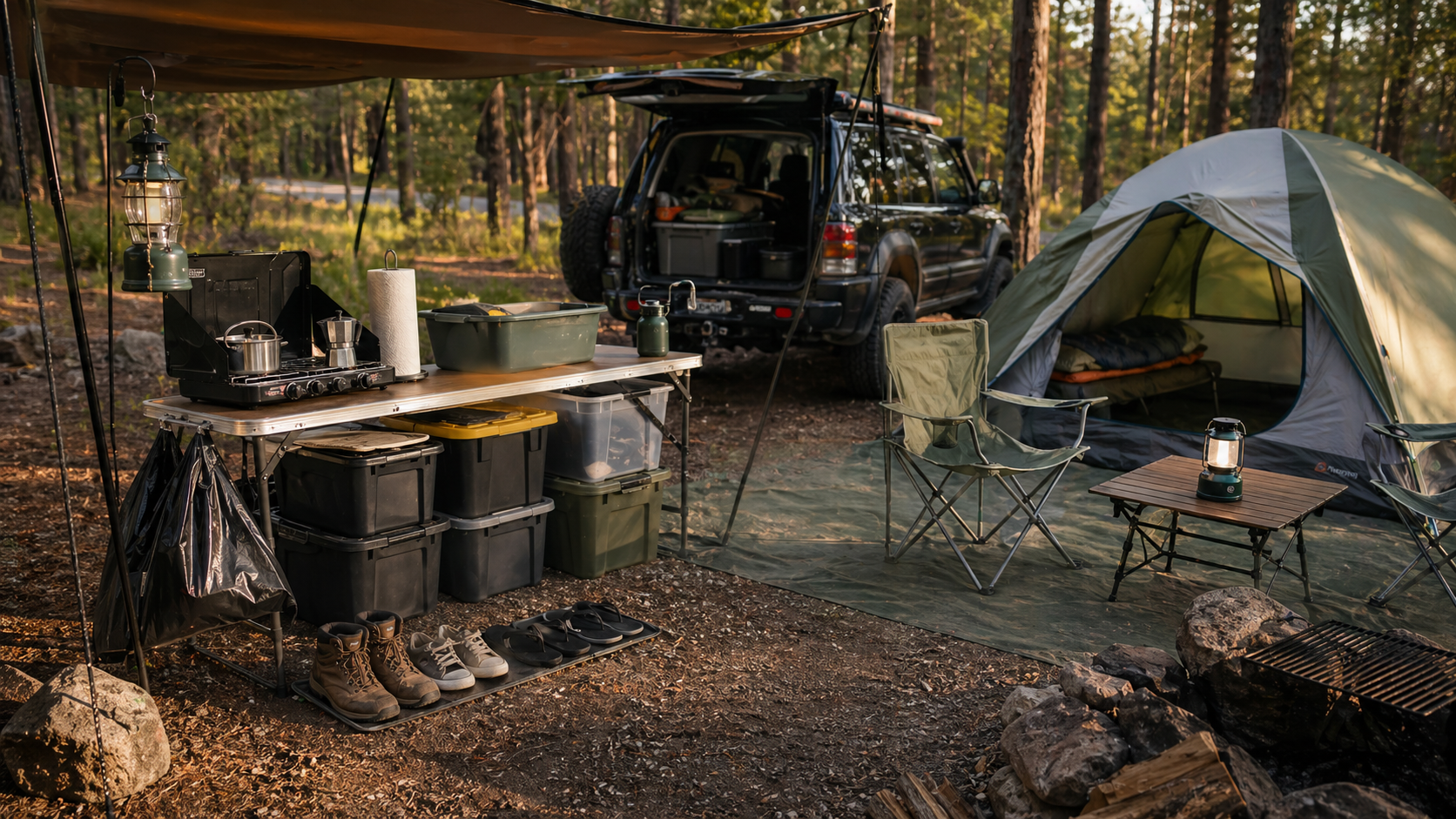
A campsite should explain itself. Food and dishes live in one area. Sleep items stay in the tent. Trash has one obvious bag. Shoes and wet gear have a dirty zone. Once that structure exists, cleanup becomes a small habit instead of a giant chore.

CAMP ZONES
Give every mess a place to live
Organization is easier when camp is designed around predictable messes instead of pretending they will not happen.
| Zone | Lives there | Boundary |
|---|---|---|
| Kitchen | Food, stove, cooler, water, dish kit, trash, hand wash. | No sleeping bags, loose clothes, or random tools on the food table. |
| Sleep | Pad, bag, pillow, dry sleep clothes, headlamp, personal night items. | No shoes, food, wet towels, or mystery bins inside the tent. |
| Dirty | Shoes, wet gear, firewood, recovery gear, dusty tools, trash staging. | Close enough to use, far enough from bedding and food. |
| Reset | One empty tote or table corner for things that need to return home. | Gets cleared at breakfast, before dark, and before bed. |
RESET RHYTHM
Three tiny cleanups beat one giant cleanup
- 1. After breakfastTrash sealed, dishes done, cooler closed, sleep gear aired if needed.
- 2. Before darkHeadlamps found, shoes staged, loose gear put away, night path cleared.
- 3. Before bedFood secured, kitchen quiet, fire cold, dirty zone contained.
- 4. Before leavingLook under tables, around trees, in fire ring, and where chairs sat.
The five-minute reset
- Close every bin you are not actively using.
- Put kitchen items back in the kitchen zone before starting the next activity.
- Collect wrappers, cans, and food scraps before they become background scenery.
- Move shoes and sandals out of walkways.
- Hang or isolate wet layers before they spread moisture into everything else.
- Stage nighttime items: headlamp, water, bathroom shoes, warm layer.
Group camp needs rules
- Every person needs one personal landing spot: a duffel, chair pocket, tote, or tent corner. Shared tables are for shared tasks, not every hoodie, charger, snack, and mystery object. The bigger the group, the more obvious the trash and dish zones need to be.
Teardown starts before morning
A calm morning starts the night before. Put away nonessential gear, consolidate food, separate trash, dry what can dry, and stage breakfast. You want to wake up with fewer decisions, not a campsite that has to be rebuilt before it can be packed.
Camp will stay usable
- The table can be cleared in under a minute.
- People know where trash, water, lights, and toilet items are.
- The tent floor is not collecting shoes, snack wrappers, and wet jackets.
- Pack-up feels like reversing setup.
The mess is starting to win
- The vehicle is the only storage plan.
- Every flat surface becomes a junk drawer.
- Wet gear gets mixed with sleep gear.
- Trash moves around camp because nobody knows where it belongs.
Field note
Organization is not a personality trait. It is a campsite design choice. Make the easy thing the clean thing.