 By Chris Follin
FIRE SKILLS
How to put out a campfire properly
A campfire is not out because the flames are gone. It is out when the ashes, coals, sticks, and the ground under them are wet, stirred, and cold to the touch. Anything warmer than that is unfinished business.
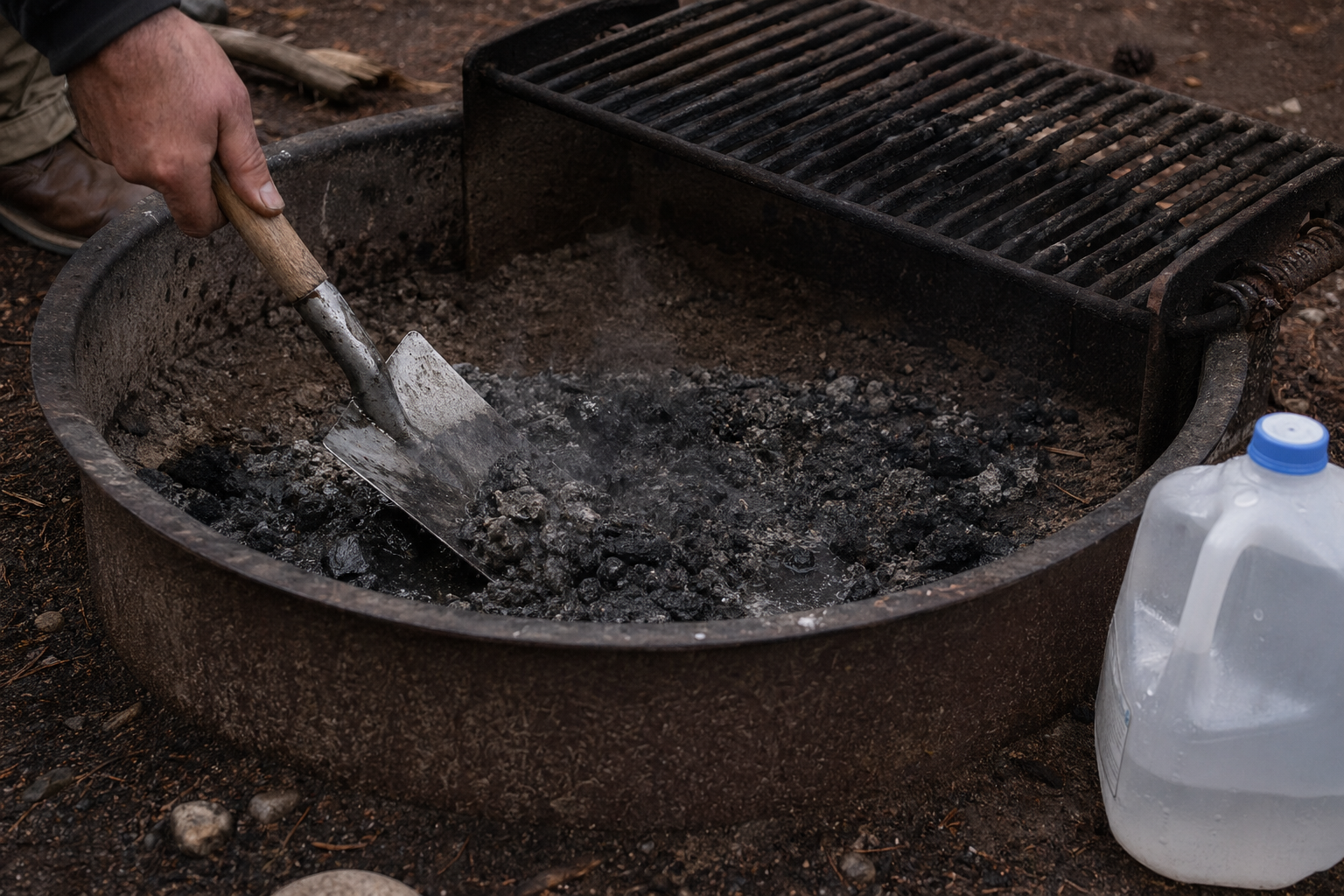
Flames out does not mean fire out
The most dangerous moment is when the fire looks boring. No flames, a little glow, maybe a few black sticks. That is exactly when people walk away too early. Coals can hold heat for a long time, especially under ash or partially burned wood.
The clean method is not complicated: stop feeding the fire early, spread the coals inside the ring, drown with water, stir everything, drown again, and feel carefully for heat. If you feel warmth, keep going. Smokey Bear and NPS both teach versions of this because it works.

OUT MEANS COLD
The shutdown sequence
Smokey Bear's version is blunt because it works: drown, stir, drown again, and feel for heat.
- 1. Stop feeding earlyLet logs burn down before everyone is tired and ready for bed.
- 2. Drown slowlyPour water across the whole fire area, not just the glowing center.
- 3. Stir deepTurn sticks, scrape the bottom, break up ash pockets, and expose hidden coals.
- 4. Feel for heatIf anything is warm, repeat. Quiet ash is not the same as cold ash.
Dirt is not the shortcut
Burying a hot fire can hide heat instead of ending it. Use water whenever possible, stir thoroughly, and keep working until the ash and remaining wood are cold to the touch.
Start the shutdown before you are tired
The easiest campfire to put out is one that has already burned down. Stop adding wood long before bed. Push unburned ends inward so they finish, and break down the coal bed while it is still manageable.
If you keep throwing logs on until the second you want to sleep, you are setting yourself up for a miserable shutdown or a dangerous shortcut.
Drown, stir, drown, feel
Pour water over the entire fire area until the hissing stops. Stir the ashes and coals with a shovel or stick. Turn over half-burned pieces. Scrape the bottom of the ring. Add more water and stir again.
Feel for heat carefully. Start with the back of your hand above the ashes, then closer as it cools. Check around the edges of the ring too. If anything is warm, add water and stir again.
Leave the ring better than you found it
Pack out foil, cans, glass, plastic, and food trash. If the site has a metal ring, leave the dead ash contained in it unless local rules say otherwise. If you are in a place where fire rings are not supposed to remain, follow the local low-impact method instead.
Do not hide a mess under ash. The next person should not inherit sharp metal, melted plastic, or a mystery pile of half-burned garbage.
Cold enough to leave
- No hiss when water hits the ash.
- No red glow anywhere after stirring.
- The ashes and remaining sticks feel cold.
Keep drowning and stirring
- Steam or smoke appears when you stir.
- Big half-burned logs are buried under ash.
- Someone says "it is probably fine" because they want to go to bed.
Field note
A fire is finished when you can touch the remains and be bored by how cold they are.