 By Chris Follin
POWER SKILLS
How to use a generator safely
A portable generator is useful power with two serious hazards: engine exhaust and electricity. Run it outside at least 20 feet from doors, windows, and vents, point exhaust away, keep the generator and cords dry, and never connect it to house wiring without proper transfer equipment.
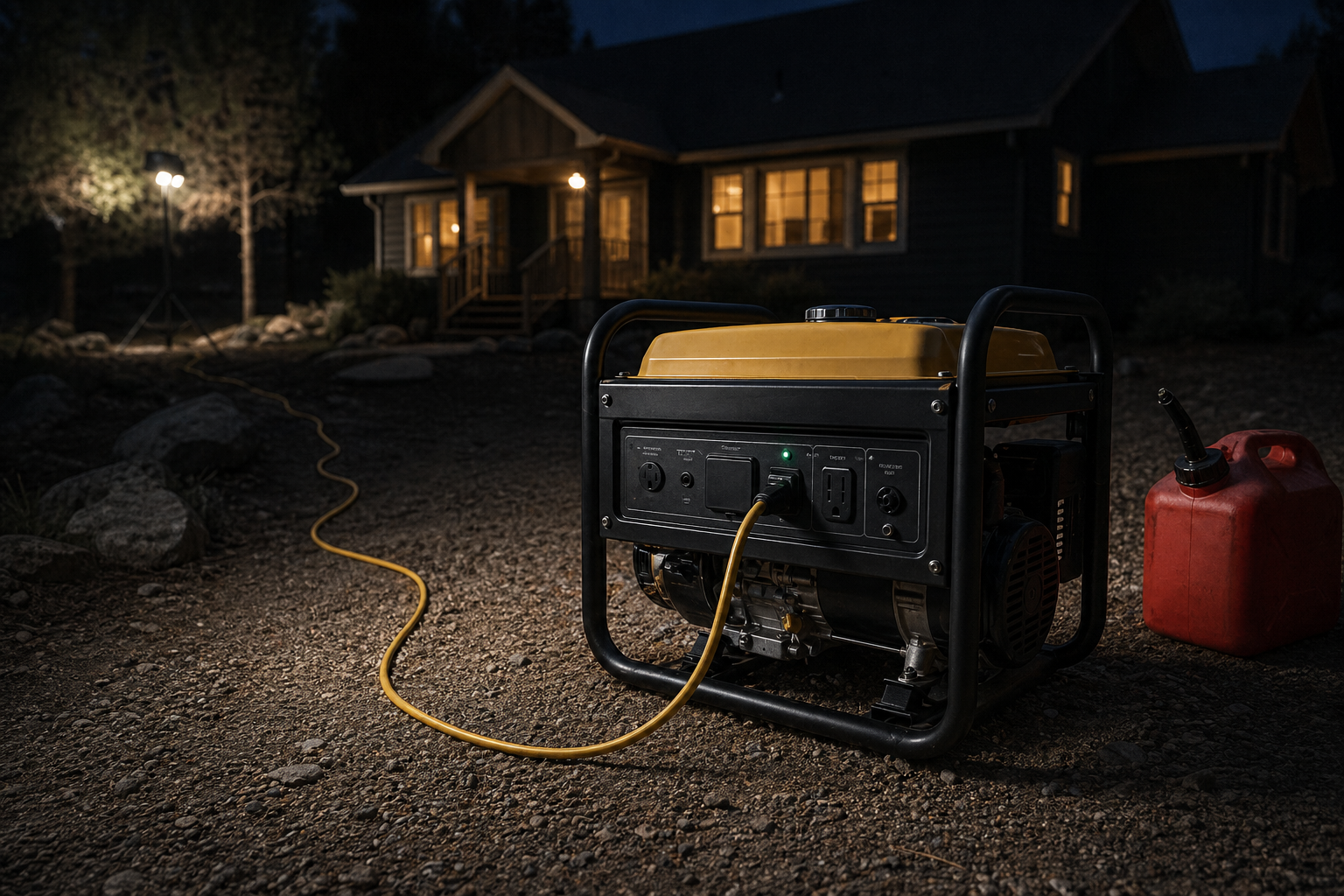
The exhaust is the first problem
Carbon monoxide is invisible, odorless, and fast. A generator outside but too close to a door, window, vent, garage, porch, camper, tent, or neighboring opening can still push exhaust where people sleep. Put the generator outside, at least 20 feet from openings, and point exhaust away. If wind, walls, fences, or the campsite shape push exhaust toward people, move the generator or shut it down.
Then deal with electricity. Keep the generator dry, use outdoor-rated 3-prong cords sized for the load, avoid overloaded strips and daisy chains, and do not connect it to house wiring unless a proper transfer switch or listed interlock/inlet setup is installed by someone qualified. Backfeeding can injure utility workers, damage equipment, and energize wiring you thought was dead.
| Hazard | Bad setup | Better setup |
|---|---|---|
| Carbon monoxide | Garage, porch, camper, tent, shed, under a window, or close to an opening. | Outside, at least 20 feet from openings, exhaust pointed away, with working CO alarms inside. |
| Backfeed | Plugging generator output into a wall outlet or homemade male-to-male cord. | Direct cords to loads, or a properly installed transfer switch/interlock and inlet for house circuits. |
| Wet electricity | Generator in rain, cords in puddles, wet hands, damaged insulation, or overloaded strips. | Dry protected placement, outdoor-rated grounded cords, correct gauge, GFCI where required, and load within rating. |
| Grounding | Guessing about ground rods, neutral bonding, or house connections. | Follow the manual; direct cord loads differ from transfer-switch connections, and structure connections need qualified installation. |
| Fuel fire | Refueling while hot or storing gas beside living areas and ignition sources. | Shut down, cool, refuel carefully, wipe spills, and store approved containers away from heat. |
The 20-foot habit
Put the generator outside and at least 20 feet from doors, windows, vents, tents, campers, garages, and neighboring openings. Point exhaust away. If the site layout makes that impossible, the generator does not run there.
SAFE SETUP FLOW
Place, cord, load, fuel
- 1. Place outsideDry, stable surface, exhaust away, at least 20 feet from openings and sleeping areas.
- 2. Use proper cordsOutdoor-rated, 3-prong, undamaged, fully uncoiled if they heat up, and sized for load and distance.
- 3. Manage wattsAdd starting and running loads before plugging everything in; critical loads come first.
- 4. Refuel coldShut down, let it cool, refuel away from ignition sources, and clean spills before restarting.
Place it like the wind can betray you
Do not run a generator in a garage, shed, porch, tent, camper, crawlspace, basement, covered patio, breezeway, or under an awning that traps exhaust. Open doors do not make enclosed or partly enclosed spaces safe. Put it outside and at least 20 feet from doors, windows, vents, and neighboring openings.
Use battery-powered CO alarms inside sleeping areas and nearby buildings. If anyone feels headache, dizziness, nausea, weakness, confusion, chest pain, or shortness of breath, get everyone to fresh air immediately and call emergency help. Shut the generator down only if it is safe to do so.
Use electricity like it can bite
Keep the generator dry and off wet ground when possible. Do not touch plugs, cords, or controls with wet hands. Use heavy-duty outdoor-rated extension cords in good condition, with three prongs and a grounding conductor. Match cord gauge and length to the load. Heat, voltage drop, damaged insulation, missing ground pins, and overloaded strips are not small details.
Never plug a generator into a wall outlet. That is backfeeding. Use direct cords to appliances or a properly installed transfer switch/interlock and inlet system for house circuits. Do not rely on “I turned the main breaker off” as a substitute for listed transfer equipment.
Grounding is not guesswork
Portable-generator grounding depends on how the generator is being used. OSHA notes that a portable generator feeding only cord-and-plug equipment from receptacles mounted on the generator may use the bonded generator frame as the grounding means when the required conditions are met. If the generator is connected to a structure through a transfer switch, OSHA says it must be connected to a grounding electrode system and the transfer switch must be approved and installed by a qualified electrician.
That means the safe answer is not “always drive a ground rod” or “never drive a ground rod.” Read the generator manual, know whether the neutral is bonded or floating, and get qualified help before connecting a generator to building wiring.
Fuel and load management
Turn the generator off and let it cool before refueling. Gasoline on a hot engine is a bad plan. Store fuel in approved containers away from living areas, pilot lights, heaters, sparks, and other ignition sources. Wipe spills and move fuel containers away before restarting.
Add up the starting and running watts of what you plan to power. Motors, fridges, pumps, well pumps, furnaces, and compressors can surge above their running wattage. Run critical loads first. If the generator labors, breaker trips, cords heat up, or voltage-sensitive gear acts weird, reduce the load. Sensitive electronics may also prefer clean inverter power rather than a cheap generator with rough output.
The generator is placed correctly
- Generator is outside, 20 feet or more from openings, exhaust pointed away.
- CO alarms are working inside and sleeping areas are protected.
- Cords are outdoor-rated, grounded, inspected, and not hot.
Shut it down
- Generator runs in a garage, porch, camper, shed, or under windows.
- Fuel is added while the engine is hot.
- A male-to-male cord, wall outlet backfeed, wet cord, or damaged cord is involved.
Source-backed rules worth treating as non-negotiable
CDC guidance says to keep generators outside at least 20 feet from doors, windows, and vents. CPSC warns that generator CO can kill within minutes and that portable generators belong outside, well away from openings, with a working CO alarm inside. OSHA’s portable-generator fact sheet says structure connections need a properly installed transfer switch, and direct cord loads should use heavy-duty 3-wire cords with grounding conductors.
Field note
Generator safety is mostly placement. If the exhaust can find people, the setup is wrong.