 By Chris Follin
ROADSIDE REPAIR
How to plug a tire
A tire plug can get you moving when a small puncture is in the tread and the tire is otherwise intact. Treat it as a temporary roadside fix, not a permanent repair. The real repair is an internal inspection and plug-patch style repair, or a replacement tire if the damage is outside the repairable area.
Know what a plug is for
A tire plug is the kind of repair that feels like magic when it is the right problem and reckless when it is not. Small screw in the center tread? Maybe. Shoulder puncture, sidewall cut, torn hole, bulge, visible cord, or a tire that has been driven flat? That is no longer a plug-kit moment.
A roadside plug buys you enough seal to get moving carefully. It does not inspect the inside of the tire, seal the innerliner, restore sidewall strength, or turn a damaged casing into a good tire. That judgment matters more than how confidently the tool goes in.

| What you see | Roadside move | Why |
|---|---|---|
| Screw or nail in the center tread | Usually a reasonable temporary plug candidate if the hole is small and the tire was not driven flat. | The tread crown is the only area where a plug has a fighting chance as a field repair. |
| Puncture near the shoulder | Do not treat it like a normal plug job. | The shoulder flexes differently and is outside what most tire shops consider repairable. |
| Sidewall cut, bulge, exposed cord, or slice | Stop. Use the spare, tow, or replace the tire. | A plug does not restore sidewall strength or fix structural tire damage. |
| Tire was driven flat | Assume hidden damage until inspected from the inside. | Running flat can destroy the sidewall internally even if the outside still looks usable. |
| Puncture is larger than 1/4 inch / 6 mm, repairs overlap, or tread is worn to the indicators | Use the spare, tow, or replace the tire. | Those are outside common industry repair limits for passenger and light-truck tires. |
PLUG OR QUIT
Not every leak is a plug job
The fastest way to make this page dangerous is pretending every flat tire can be fixed with a sticky rope.
FIELD SEQUENCE
Fix, inflate, verify
- 1. Mark the angleNote how the screw or nail entered before pulling it out.
- 2. Ream cleanlyUse the reamer to size and clean the puncture path.
- 3. Insert the plugLoad the tool, push the plug in, then pull the tool out as instructed.
- 4. Air and checkInflate, trim, listen, spray water if possible, and recheck pressure soon.
A plug is not the gold-standard repair
The roadside plug is the get-moving move. Industry guidance treats the proper permanent repair as an internal inspection with a repair that both fills the puncture path and seals the innerliner, usually a plug-patch style repair from a tire shop. If the tire is important enough to carry you home at highway speed, it is important enough to inspect after the field fix.
WHAT FAILED
Diagnose the leak before reaching for the reamer
The puncture tool is only for one category of tire problem. Spend one minute finding the actual failure so you do not make a bad tire worse.
| Leak source | Field clue | Likely fix |
|---|---|---|
| Tread puncture | Nail, screw, thorn, or small object in the tread face. | Plug may get you moving, then inspect properly later. |
| Valve stem/core | Air hissing at the stem, cap area, or core. | Tighten/replace core if equipped, or use spare/service if stem is damaged. |
| Bead leak | Air from rim edge after impact, low pressure, sand, or corrosion. | Clean/reseat if equipped and trained; otherwise spare or service. |
| Sidewall/shoulder | Cut, bulge, slash, cord, or puncture outside the tread crown. | Spare, tow, or replacement. Do not plug it. |
AFTER THE PLUG
Do not call it fixed just because it holds air once
- Check parked pressureInflate to the right pressure and watch the gauge for the first obvious drop.
- Bubble testUse water if you have it. Bubbles around the plug mean the repair is still leaking.
- Drive a short distanceKeep speed and load conservative, then stop and recheck pressure before committing to the road home.
- Get it inspectedHave a tire shop remove the tire, inspect the inside, and decide whether a proper internal repair or replacement is needed.
Decide if it is pluggable
A nail or screw through the tread crown is the classic plug situation. A sidewall slice, shoulder puncture, bead damage, broken valve stem, overlapping repair, large hole, or tire that came off the wheel is not. If the tire was driven flat, internal damage may be hidden.
If you are on the road shoulder, personal safety comes first. Move as far from traffic as possible, use hazards, and call for help if the work area is not safe. A sketchy shoulder is not the place to prove you can save a tire.
Do the repair cleanly
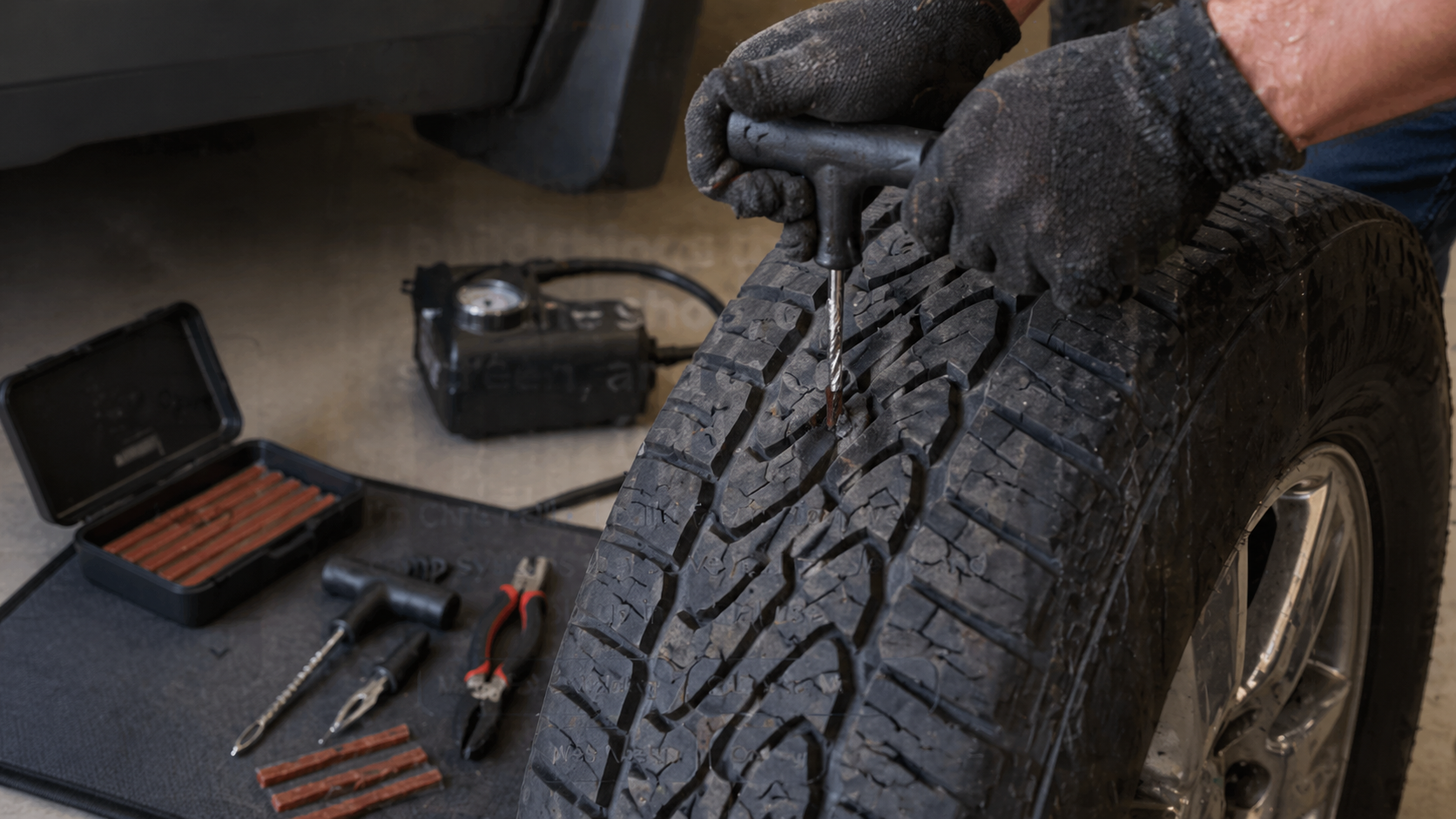
Pull the object out with pliers and keep track of the angle it entered. Ream the puncture to clean and size the hole. Thread the plug through the insertion tool, add cement if your kit calls for it, push it in, then pull the tool back out to leave the plug folded in the tire.
Trim excess plug material after it seats. Inflate to the needed pressure and check for leaks with water if you have it. A slow bubble means you are not done.
Drive like it is temporary
After the repair, drive slowly at first and recheck pressure. Heat, flex, and load can reveal a repair that seemed fine while parked. If pressure drops, vibration starts, the tire smells hot, or the sidewall looks wrong, stop.
Even if the plug holds, get the tire inspected. The outside of the tire only tells part of the story, and a plug-only repair does not seal the inside of the tire the way a proper repair does.
This can get you moving
- Small puncture is centered in the tread crown.
- The tire was not driven flat.
- Pressure holds after a short slow drive.
- You still plan to get a proper internal inspection.
Use the spare or call it
- Damage is on the sidewall or shoulder.
- The hole is torn, sliced, larger than 1/4 inch, or too large for the plug.
- The tire bulges, separates, or smells burned from running flat.
- The tread is at the wear bars or there are overlapping repairs.
Source-backed rules worth keeping
The Tire Industry Association says string plugs done on the wheel are temporary because the tire has not been removed and inspected inside. It also says a plug alone or patch alone is not an acceptable permanent repair, puncture repairs are limited to the center tread area, shoulder and sidewall damage is not repairable, and punctures larger than 1/4 inch / 6 mm should not be repaired. NHTSA tire-safety material points the same direction: proper puncture repair uses both a plug for the hole and a patch inside the tire, and sidewall punctures should not be repaired. AAA's tire-repair guidance repeats the practical version: sidewall/shoulder damage, run-flat damage, deep cracks, bulges, worn-out tread, large holes, and too-close multiple punctures are replacement or professional-service problems.
Field note
A plug is a way home, not a reason to stop caring about the tire. The kit earns its place when it keeps a small puncture from controlling the whole day, then hands the problem back to a proper tire inspection.