 By Chris Follin
SOUTHWEST
How to camp in Arizona without getting cooked
Arizona camping is not one season. Desert, rim country, high forest, lake edges, and exposed public land all behave differently. The trick is not being tough. It is choosing elevation, shade, water, and timing before heat becomes the entire trip.
Start with elevation
The fastest way to improve a hot Arizona trip is often to move up. A beautiful low desert site can be miserable when overnight lows stay high. A less dramatic forest site at better elevation can feel like a different season.
| Decision | What to check | What it means |
|---|---|---|
| Night reset | Overnight low, wind, humidity, and shade at sunrise. | If the night stays hot, you are not recovering. Move higher, change dates, or keep it extremely short. |
| Shade coverage | Where shade is at 9 a.m., noon, and late afternoon. | One pretty tree at arrival does not count if camp bakes during the actual heat window. |
| Water reserve | Drinking water, cooking water, cleanup water, and emergency reserve. | Separate the reserve so it does not disappear into dishes, dogs, showers, or casual rinsing. |
| Activity window | When chores, hikes, cooking, and packing happen. | Do heavy work early or late. Midday is for shade, water, and making fewer heroic decisions. |
The heat planning checklist
- Check daytime high, overnight low, wind, cloud cover, and fire restrictions.
- Know where the sun will hit camp in the morning. A tent in early sun becomes a brutal alarm clock.
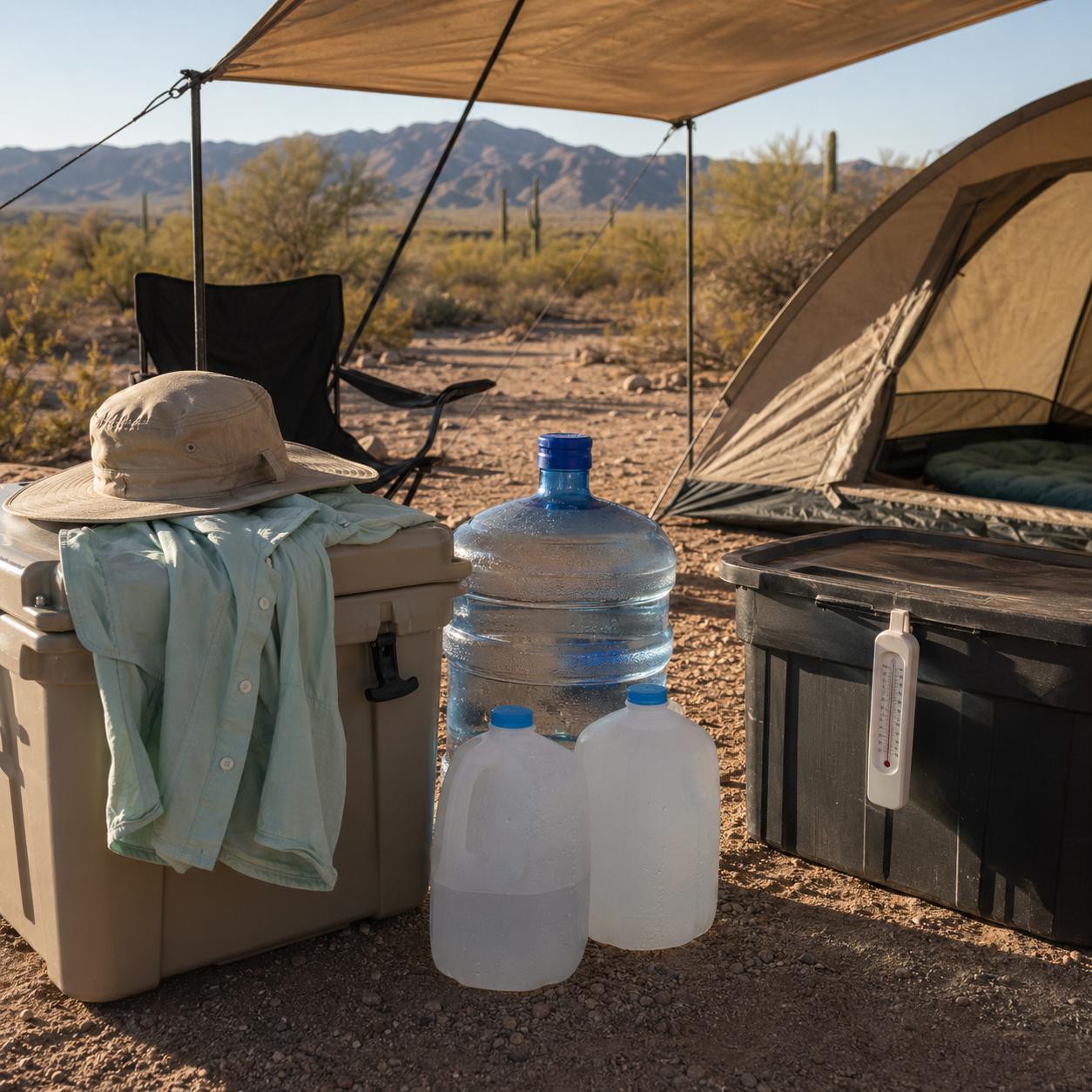
- Bring more water than expected, then protect a reserve from casual use.
- Plan meals that do not require long cooking over heat.
- Avoid big afternoon exertion. Do camp chores early or late.
- Have a bailout plan: higher elevation, town, water, shade, or leaving early.
Desert strategy
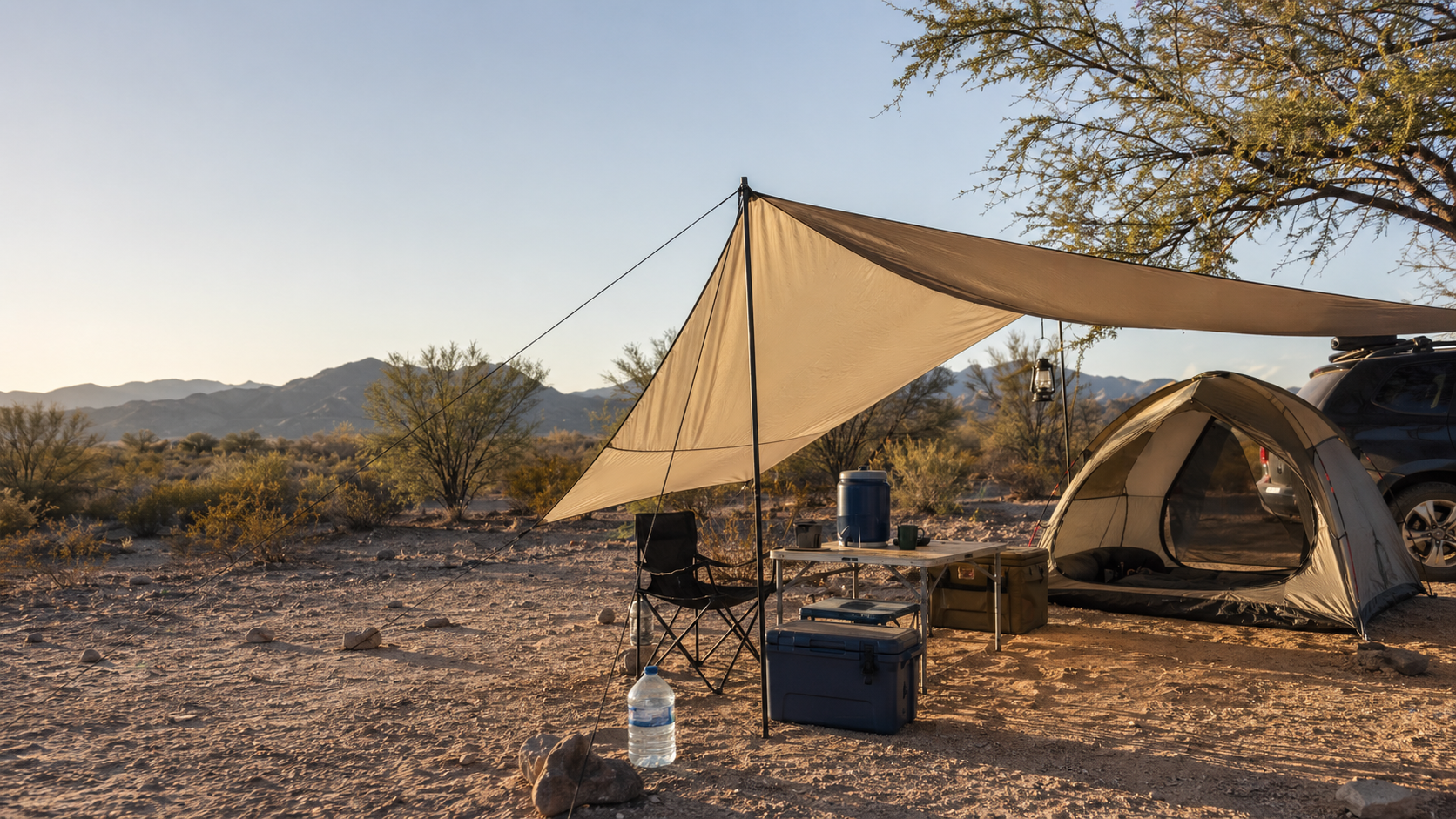
- Use shade like infrastructure. Park to block low sun. Build the kitchen where the breeze helps but does not blast. Keep metal, dark plastic, water jugs, and coolers out of direct sun. Move slowly in the hot window and stop pretending discomfort is the point.
High-country strategy
Rim country, Flagstaff, and higher forest can solve a lot of heat problems, but they create different ones: crowded weekends, monsoon storms, muddy roads, fire restrictions, and cooler nights than you packed for. Do not let "escaping heat" make you forget weather.
When to change the plan
If the trip requires constant shade management, warm drinking water, no sleep, no fire, no activity window, and a bad mood by 10 a.m., move the date or move the location. The best heat strategy is choosing a trip where heat is a factor, not the main event.
The trip still has a chance
- The night cools enough to sleep.
- Camp has shade during the brutal hours, not just at arrival.
- Water is easy to drink before anyone feels thirsty.
- Meals and activities match the temperature window.
The heat is winning
- The tent gets full sun at sunrise after a hot night.
- The only plan is to sit in shade and wait.
- Water is scattered, warm, or being used casually for cleanup.
- Fire restrictions or heat make the trip less fun than staying home.
Field note
Arizona heat is not a toughness contest. Pick elevation, shade, water, and timing like they are the trip, because in summer they are.