 By Chris Follin
RECOVERY SKILLS
How to get unstuck without making it worse
Getting unstuck starts by stopping early. The deeper you spin, the more you turn a simple traction problem into a digging, heat, damage, and recovery problem.
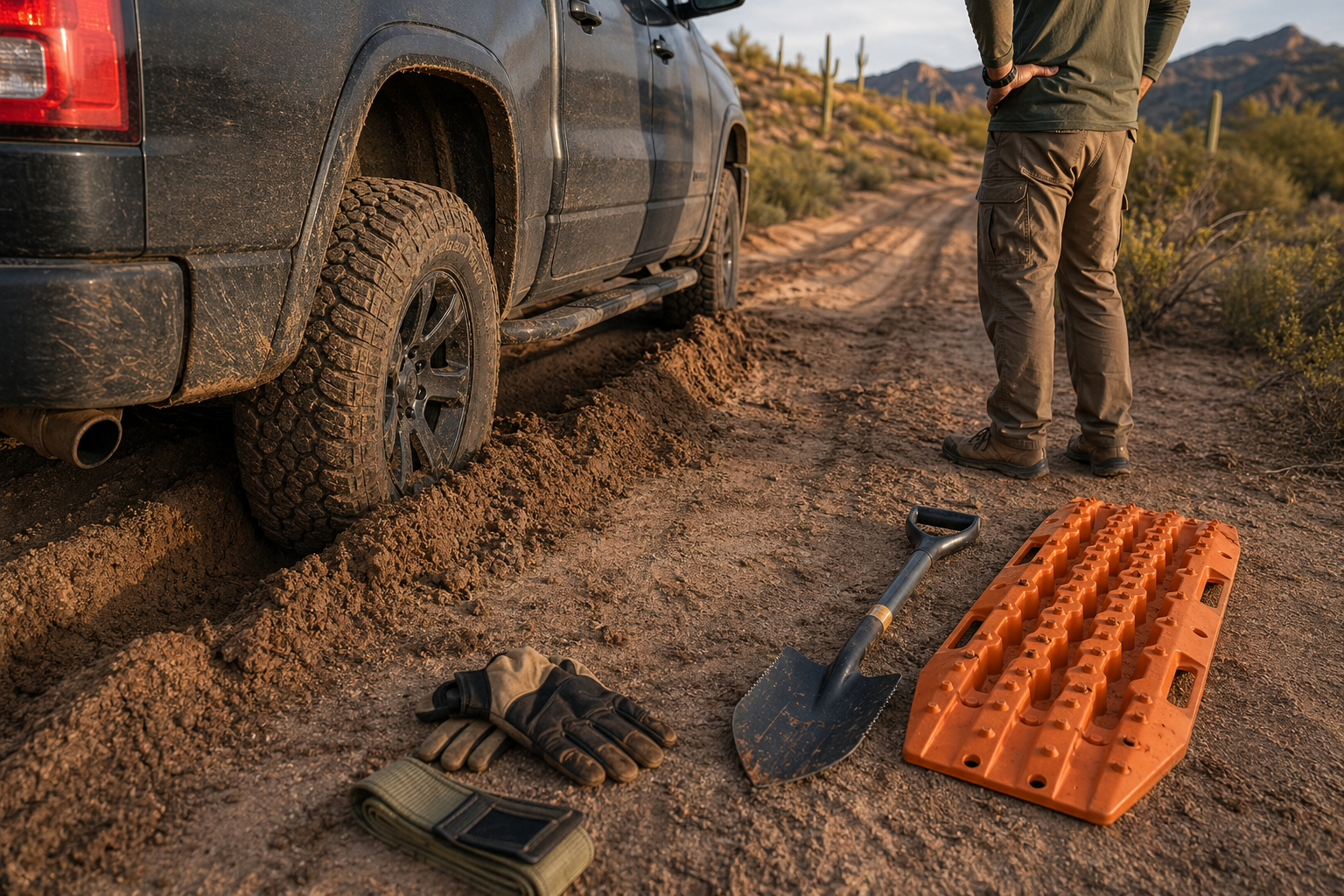
Stop before you bury it
The moment the vehicle stops moving, the job changes. You are not driving through the problem anymore. You are managing it. The bad version is familiar: a little more throttle, then more, then four polished holes and a truck sitting on its belly.
Get out while the situation is still small. Look at the tires, the frame, the hitch, the slope, and the easiest way back to firm ground. A recovery gets simpler when you stop trying to win the argument with wheel speed.
| Problem | What it looks like | First useful move |
|---|---|---|
| Traction loss | Tires spin but the vehicle is not sitting on its belly. | Straighten wheels, lower tire pressure if appropriate, add boards or a better surface. |
| High-centered | Frame, axle, hitch, skid plate, or diff is resting on sand, mud, snow, or a berm. | Dig under the stuck metal first. Boards alone will not fix tires with no weight. |
| Wrong direction | Forward means uphill, deeper material, tighter brush, or more unknown road. | Back out along your tracks if that is the easier and safer line. |
| Trailer drag | Trailer tongue, jack, stabilizer, bumper, or hitch is plowing material. | Stop and clear the trailer contact point before the tow vehicle digs in too. |
LOW-DRAMA RECOVERY
The sequence that saves work
This is the unglamorous order that keeps a normal stuck moment from becoming a recovery story.
- 1. StopTake your foot out of it as soon as forward progress stops.
- 2. Look underneathFind out whether the tires are stuck or the vehicle is sitting on its belly.
- 3. Clear a rampDig in the direction you want the tires to climb.
- 4. Add tractionAir down if appropriate, wedge boards, straighten wheels, and use gentle throttle.
The recovery line rule
If another vehicle gets involved, use rated recovery points and proper recovery gear. Do not hook straps to tow balls, random suspension parts, or mystery metal. People should stand clear of the strap line and tire path before anyone moves.
TERRAIN READ
The surface decides the recovery
A stuck vehicle in sand, mud, snow, and rock may look similar from the driver seat. Underneath, they are different problems.
| Surface | What usually works | What makes it worse |
|---|---|---|
| Sand | Air down, long shallow ramps, boards buried under the tread, and very gentle throttle. | Wheelspin, sharp turns, and trying to climb out of vertical holes. |
| Mud | Clear suction, find firmer edges, add traction, and avoid burying the frame. | Spinning until the tread turns slick and the vehicle bellies out. |
| Snow | Clear packed snow, avoid polishing ice, use boards/chains when appropriate, and keep throttle tiny. | Heat from spinning tires that turns snow into ice under you. |
| Rock ledge or rut | Stack legal trail material carefully, pick a better line, or back out. | Throttle bouncing, dragging diffs, and breaking parts because pride is driving. |
STOP POINTS
Know when the simple recovery is over
ESCALATION LADDER
Do the cheap moves first
The deeper the intervention, the more ways there are to break parts or hurt someone. Start boring.
| Stage | Try this | Stop if |
|---|---|---|
| Simple | Straighten wheels, clear packed material, back out on your own tracks. | The vehicle sinks, slides sideways, or starts resting on the frame. |
| Traction | Dig a ramp, air down when appropriate, place boards tight under the tires. | Boards spit out, tires smoke, or throttle becomes the whole plan. |
| Unload | Remove passengers, coolers, firewood, trailer tongue load, or anything making the stuck tire work harder. | You are on a slope, near water, or losing daylight. |
| Assisted recovery | Use rated recovery points, rated gear, clear communication, and no people in the line of pull. | Someone suggests a tow ball, a chain of unknown rating, or standing near the strap. |
Figure out what is holding you
If the frame, axle, hitch, or skid plates are resting on the ground, the tires may not have enough weight to climb. Dig under the stuck points before trying again. If the tires are just spinning on a slick surface, traction boards, brush where legal, floor mats in a true emergency, or a different line may help.
If you are on a slope, think about gravity. Backing down your own tracks may be smarter than trying to climb forward into worse terrain.
Use the low-drama sequence
Clear around the tires. Straighten the steering wheel. Air down if the terrain calls for it and you have a compressor. Place boards or create a ramp. Use low gear and smooth throttle. Stop as soon as progress stops.
Rocking can work in light situations, but violent shifting from reverse to drive can break parts. Keep it gentle and stop if the vehicle is getting hotter, deeper, or more sideways.
Know when to escalate
If you need another vehicle, use rated recovery points and proper recovery gear. Tow balls are not recovery points. Random straps, chains, and hardware can become projectiles. If you are unsure, call someone who knows what they are doing.
Sometimes the best recovery decision is waiting, digging more, unloading weight, changing tire pressure, or walking out for help. Pride breaks vehicles.
Keep working the recovery
- You stopped before the vehicle sat on its belly.
- The tires have a cleared ramp and a lower-pressure contact patch.
- Everyone stands clear of straps, boards, and tire paths.
Stop digging the hole
- You keep flooring it because it almost moved.
- The vehicle is rocking violently between gears.
- A strap is hooked to a tow ball or unknown metal.
Field note
The first win is not getting out. The first win is stopping before you make the recovery harder.