 By Chris Follin
LOAD SKILLS
How to use ratchet straps without making a mess
Ratchet straps are simple until they are twisted, overloaded, hooked to bad points, rubbed across sharp edges, or tightened over something that can slide out. A good strap job starts with rated gear and real anchors, then controls forward, backward, side, and upward movement.
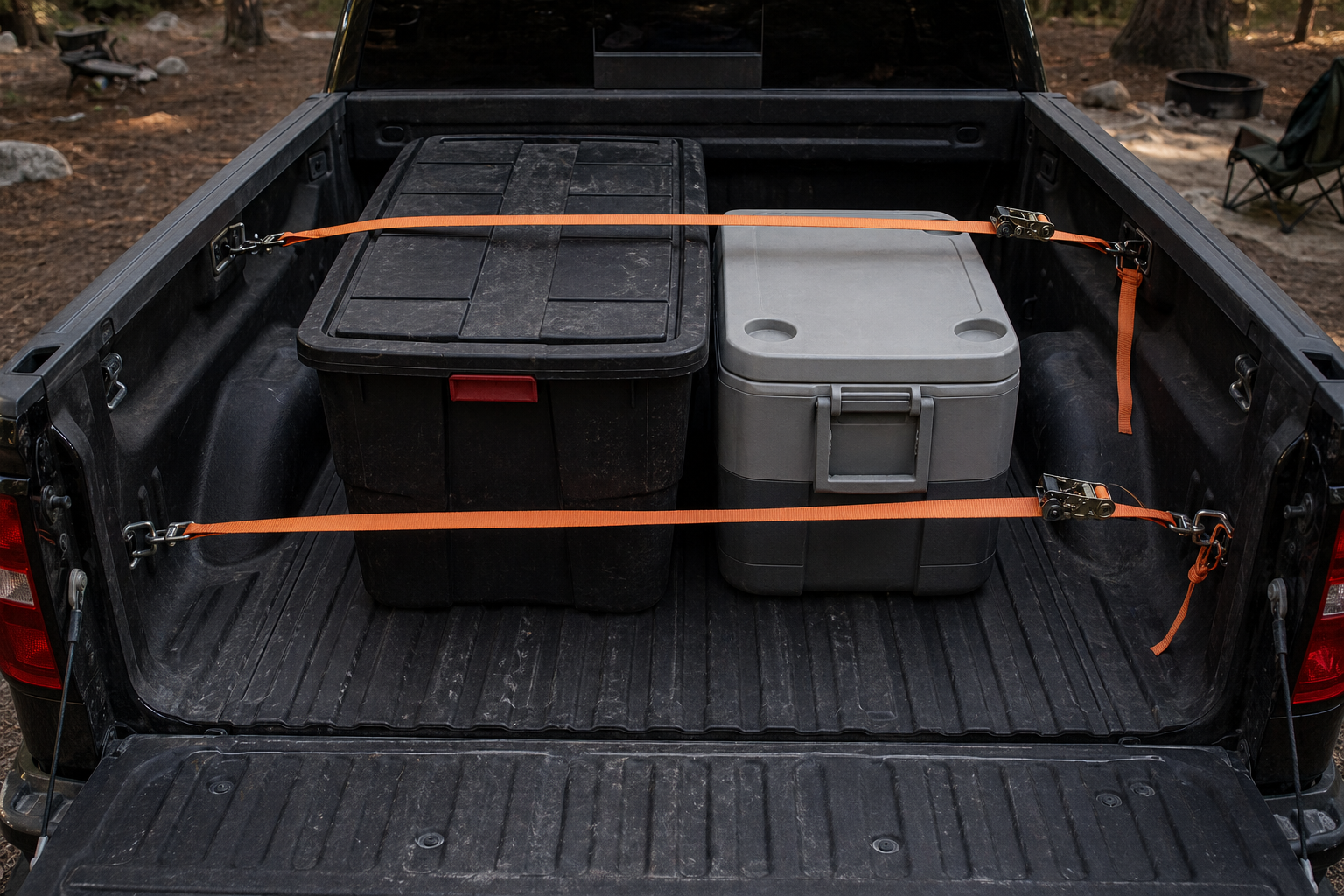
A strap is not a force field
A ratchet strap only works in the direction it is pulling. If the load can slide forward under braking, sideways during a turn, or bounce upward over a bump, one pretty strap across the top may not be enough. Think about movement, not just tightness.
Use straps with readable working load limits, inspect webbing and hooks, and anchor to real tie-down points. A strap hooked to trim, thin sheet metal, random rack parts, or a weak trailer edge can make you feel secure while doing almost nothing useful. If the strap, hook, ratchet, or anchor is the weak link, that is the rating that matters.
LOAD THINKING
Strap against movement, not hope
A secure load has a plan for braking, turning, bumps, and wind. One strap over the top is often only controlling upward bounce.
| Load type | Risk | Better strap plan |
|---|---|---|
| Low box or cooler | Sliding under braking or turning. | Block it if possible, then strap down and against side movement. |
| Tall or round item | Tips, rolls, or walks out from under a top strap. | Use opposing straps and block the base. |
| Soft cargo | Compresses after the first few bumps. | Stop early and retighten after the load settles. |
| Sharp-edged cargo | Cuts webbing under vibration. | Pad edges and inspect the strap path before driving. |
| Roof load | Lift, sway, and strap movement at speed. | Tie large items directly to rated rack/vehicle points and check front, rear, side, and upward movement. |
| Commercial, heavy, oversized, or road-facing load | Legal securement requirements beyond this camp checklist. | Use the applicable FMCSA/state rules, commodity rules, permits, and trained securement help. |
Working load limit matters
Use straps with readable working load limits and leave damaged webbing out of the system. Do not confuse break strength with working load limit. A useful baseline from FMCSA cargo-securement rules is that the aggregate working load limit of the tie-down system must be at least one-half the weight of the cargo being secured. For normal camp and truck-bed loads, treat that as a floor, not a bragging target.
THE STRAP JOB
What actually keeps the load home
A good tie-down is usually boring to look at: short strap runs, flat webbing, solid anchors, and no mystery angles.
Route the strap cleanly
Lay the webbing flat with no twists or knots. Feed the loose end through the ratchet slot, pull the slack by hand first, then ratchet only enough to tension. Too much slack in the spool jams the ratchet and leaves you with a bulky mess.
Keep the ratchet handle where you can reach it and where it will not rub paint, glass, wiring, or soft gear. Protect sharp edges with padding or edge protectors. If the strap has to bend over a corner hard enough to cut fibers, change the path or add protection.
Control movement, not just height
For a box, cooler, or bin, top pressure might be enough if the load is blocked and low. For tall, heavy, round, wind-catching, or slippery cargo, you need straps that oppose forward, rearward, side, and upward movement. Two straps are often the minimum for anything meaningful.
NHTSA guidance on securing loads is blunt for a reason: cargo that leaves a vehicle can injure or kill people behind you. Treat even a short drive like the load will be tested by braking, bumps, turns, wind, and another driver's bad day.
Finish the job
Lock the ratchet handle closed. Tie off the tail. Drive a few minutes, then stop and check tension. Webbing can settle, soft cargo compresses, and hooks can rotate into worse positions after the first bumps.
Do not leave straps flapping. Loose tails slap paint, shred themselves, distract other drivers, and can wrap around moving parts. If a strap loosens, a hook moves, or the load shifts after the first check, fix the setup instead of cranking the same bad angle harder.
The load is controlled
- Webbing is rated, readable, flat, and protected at edges.
- The load is blocked or strapped against movement in multiple directions.
- Hooks are fully seated in real anchor points.
- Loose tails are tied off and tension is rechecked after a short drive.
One bump will expose it
- One strap is doing every job.
- Hooks are attached to weak trim or random holes.
- The ratchet is overloaded with too many wraps of webbing.
- Webbing is cut, knotted, melted, twisted, or rubbing a sharp edge.
Source-backed rules worth keeping
NHTSA tells drivers to tie cargo down with rope, netting, or straps, tie large objects directly to the vehicle or trailer, double-check the load, and ask what happens under sudden braking, bumps, or another vehicle hit. FMCSA cargo-securement rules add the rating language: securement devices must be in proper working order, anchor points must be strong enough, damaged components cannot be used, and aggregate working load limit must be at least one-half the cargo weight. FMCSA also explains that working load limits come from markings or regulatory tables, and unmarked tiedowns can be treated conservatively as the lowest rating for that tiedown type. This page is a practical camp/truck-bed guide, not a complete legal guide for commercial, oversized, or commodity-specific loads.
Field note
Strap for the panic stop, not for the peaceful driveway photo. A load that looks fine parked can become a completely different problem once wind, braking, vibration, and road crown start working on it.