XJ Cherokee – Trail-Ready Overland Build

A second-pass XJ build shaped by the lessons of the first one: enough lift and tire for Arizona trails, but still simple enough to inspect, service, and drive home.

XJ Cherokee build - hero image
jeep1 jeep2 jeep3 jeep4 jeep5 jeep6 jeep7
BuildOverlandTrailFabricationPhotography
Overview

A trail XJ built to get out there and come back without turning every weekend into repair work.

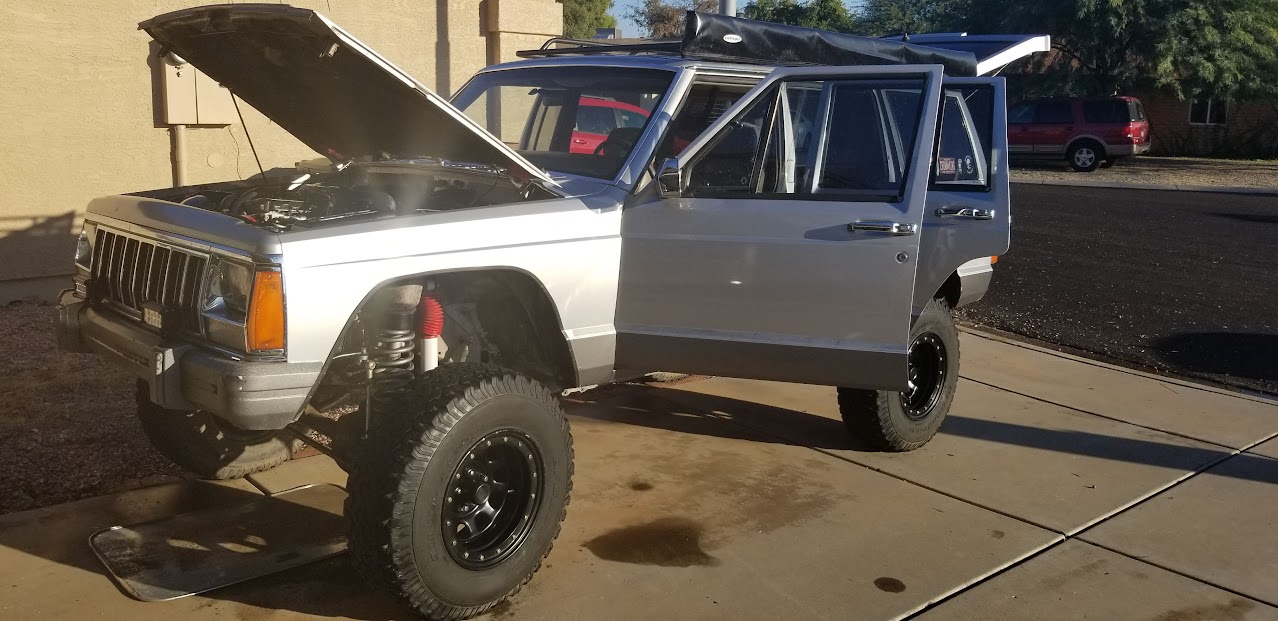
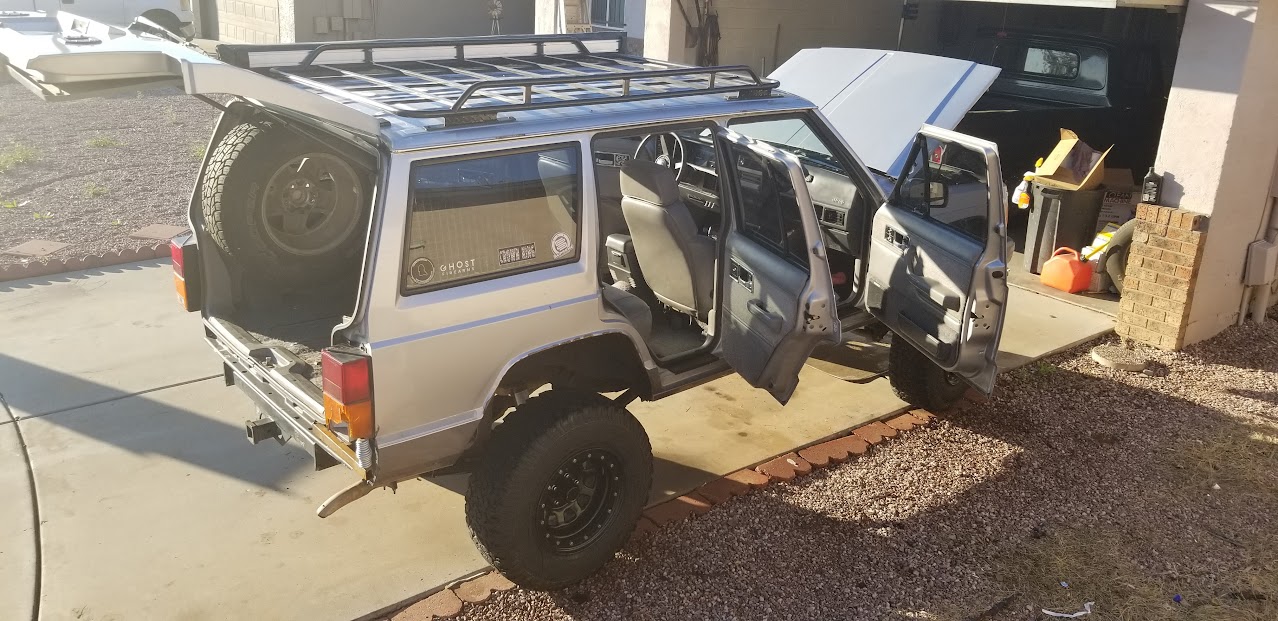
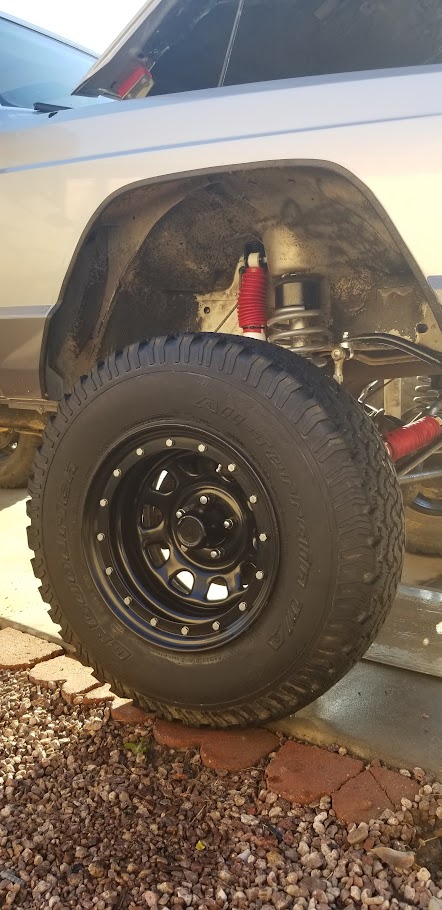
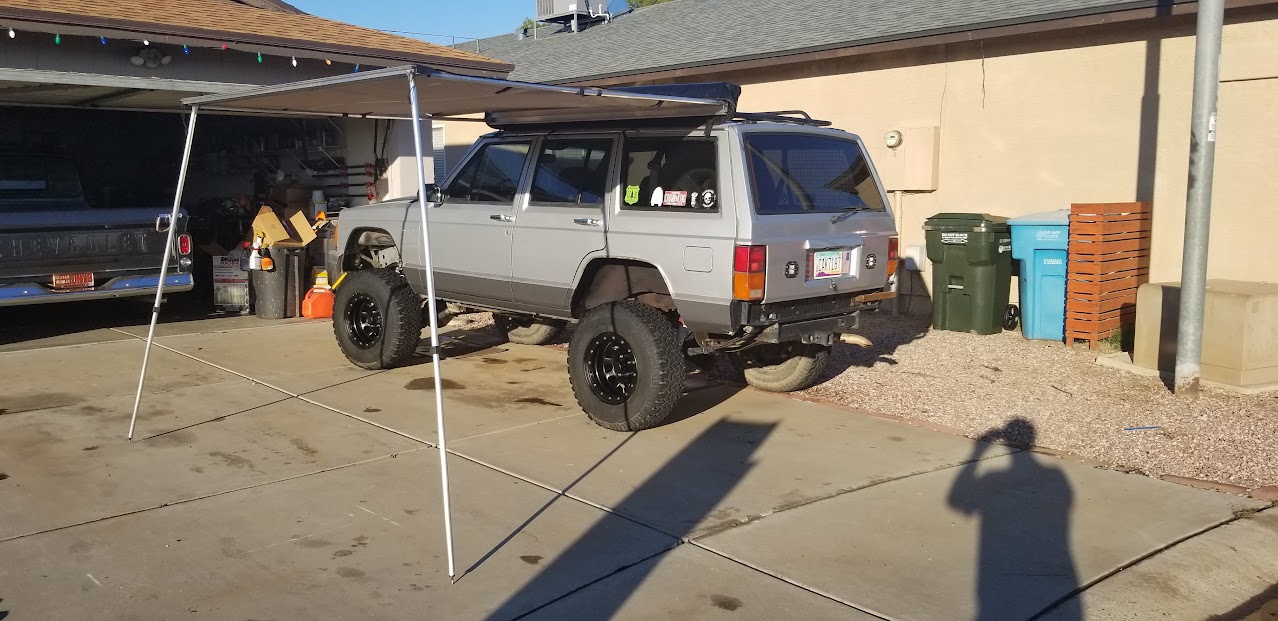
This 1992 Cherokee Sport sat on a 6.5-inch lift and 33s, but the goal was never a parking-lot flex rig. It was built to reach the places I actually wanted to go around Crown King and the back roads outside Phoenix, then drive home without a list of fresh problems.

It was my second Cherokee build, which meant the priorities were clearer: steering and suspension that could be checked quickly, tire clearance without pretending sheet metal is sacred, cargo space that stayed usable, and electrical/mechanical changes that did not create a scavenger hunt later. Reliability, serviceability, and clean execution stayed ahead of flash. The Jeep is gone now, but the way this one was approached still shows up in a lot of my later work.


Goal
A dependable weekend rig for Arizona trails that still behaves on the road.
Approach
Keep the platform mostly stock, add a sensible lift and tires, and favor parts and layouts that are easy to service.

Real trails over likes. Keep it simple and serviceable.
At a Glance
Project
Personal build
Platform
1992 Jeep Cherokee Sport (XJ)
Setup
6.5" suspension lift · 33" tires · mostly stock otherwise
Focus
Reliability · Trail-ready · Field-serviceable
Status
Sold
Region
Crown King + greater Phoenix area
Build Priorities
What had to work
  • Clear 33-inch tires without turning normal driving into a chore.
  • Keep steering, suspension, brake, and driveline checks simple enough to do before a trip.
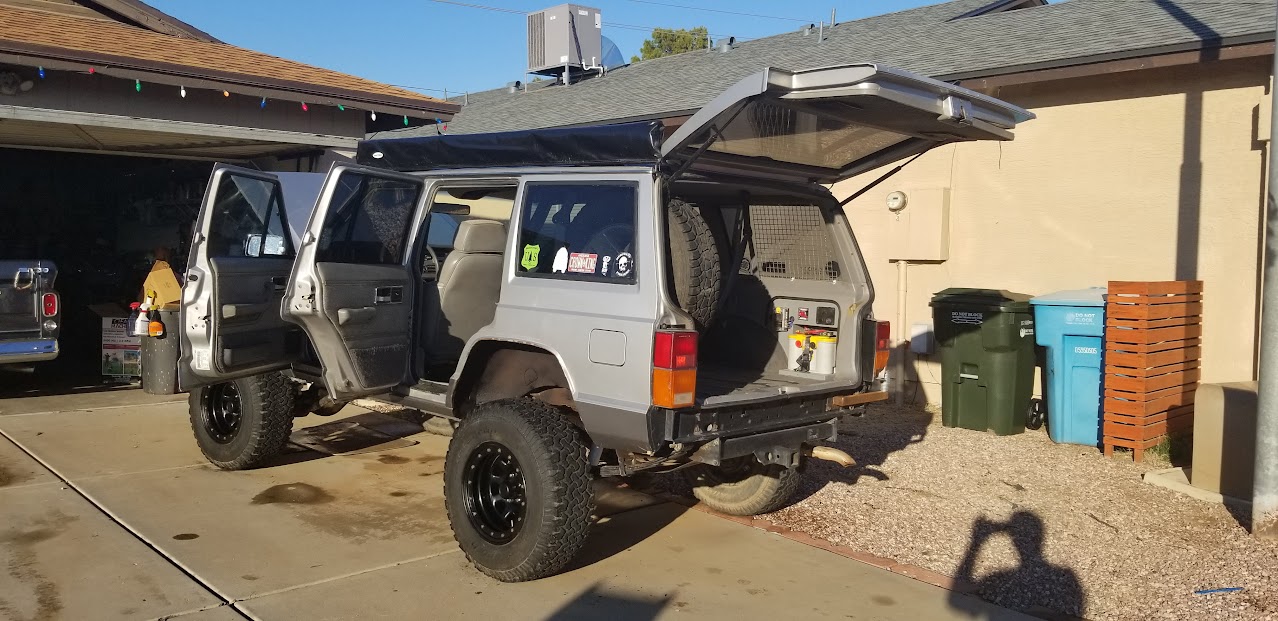
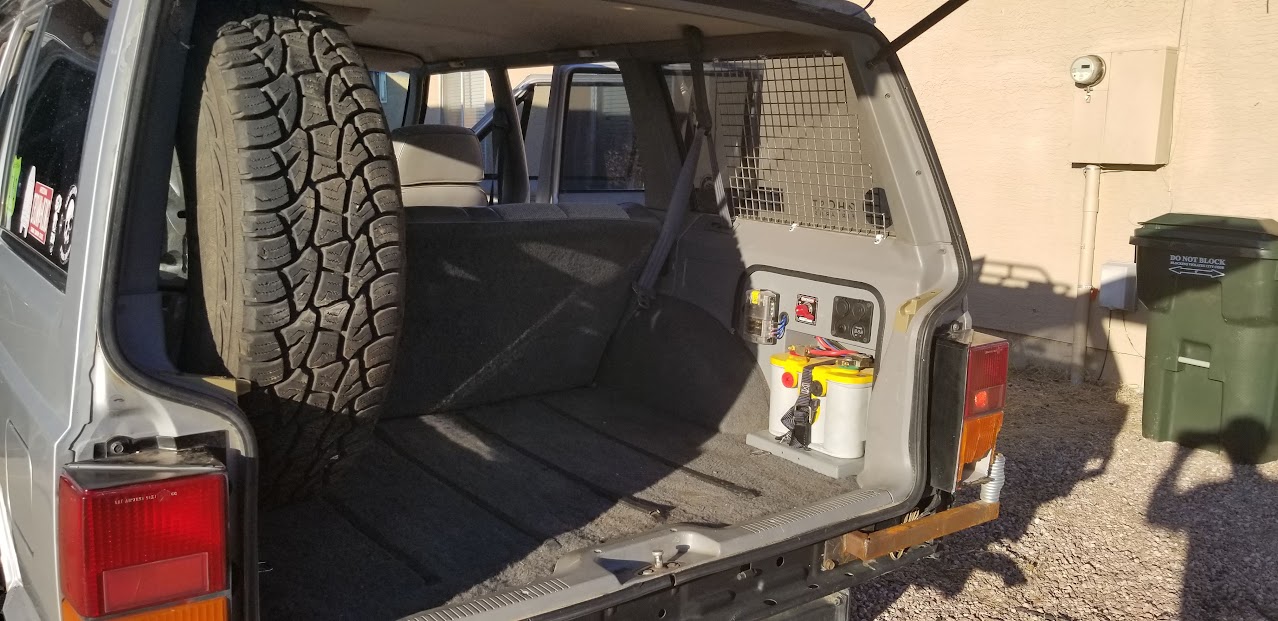
  • Protect usable cargo space for tools, recovery gear, water, and overnight kit.
  • Stay field-serviceable with ordinary tools instead of stacking custom one-off dependencies everywhere.
What I avoided
  • Adding weight just because something looked more built.
  • Complicated accessory wiring without a clean way to inspect or isolate circuits.
  • Suspension choices that looked good parked but made highway miles or trail repairs worse.
  • Turning every future maintenance job into a fight with hidden fasteners and cramped routing.
System Notes
Suspension and tires
  • The 6.5-inch lift and 33s gave the Jeep the clearance and stance it needed for the kind of Arizona trails I cared about.
  • The job was not just height. It was keeping the Jeep predictable enough to drive to the trail, use all day, and drive home.
  • Clearance, steering feel, and inspection access mattered more than chasing the most extreme articulation photo.
Reliability and trail use
  • Crown King and Phoenix-area back roads reward boring reliability more than fancy parts.
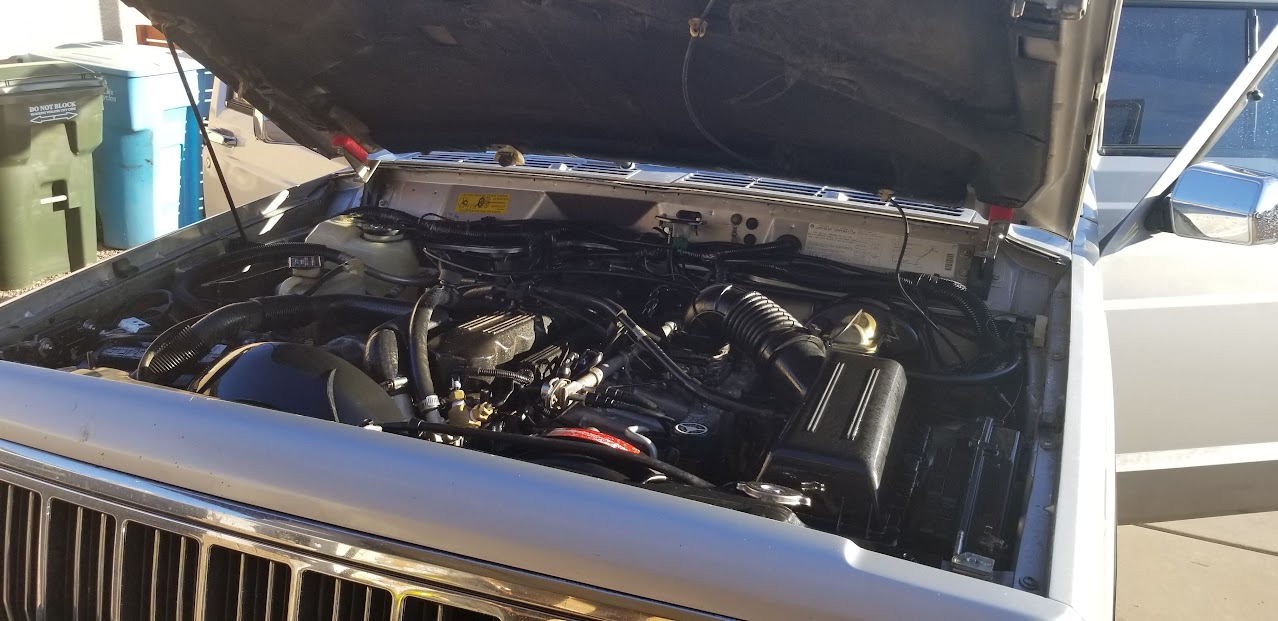
  • The build stayed mostly stock where stock still worked, because every extra system becomes one more thing to diagnose later.
  • Tools, spares, recovery gear, and simple routing were treated as part of the build, not an afterthought tossed in the back.
My Take

I like rigs that start every time and can be fixed with hand tools. This XJ was not built for flex shots. It was built to get me out there and back with enough confidence that the trail was the story, not the repair afterward.

  • Straightforward setup that works hard without drama.
  • Serviceable choices over trendy parts.
  • Clean routing and simple layouts that are easy to check on the trail.
  • Enough restraint that the Jeep still behaved like transportation, not just a project.
What I'd Do Next
  • Short monthly notes on trips, fixes, and lessons learned.
  • Add mini case studies per system (suspension, armor, cooling, electrical) with 3 photos + 3 bullets.
  • Keep growing the photo gallery and write quick captions for trail context.
Highlights
Suspension & Rolling Setup
  • 6.5" lift with 33" tires
  • Geometry checked for street manners and trail control
  • Kept the rest simple to reduce failure points
Trail-Ready Priorities
  • Reliability first, easy to service anywhere
  • Practical add-ons only as needed
  • Built for real Arizona miles around Phoenix and Crown King
Lessons From The Second XJ
What aged well
  • The simple parts philosophy. If a modification did not make the Jeep easier to use, fix, or trust, it had to justify itself.
  • Keeping the cargo area and systems readable. A clean layout is not vanity when you are tired, dusty, and trying to find a problem fast.
  • Building around actual Arizona trips instead of an imaginary use case.
What I would document sooner now
  • Before/after photos for each system, not just finished glamour shots.
  • A running maintenance log: what loosened, what rubbed, what stayed fine, and what got changed after real trail miles.
  • Small captions for each photo so the build record teaches instead of only proving that the Jeep existed.
Like clean, reliable builds?

Let's plan something that actually gets used.

I focus on practical design - in the shop and on the trail. If you want help planning or documenting a build, I can help.

Contact

Tell me what you're building or where you're stuck. I'll get back to you right away.